
Last updated September 21, 2026
Full 25-point door and opener safety check with every visit - springs, cables, rollers, tracks, and your LiftMaster or Chamberlain opener included
You get a price before we start. It does not change when the truck arrives.
 Before
 After
After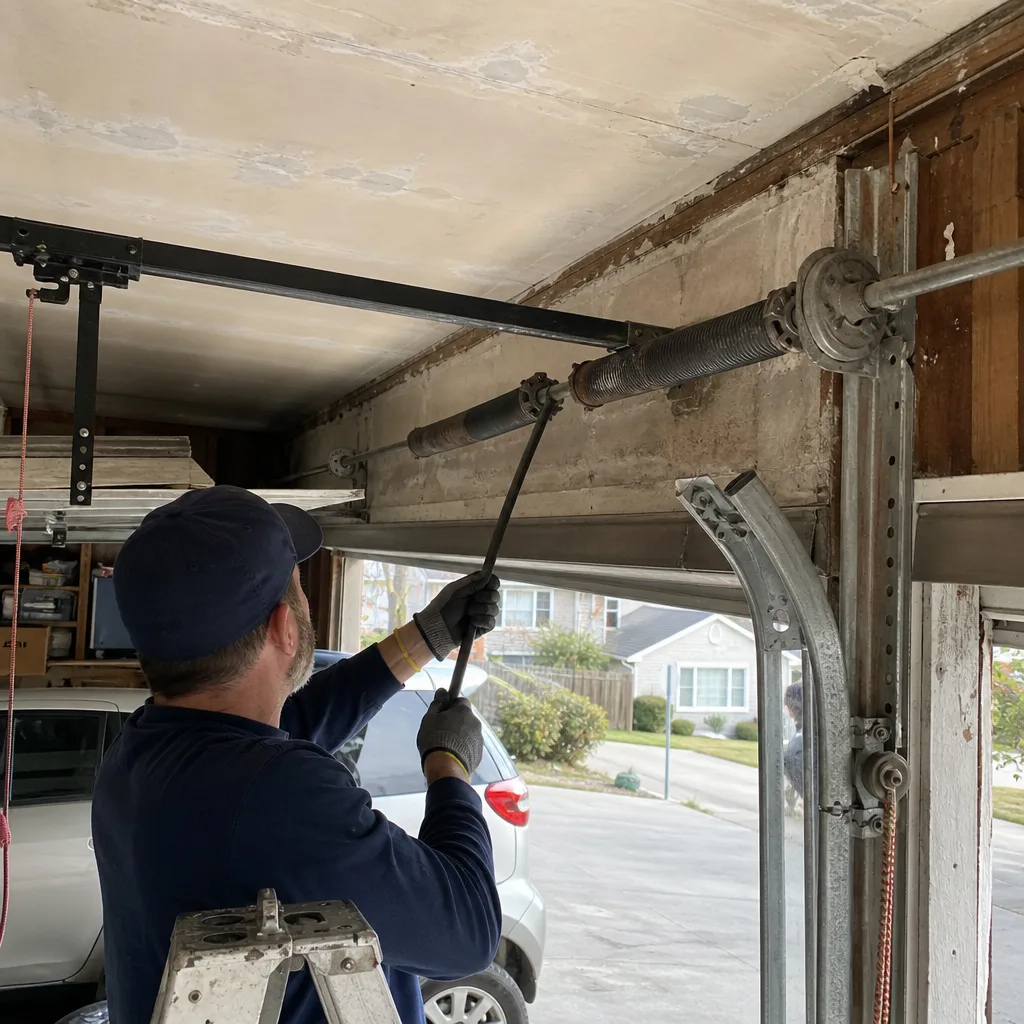 Before
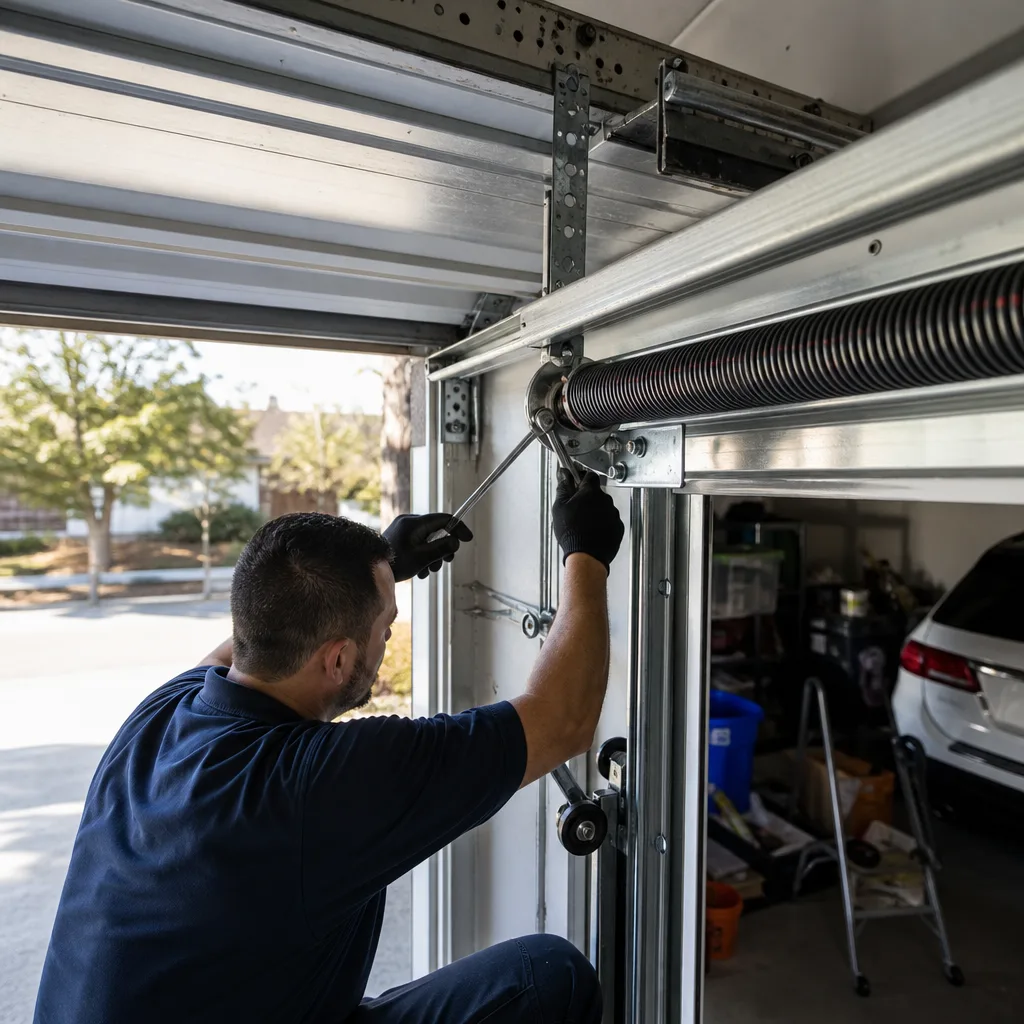 After
After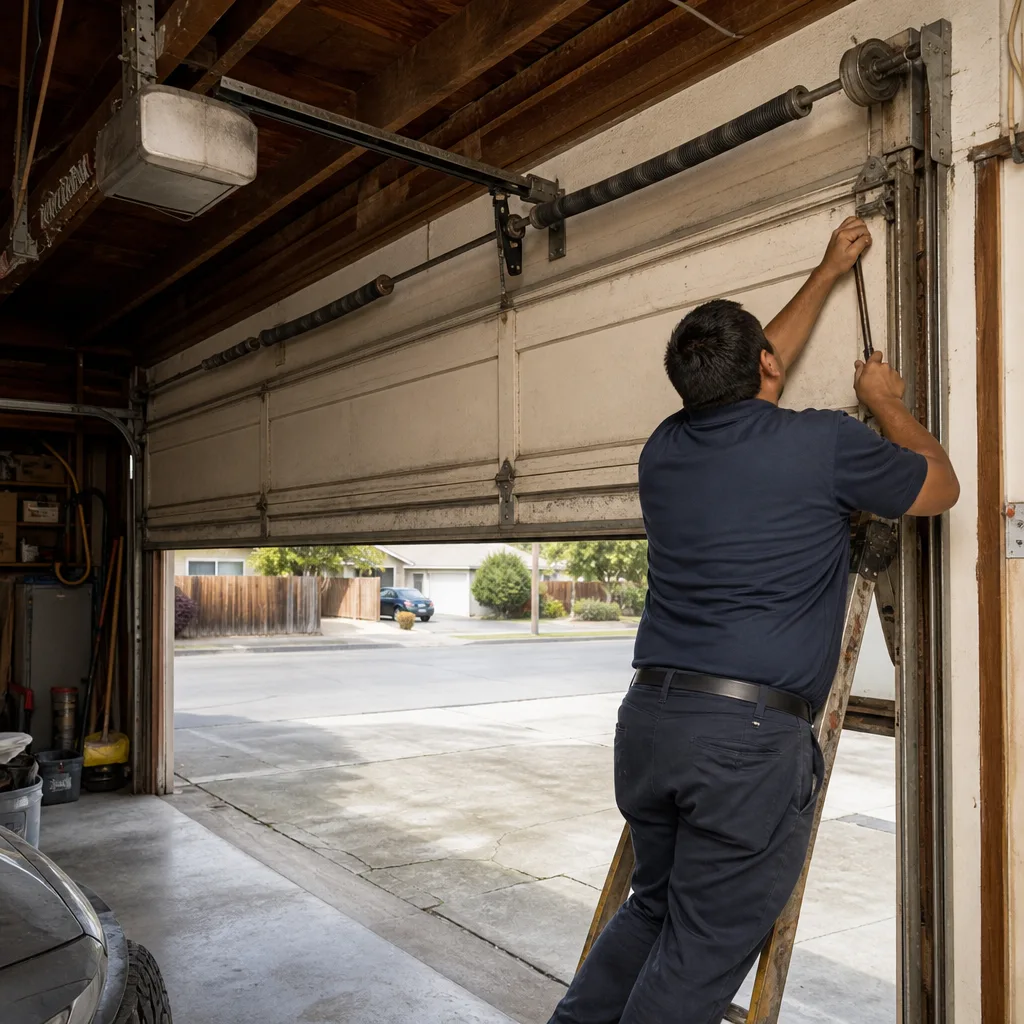 Before
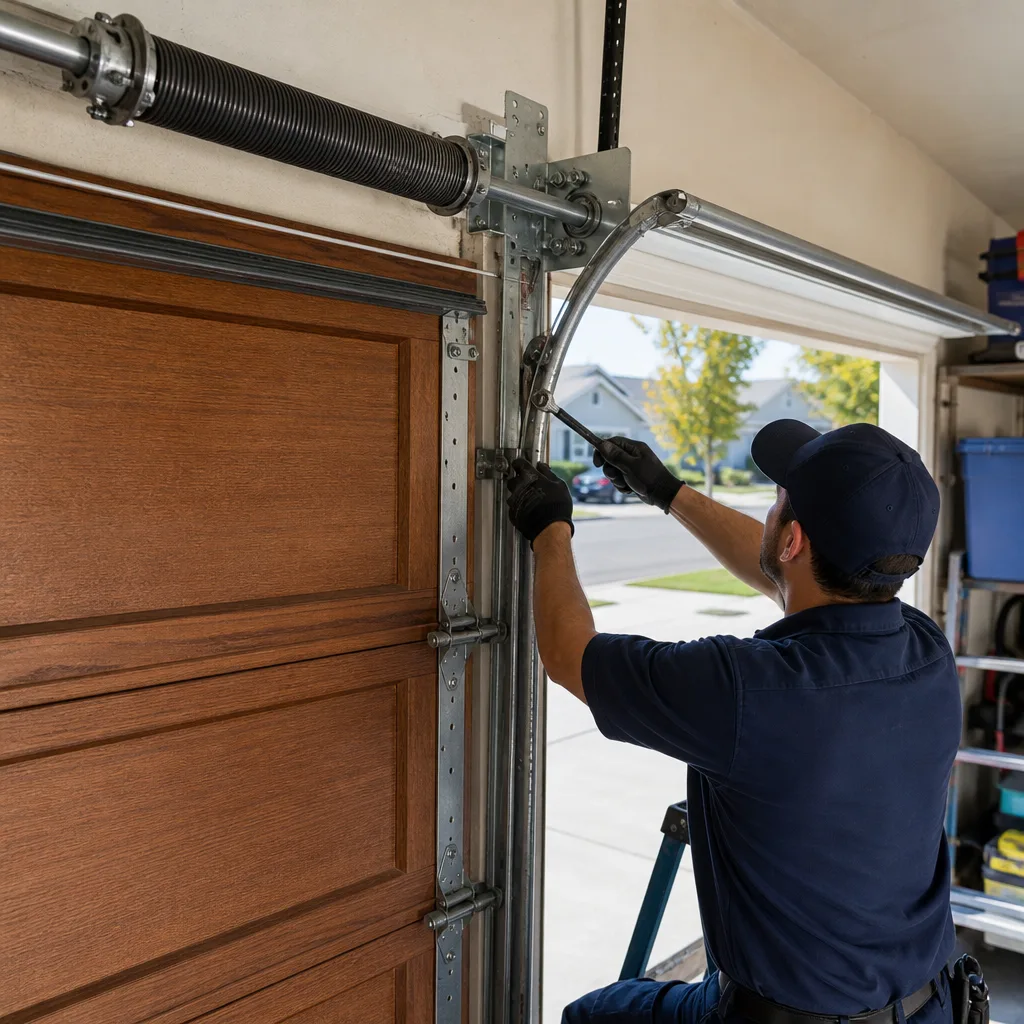 After
AfterDIY vs Professional Garage Door: The Concord Homeowner’s Decision Guide
A torsion spring stores enough torque to break a wrist or fracture an orbital bone if released incorrectly. That is not a liability disclaimer. It is a physics statement about a 200-pound door counterweight compressed into a metal coil. In Concord, where many homes in the 94518, 94519, and 94521 zip codes were built during the 1960s through 1980s garage-door boom, we see the aftermath of DIY attempts weekly: bent tracks from pry-bar “adjustments,” opener logic boards fried by crossed low-voltage wiring, and homeowners who saved $80 on a roller swap only to spend $340 undoing the damage. This guide draws a hard line between what you can safely handle yourself and what requires a trained technician, a written scope, and a documented photo record; for a deeper look at protecting your investment, see our Garage Door Repair Maintenance Checklist for Concord Homeowners. No enthusiasm. Just the facts, the law, and the actual cost of getting it wrong.
Quick Answer
Most Concord homeowners can safely replace weather seals, lubricate rollers, swap keypad batteries, and test safety sensors. Anything involving torsion springs, cables under tension, bottom brackets, or hardwired electrical connections should be handled by a licensed professional. California law permits unlicensed work on your own owner-occupied single-family home, but connecting a new garage door opener to your home’s electrical circuit triggers permit requirements regardless of who performs the work; for details, read Garage Door Permits, Codes & Inspections in CA: What You Need to Know.
Table of Contents
- The Physics of Stored Energy: What Makes Garage Doors Dangerous
- DIY-Safe Tasks: The Complete List
- Never DIY: Tasks That Carry Injury or Legal Risk
- California Law and Concord Permits: What Homeowners Need to Know
- The Actual DIY Tool Kit (and the Substitutes That Cause Injuries)
- The Real Cost of Getting It Wrong
- How to Call a Technician After You’ve Already Started
- When to Call a Professional
 Before
 After
AfterThe Physics of Stored Energy: What Makes Garage Doors Dangerous
Most homeowners in Concord understand that a garage door is heavy. What they often miss is that the door’s weight is not the primary hazard. The hazard is the stored mechanical energy in the counterbalance system.
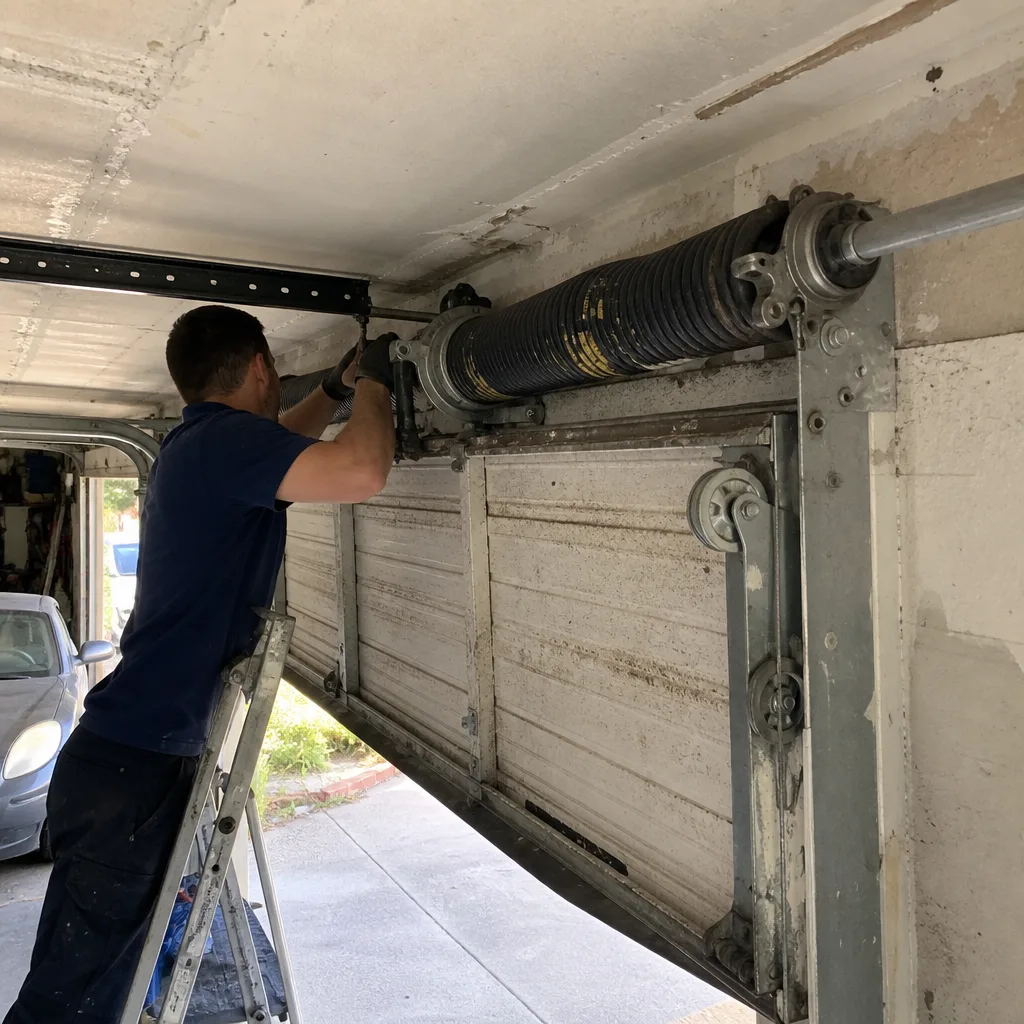
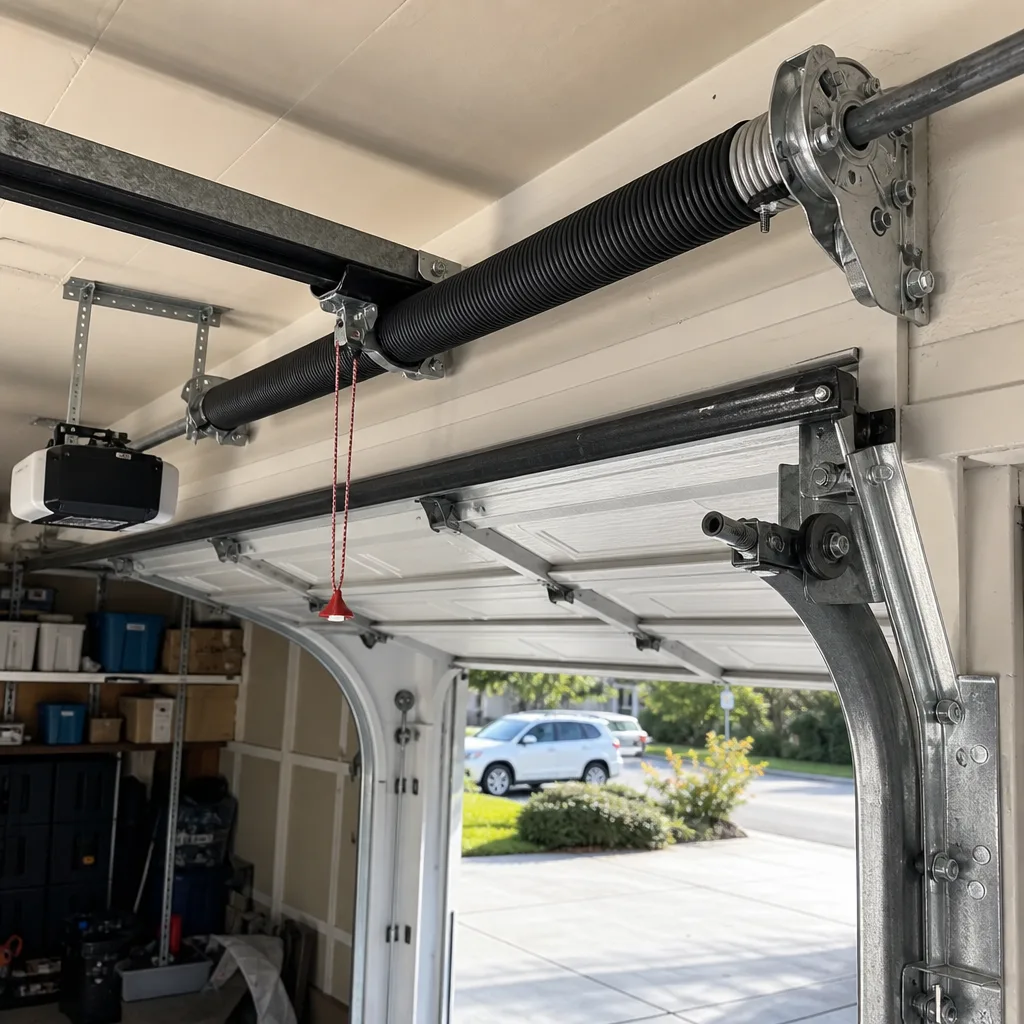
Here’s how it works. A standard 16-foot wide steel garage door in a Concord ranch-style home weighs between 150 and 200 pounds. You can lift it with one hand because torsion springs above the door header store torque, offsetting that weight. The spring is wound tight, typically 7 to 9 full turns for a standard 7-foot door. Each turn stores roughly 50 foot-pounds of torque. Release that energy suddenly, and the spring unwinds in milliseconds. The winding bar in your hand becomes a projectile. The door drops uncontrolled. We’ve photographed the results: bent top sections, shattered windows, and in one case on Olivera Road, a spring anchor bracket torn from the header.
Extension springs, found on older Concord homes in the Monument Corridor and near Todos Santos Plaza, store energy differently but no less dangerously. They stretch along the horizontal track and are held by safety cables. When an extension spring breaks without safety cables, it can whip across the garage. California building code has required safety cables on extension springs since 1993, but we still find them missing on pre-1990s installations.
The critical distinction: weight is static. Stored energy is dynamic and seeks equilibrium instantly. A door that feels “a little heavy” may indicate a failing spring that is closer to catastrophic release than you realize. This is why garage door repair in Concord should include a full counterbalance inspection, not just the symptom you noticed.
DIY-Safe Tasks: The Complete List
These tasks carry no stored-energy risk, no permit trigger, and no specialized tooling beyond what most Concord homeowners already own. They are appropriate for any physically able homeowner with thirty minutes and basic attention to detail.
Weather Seal Replacement
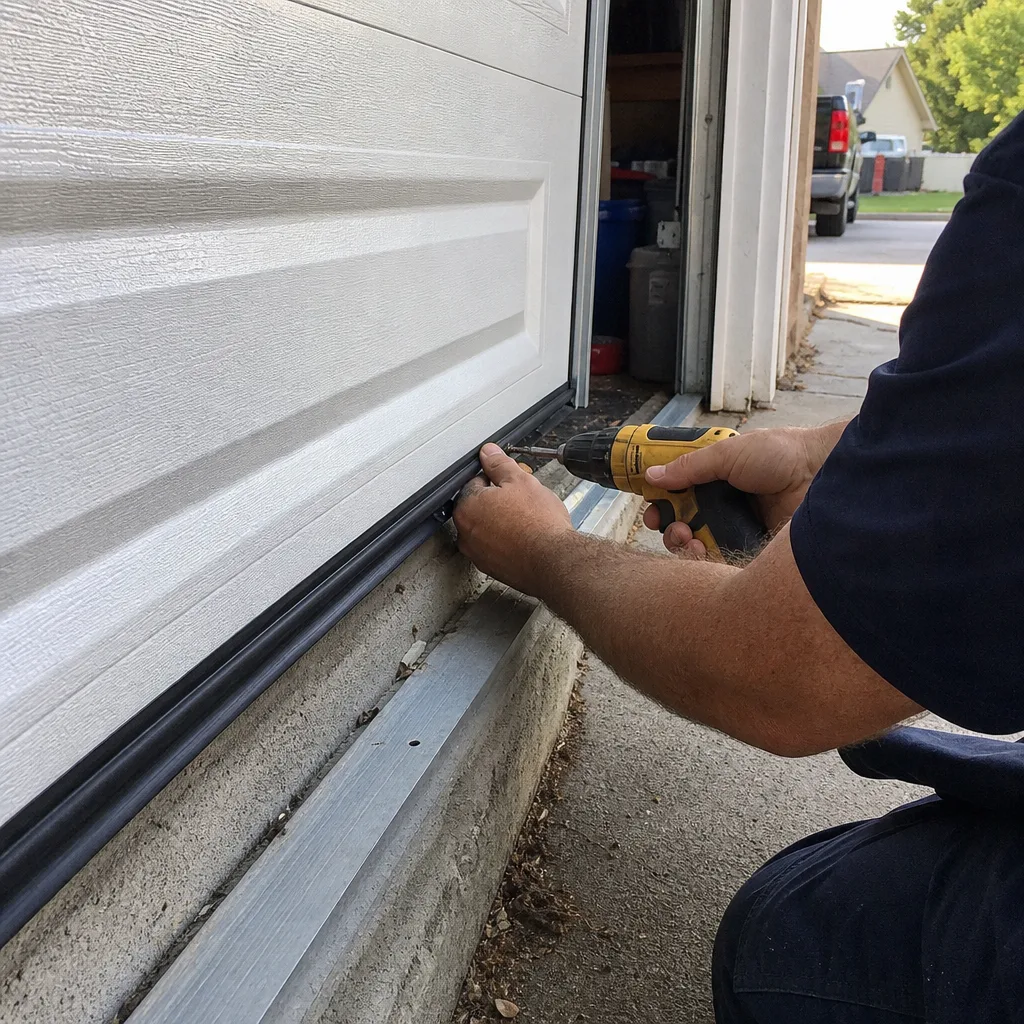
The rubber or vinyl seal at the bottom of your door hardens and cracks in Concord’s summer heat, then stiffens further during winter fog cycles. Replacement is straightforward: raise the door to waist height, clamp the track to hold it, and slide the old seal out of the retainer channel. Most seals use a T-end or bulb profile. Match the profile exactly; a 3-inch T-end will not seat in a 4-inch retainer. Big Box stores in Concord carry common profiles, but older Wayne Dalton doors often use proprietary seals that require ordering by model number.
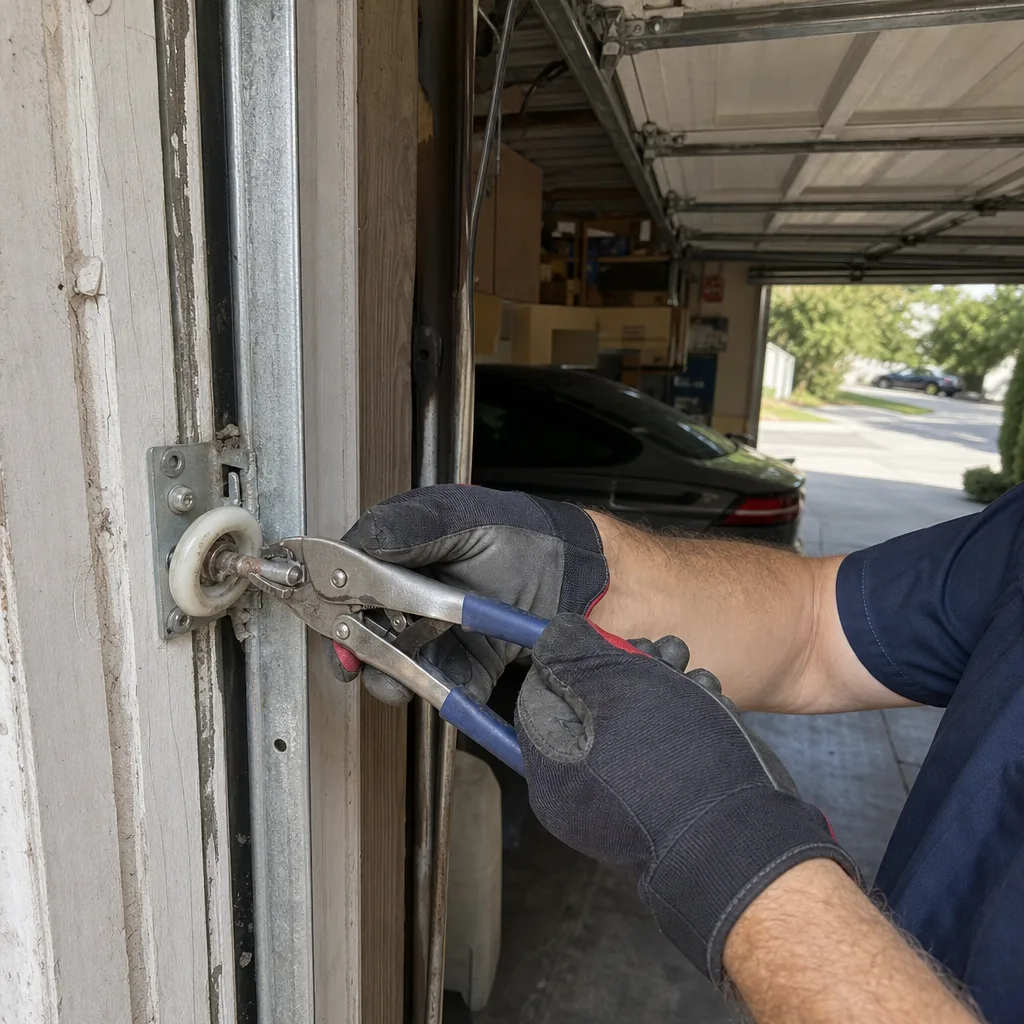
- Raise door to waist height and clamp track with locking pliers.
- Remove old seal by pulling from one end; lubricate channel with silicone spray if stuck.
- Feed new seal from one end, working evenly to avoid twisting.
- Trim excess with utility knife; test door travel to ensure seal does not bind on floor.
Roller Lubrication and Visual Inspection
Nylon rollers need no lubrication. Steel rollers with ball bearings need a drop of lightweight machine oil on the bearing race, not WD-40 (which is a solvent, not a lubricant, and attracts dust). While lubricating, inspect each roller for cracked wheels, bent stems, or wobble in the track. A roller that wobbles is pre-failure. Replace it before it seizes and tears the track.
Keypad and Remote Battery Replacement
LiftMaster and Chamberlain keypads typically use 9-volt batteries; Genie keypads often use AAs. If your keypad works intermittently in Concord’s damp winter mornings, the battery is weak, not the electronics. Replace it before you call for service. Document the PIN before removing power; some models reset to factory default.
Safety Sensor Alignment and Cleaning
The photo-eye sensors near the floor transmit an invisible beam. Misalignment or spider webs cause the door to reverse immediately or refuse to close. Clean lenses with a dry cloth, check that both LEDs are solid (not blinking), and adjust brackets by hand until alignment restores. Do not use tools on the sensor brackets; the plastic strips easily.
Manual Release Operation
Every opener has a red emergency release cord. Pull it to disengage the trolley carriage from the door for manual operation. Practice this when the door is closed, not during a power outage when you’re already stressed. Re-engagement requires raising the door slightly until the trolley clicks back onto the carriage. If you cannot re-engage smoothly, the limit switch may need adjustment, which is not a DIY task.
Track Debris Cleaning
Concord’s valley oak and liquidambar trees drop leaves and seed pods that compact in vertical track sections. Clean with a dry brush or vacuum. Do not lubricate the track; lubricant collects grit and accelerates wear.
Never DIY: Tasks That Carry Injury or Legal Risk
These tasks share one or more of the following: stored mechanical energy that can release unexpectedly, structural load paths where incorrect reassembly causes collapse, or electrical connections that trigger permit and inspection requirements.
Torsion Spring Winding, Unwinding, or Replacement
This is the most dangerous routine task in residential construction. The winding cone on a torsion spring has set screws that grip the spring wire. To adjust or replace, you insert solid steel winding bars into the cone’s cogs, then add or release tension in quarter-turn increments. The bars must be the correct diameter (typically 1/2 inch or 7/16 inch, matching the cone) and must be inserted fully before any set screw is loosened.
The injury mechanism is predictable and repeated: a homeowner uses an adjustable wrench, screwdriver, or pliers instead of winding bars. The tool slips. The cone spins. The spring unwinds instantly. The tool becomes a projectile. The door drops. In 2023, we responded to three such incidents in Concord alone, including one on Treat Boulevard where the homeowner suffered a compound wrist fracture and the door crushed a parked bicycle.
Even “just checking” the spring is hazardous. A spring with a visible gap in the coil is broken and under no tension, but a fatigued spring may appear intact while holding near-maximum torque. Only a technician with winding bars and a calibrated spring gauge can assess safely.
Cable Replacement or Drum Adjustment
The lift cables attach to the bottom brackets and wind around the torsion drum. They are under tension equal to the spring torque. A cable that has jumped its drum or frayed must be addressed by a technician who can secure the door in the open position, release spring tension, and re-tension evenly. Uneven tension causes the door to rise crooked, stressing the track and header.
Bottom Bracket Work
The bottom brackets connect the lift cables to the door. They are under full spring tension at all times. Removing a bottom bracket without first securing the door and releasing tension causes immediate, uncontrolled cable whipping. This is not a “be careful” warning. It is a “do not touch” boundary.
Opener Hardwiring and Electrical Connections
Plug-in opener installation (120V outlet in the ceiling) is homeowner-permissible. Hardwiring into a junction box, installing a dedicated circuit, or connecting to a subpanel is not. California Electrical Code requires permits for any new circuit, and Concord’s building department enforces this for garage door openers because they are motor loads with specific GFCI and disconnect requirements. A homeowner-installed hardwired opener that fails and causes a fire may void your insurance coverage if permits were not pulled.
Track Realignment or Replacement
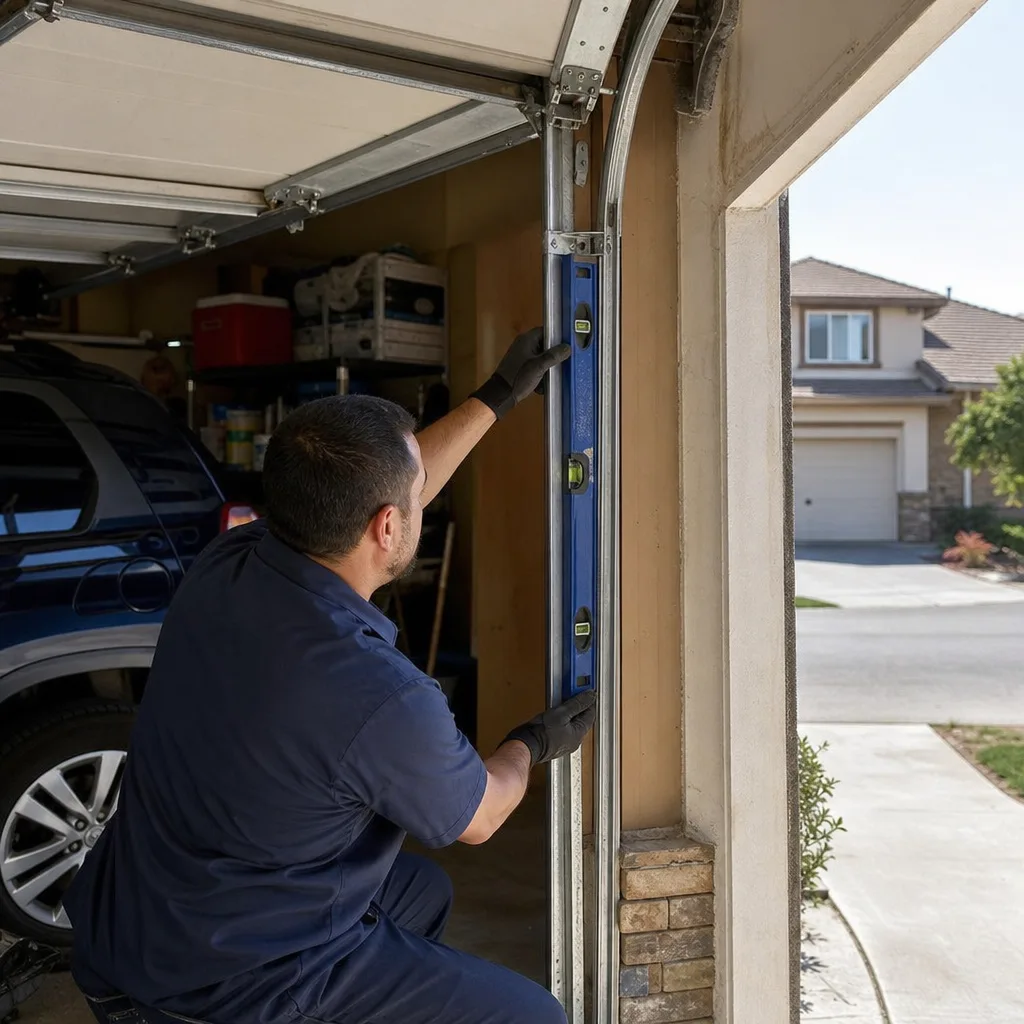
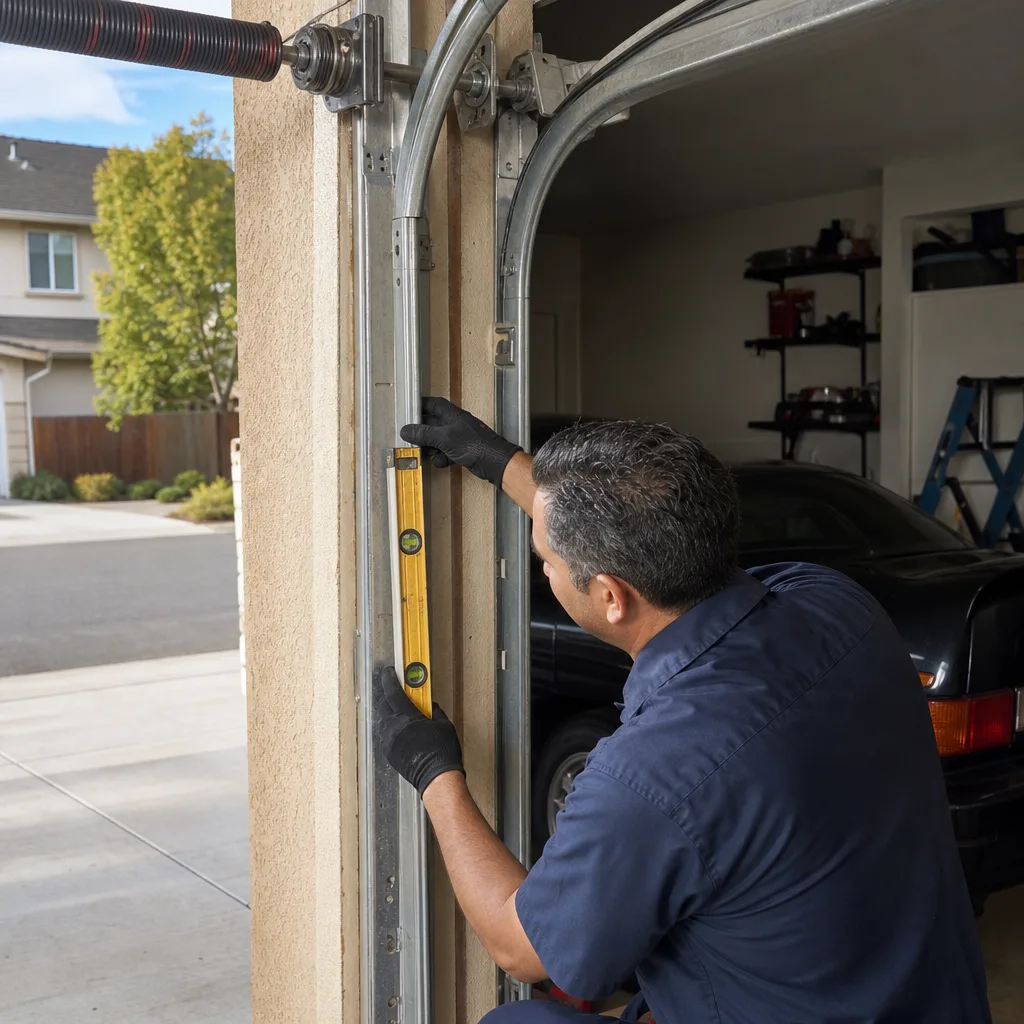
Vertical and horizontal tracks must be parallel within 1/4 inch and plumb within 3/8 inch. “Eyeballing” track alignment causes binding, roller wear, and eventual door derailment. Track replacement requires removing the door from the system, which means managing the full weight without counterbalance assistance.
California Law and Concord Permits: What Homeowners Need to Know
California Business and Professions Code Section 7048 allows unlicensed work on an owner-occupied single-family dwelling, provided the work does not require a building permit and the aggregate value of materials and labor does not exceed $500 per project. This is the legal foundation for homeowner DIY on garage doors. But the exceptions matter more than the permission.
Building permits are required in Concord for:
- Any new electrical circuit, including dedicated circuits for garage door openers
- Structural modifications to the garage header or framing
- Changes to egress requirements (converting a garage door to a pedestrian door, for example)
- Work that alters the fire separation between garage and living space
The permit trigger that surprises most Concord homeowners: replacing a plug-in opener with a hardwired unit, or adding a new outlet specifically for an opener. The work itself is simple. The permit requirement is absolute. Concord’s Community Development Department inspects for proper GFCI protection, disconnect location, and load calculation. An unpermitted installation discovered during a home sale can delay closing.
Another boundary: if you rent the home, even a single-family residence, you cannot legally perform garage door work valued over $500 without a contractor’s license. The owner-occupier exemption is personal and non-transferable.
Finally, liability. A self-modified garage door that injures a visitor, a tenant, or a delivery driver exposes the homeowner to personal injury claims. California’s premises liability standard does not grant immunity for DIY work. If a professional technician would have identified a worn cable or improper spring tension, and you did not, that is discoverable in litigation. The documentation that protects you is a written scope, a flat price agreed in advance, and a photo record of findings. That is why Servo Garage Doors Concord home operates under Clause 4 of The Haven Standard: photograph the failed component before quoting a replacement, so the customer sees what we see.
The Actual DIY Tool Kit (and the Substitutes That Cause Injuries)
Legitimate DIY garage door maintenance requires minimal tools. The problem is not missing tools. It is wrong substitutes used in moments of impatience.
Tools You Actually Need
| Task | Required Tool | Common Dangerous Substitute |
|---|---|---|
| Weather seal replacement | Utility knife, locking pliers | Box cutter with dull blade (slips, cuts hand) |
| Roller lubrication | Lightweight machine oil, rag | WD-40 (attracts grit, dries to residue) |
| Sensor alignment | Hands only | Screwdriver on plastic bracket (strips, requires replacement) |
| Manual release test | None | Pliers on release cord (damages trolley linkage) |
| Track cleaning | Dry brush, vacuum | Compressed air (blows debris into bearings) |
The Winding Bar Problem
Torsion spring work requires solid steel winding bars, typically 18 inches long, inserted fully into the winding cone. The specified diameter is stamped on the cone face. The most common injury we see in Concord involves substituting:
- Adjustable wrenches (slip, no positive engagement)
- Screwdrivers (round shank spins in cone, no torque control)
- Socket extensions (wrong diameter, wedges instead of engages)
- Two smaller bars instead of one correct bar (uneven loading, cone fracture)
A proper winding bar set costs $30. A trip to the emergency room at John Muir Medical Center costs substantially more. The substitute is never worth the savings.
The Real Cost of Getting It Wrong
DIY garage door repair appeals to the rational homeowner who has fixed a toilet, replaced a light fixture, or patched drywall. The cost structure is different. A failed DIY plumbing repair floods a bathroom. A failed DIY garage door repair can fracture bone, destroy a vehicle, or create a liability exposure that persists for years.
Direct Costs We Document
In 18,000+ jobs since 2015, we’ve catalogued the aftermath of DIY attempts. The pattern is consistent:
- Undo and redo: A homeowner replaces rollers with incorrect stem length, binding the track. Service call to remove, source correct rollers, and reinstall: $180-$260.
- Component damage from wrong tools: A stripped winding cone from screwdriver use requires drum replacement, not just spring: adds $140-$200.
- Opener logic board: Crossed low-voltage wiring during sensor replacement fries the board on a Craftsman or Raynor unit: $220-$380 for board plus reprogramming.
- Track replacement: Pry-bar “adjustment” bends vertical track beyond repair: $340-$520 for track pair, hardware, and realignment.
The Liability Gap
Homeowner’s insurance covers accidental damage. It does not cover damage caused by work performed without required permits, work outside the owner’s competency, or modifications that create known hazards. If you adjust spring tension yourself and the door later drops on a visitor, your insurer may deny the claim based on your assumption of a professional task. The documentation that prevents this is a written scope and flat price from a licensed technician, with a photo record of the door’s condition before and after work.
The Time Cost
Concord’s commute patterns mean most garage door failures happen at 6:47 AM or 6:15 PM. A DIY attempt that fails extends the problem across multiple days. A professional with common parts on the truck resolves most issues in one visit. Our live phone coverage answers at those hours because we know the timing.
How to Call a Technician After You’ve Already Started
There is no shame in stopping. The dangerous call is the one where the homeowner, embarrassed, conceals what they’ve done and the technician discovers partial disassembly with no documentation.
What to Disclose
- Exactly what you touched and in what sequence. “I removed the bottom bracket bolts” is critical information. “I adjusted something” is not.
- Whether spring tension was released, even partially. A door that feels “lighter” after your adjustment may have a dangerously unbalanced spring.
- What tools were used. If you used a screwdriver in a winding cone, we need to inspect the cone for damage before any further tensioning.
- Whether the opener was unplugged or the manual release pulled. This affects our lockout procedure on arrival.
What Not to Do in the Meantime
- Do not re-engage the opener if the door feels unbalanced. An opener straining against improper spring tension burns out the motor or strips the nylon gear.
- Do not leave the door partially open. A door with compromised counterbalance can drop without warning.
- Do not apply power to an opener with crossed wiring. The logic board is often salvageable if power has not been applied; once energized, damage may be irreversible.
How Partial Disassembly Affects Diagnostic Starting Point
A fully assembled door gives us baseline measurements: spring wire diameter, coil count, drum cable position, track plumb. Partial disassembly removes those baselines. We may need to reassemble your work to assess, then disassemble again to repair. This adds time but is necessary for safety. The technician will document the starting condition photographically per Clause 4 of The Haven Standard, so you see what we found.
If you are in this situation now, garage door repair in Concord from Servo includes a free second opinion on any written estimate you’ve already received. Bring the paperwork. We will quote our scope in writing before any work begins, per Clause 1.
When to Call a Professional
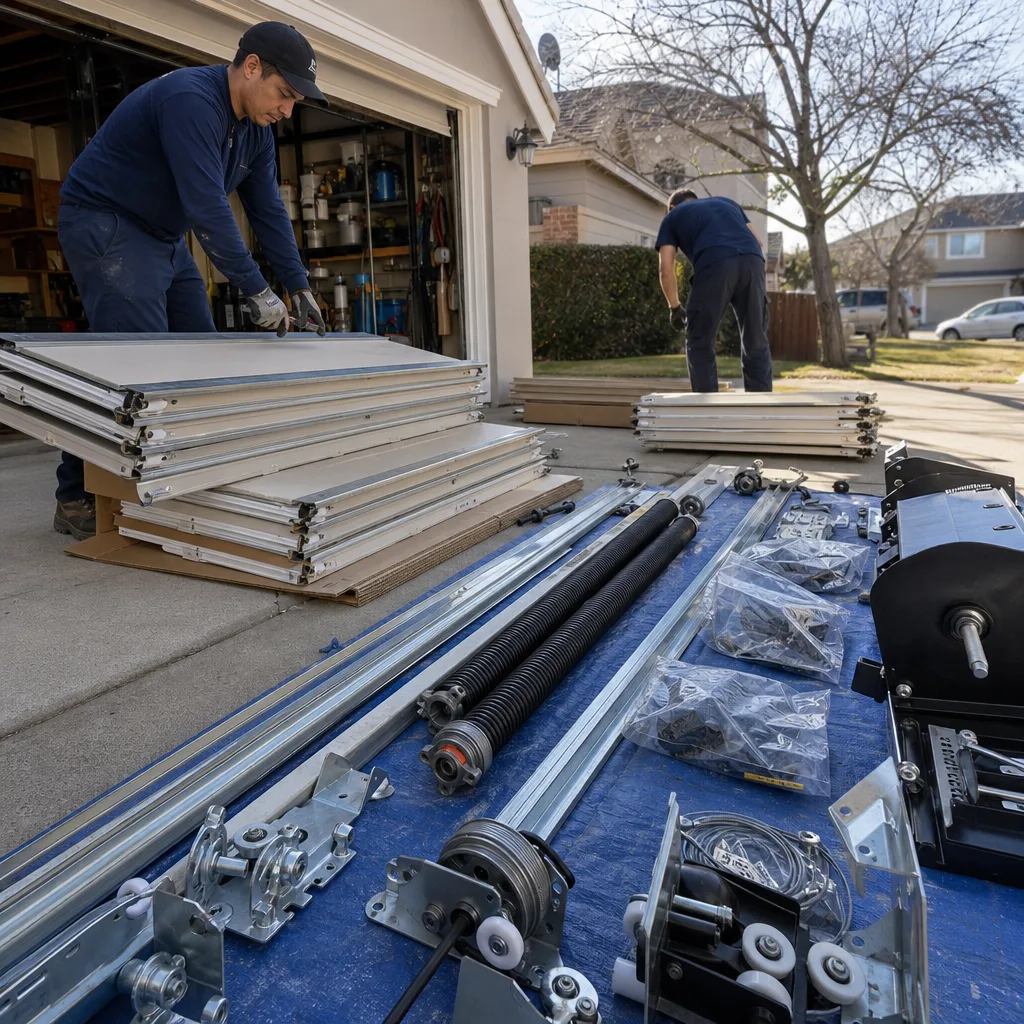
Call when the task involves stored energy, structural load, or electrical permits. Call when you’ve attempted a repair and the door now behaves differently. Call when you need documentation for a home sale, insurance claim, or warranty dispute. Call when the problem is intermittent, because intermittent garage door failures often precede catastrophic ones.
Servo Garage Doors Concord offers free estimates in Concord. A technician arrives with a documented inspection process, a flat written price before any work starts, and a photo record of findings delivered to you. Calls are answered by a live person, 24/7, including holidays. Emergency calls receive a named technician and an on-the-way text, not a callback window. Reach us at (925) 940-6359.
Common Mistakes to Avoid
- Using WD-40 on rollers or springs. It is a solvent and water displacer, not a lubricant. It strips existing grease and attracts Concord’s fine valley dust, forming abrasive paste.
- Ignoring a “heavy” door. A door that requires shoulder effort to lift manually indicates spring fatigue. Operating the opener under this load strips the nylon drive gear in LiftMaster and Chamberlain units within weeks.
- Replacing one spring on a two-spring system. Springs age in pairs. A new spring paired with a fatigued spring creates unequal torque, causing the door to rise crooked and damaging the cables and drums.
- Adjusting the force setting instead of fixing the underlying problem. The opener’s force dials compensate for weak springs or binding tracks. Cranking force to “make it work” overrides safety reverse and creates crush hazard.
- Installing an off-brand remote without verifying frequency. Modern openers use rolling-code encryption. An incompatible remote can desynchronize the receiver, requiring a full logic board reset.
- Neglecting the photo-eye test. Federal law requires automatic reverse on contact and non-contact (beam interruption). Testing with a 2×4 is not enough; test the photo-eye monthly by breaking the beam with your foot during closing.
- Assuming Concord’s mild climate eliminates maintenance. Summer heat degrades rubber seals and lithium grease. Winter fog corrodes steel rollers and track. Seasonal inspection prevents failure.
Frequently Asked Questions
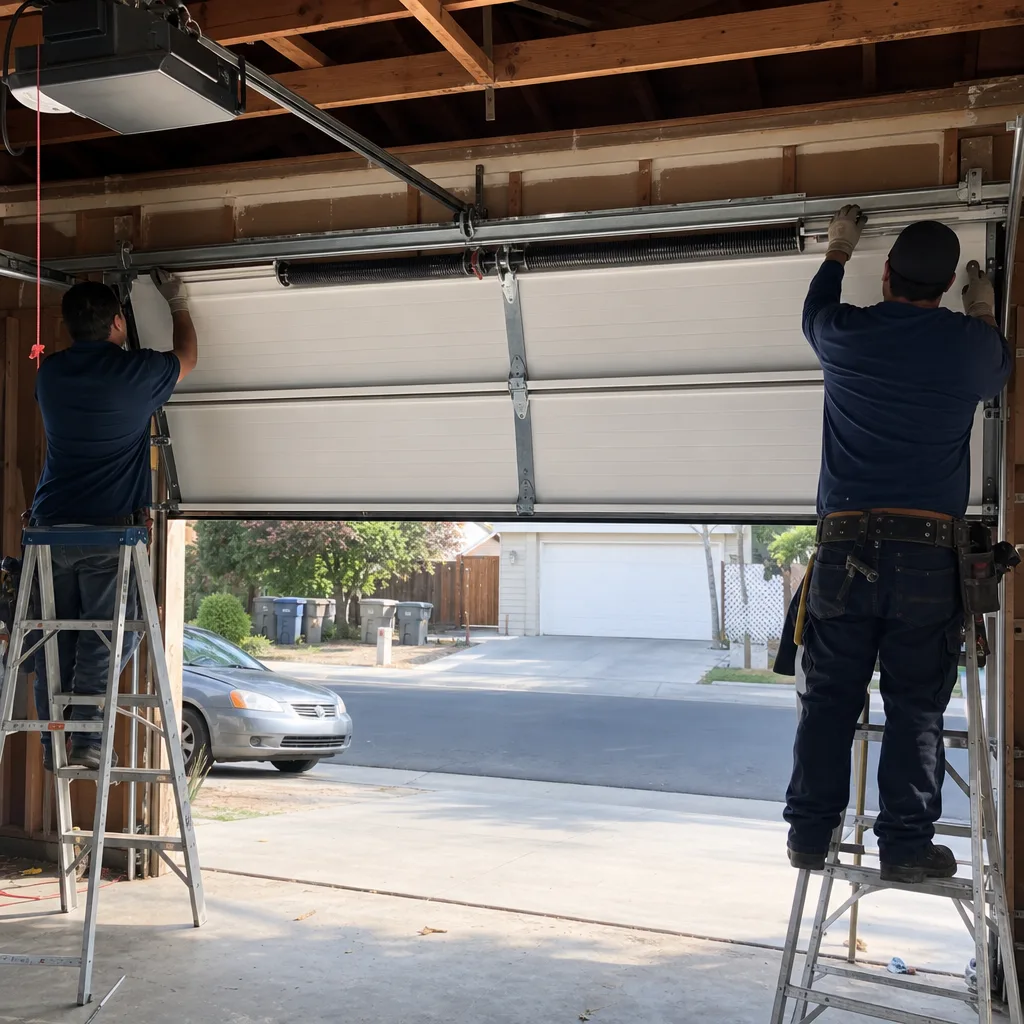
Most common repairs in Concord range from $180 for roller replacement to $340 for torsion spring replacement, with opener repairs typically between $220 and $380 depending on whether the logic board, trolley carriage, or limit switch is involved; see our Garage Door Cost Breakdown: The Concord Homeowner’s Reference for 2026 for full pricing context. We provide a flat, written price before any work starts, per Clause 1 of The Haven Standard. Call (925) 940-6359 for an exact quote - estimates are free.
Yes, if you are plugging into an existing 120V outlet. No, if you are hardwiring into a junction box or installing a new circuit, which triggers a permit requirement from Concord’s Community Development Department regardless of who performs the work. A permit ensures GFCI protection and proper disconnect location.
Concord’s winter fog and temperature drops cause steel tracks to contract slightly and old grease to harden. Lithium-based lubricants thicken below 40°F. The fix is seasonal maintenance: clean tracks and apply low-temperature grease to steel roller bearings in November, before the cold pattern sets in.
No. Our written price and written scope are delivered before any work begins. If we discover additional issues during inspection, we document them photographically per Clause 4 and quote separately. You approve or decline each scope item. No surprises, no “while I’m here” pressure. This is the core of The Haven Standard.
Yes. Our trucks stock torsion springs in common wire sizes and lengths for Concord’s prevalent door configurations, plus rollers, cables, drums, and logic boards for LiftMaster, Chamberlain, Genie, and other major brands. Most repairs are completed in one visit. Call (925) 940-6359 to confirm availability for your specific model.
Warning signs include: the door feels heavier to lift manually, the opener strains or stalls mid-travel, you see a gap in the torsion spring coil, or the door rises unevenly with one side lagging. In Concord’s older neighborhoods like Dana Estates and Holbrook Heights, original springs from the 1970s and 1980s are well past their 10,000-cycle design life. A cycle is one open-close. Two cycles daily equals roughly 14 years. If your springs are original to a pre-2000 home, they are living on borrowed time.
The Bottom Line
The DIY-vs-professional question is not about your competence. It is about the physics of stored energy, the boundaries of California law, and the documentation that protects you when something goes wrong. Weather seals, roller lubrication, sensor cleaning, and battery swaps are homeowner-appropriate. Torsion springs, cables under tension, bottom brackets, and hardwired electrical connections are not. The cost of a DIY attempt gone wrong typically exceeds the original professional repair by 40 to 100 percent, and the liability exposure is unquantifiable. When in doubt, stop, document what you’ve done, and call a technician who will quote a flat price in writing before touching anything. That is Clause 1. That is how we work. That is why we photograph what we find, per Clause 4, so you see the evidence before you decide.
Written by Marcus Deller, Owner at Servo Garage Doors Concord, serving Concord since 2015.