
Last updated September 21, 2026
Full 25-point door and opener safety check with every visit - springs, cables, rollers, tracks, and your LiftMaster or Chamberlain opener included
You get a price before we start. It does not change when the truck arrives.
 Before
 After
After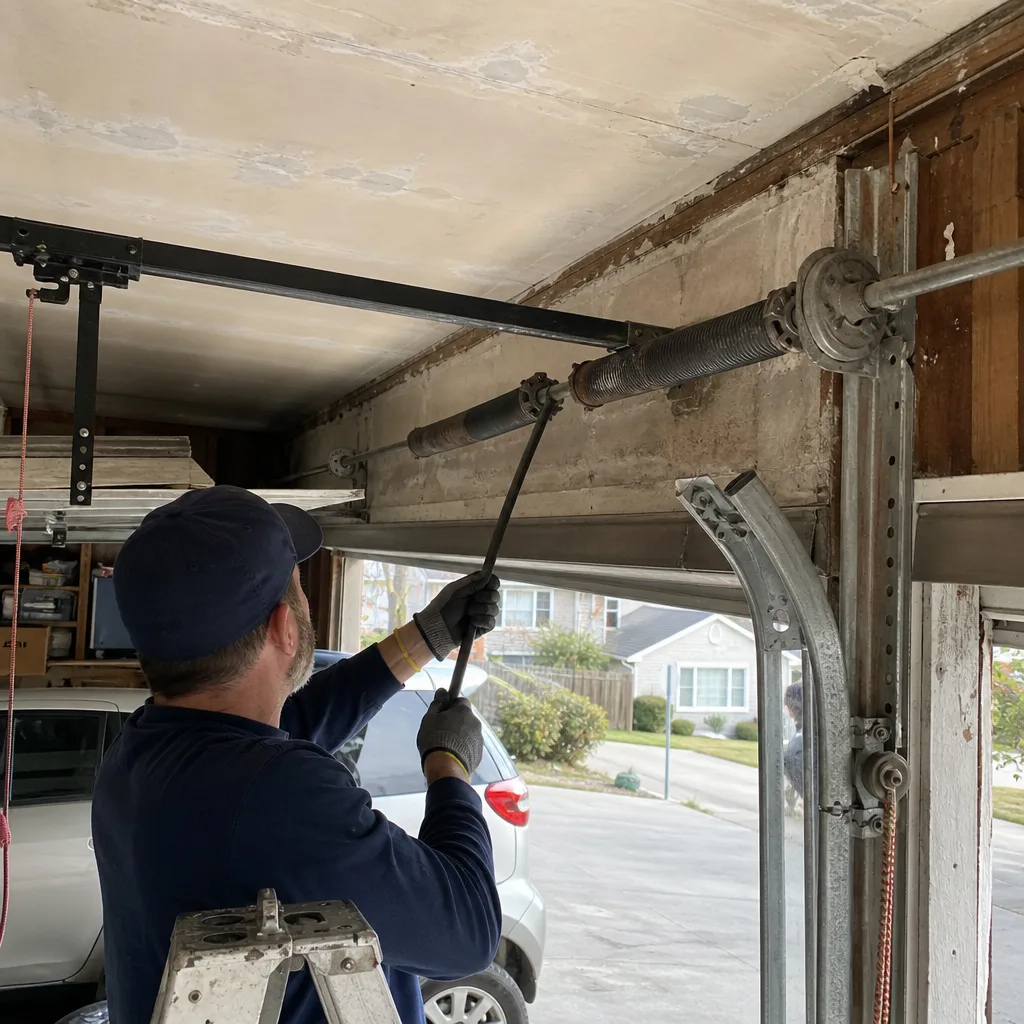 Before
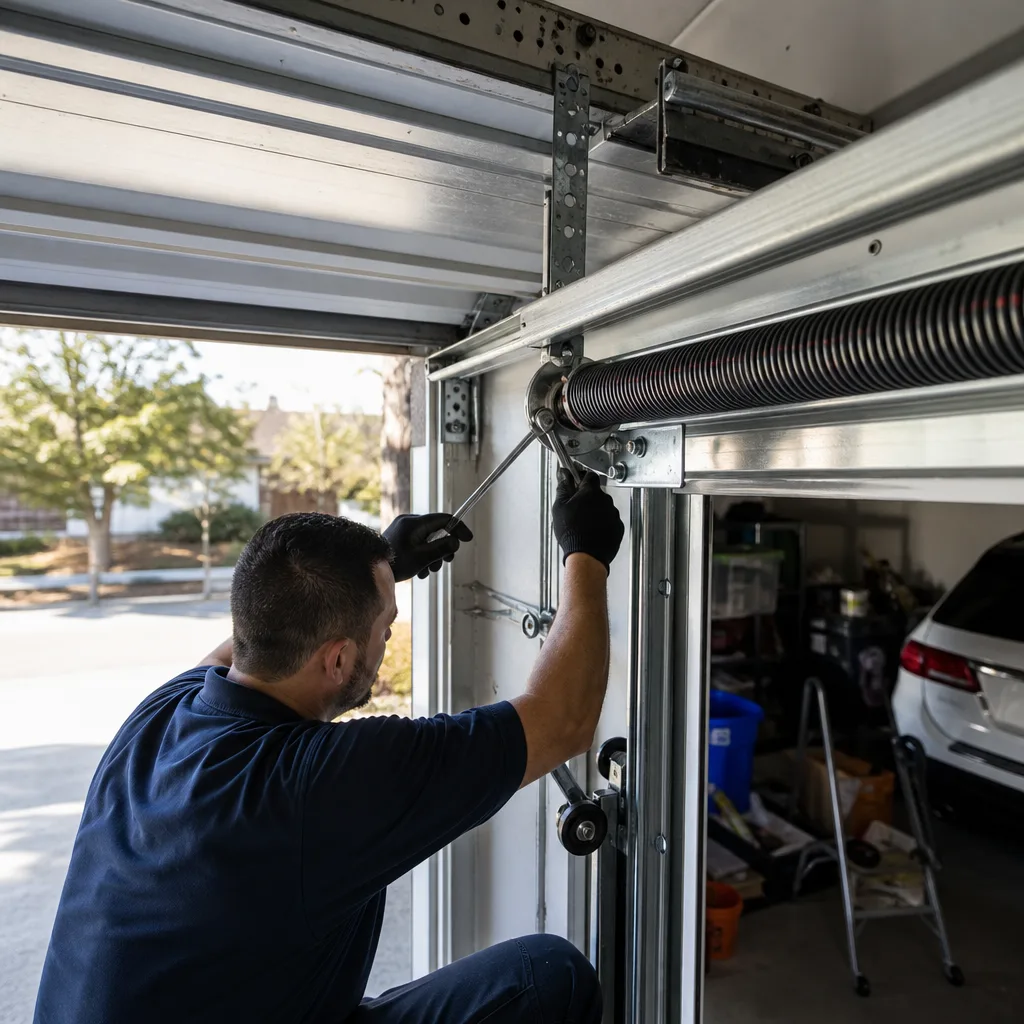 After
After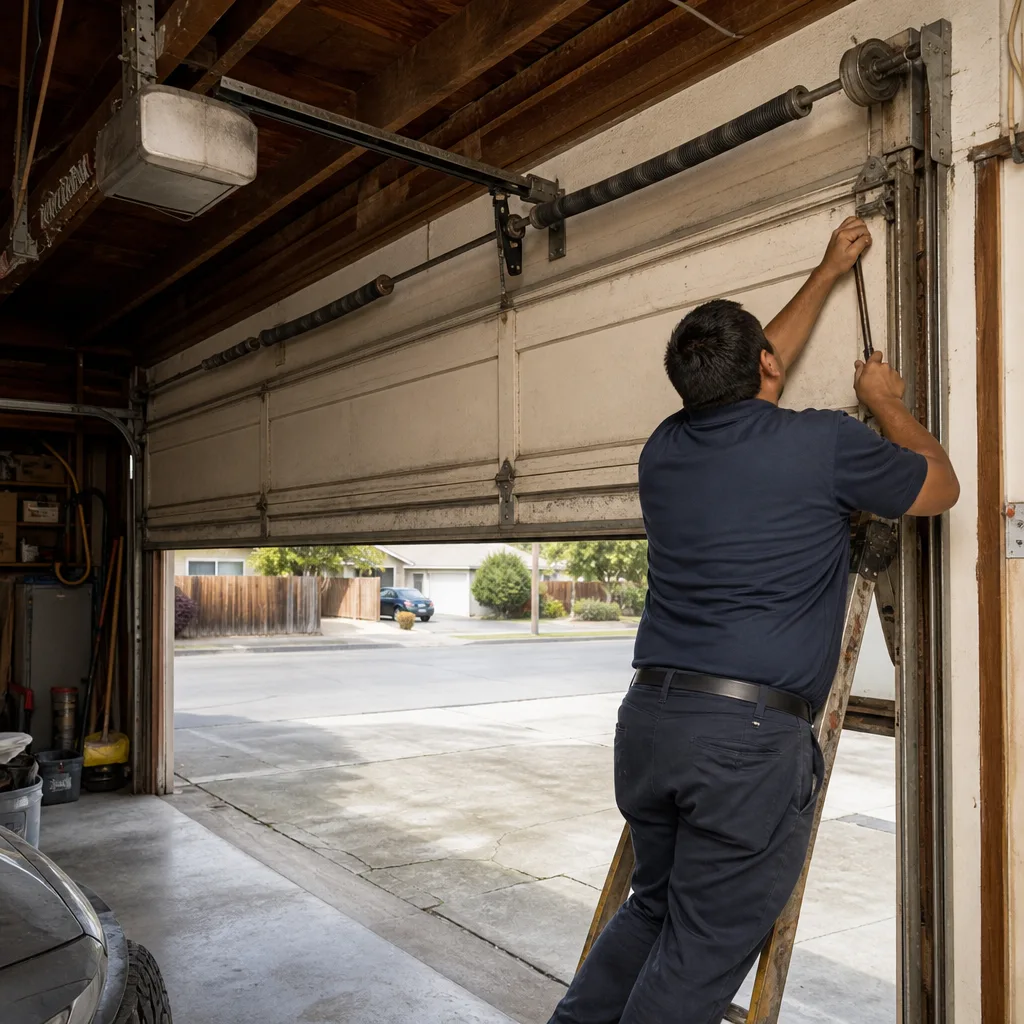 Before
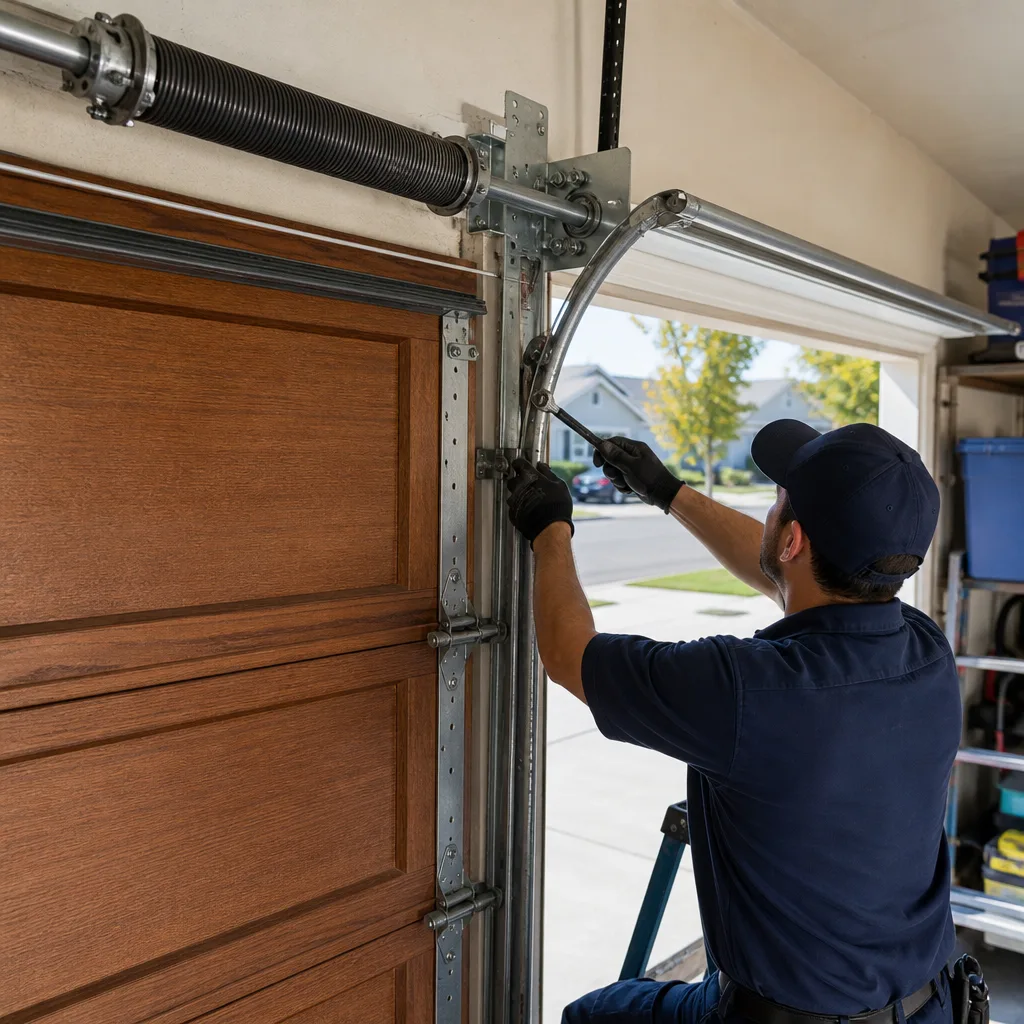 After
AfterGarage Door Repair Maintenance Checklist for Concord Homeowners
Most printable maintenance checklists tell you to “lubricate moving parts.” Not which lubricant. Not which parts. Not what happens if you use WD-40 on a torsion spring. That omission costs people money. We’ve been called to Concord homes where a $12 can of the wrong spray turned a $180 roller replacement into a $680 spring-and-cable job because the lubricant stripped the protective coating and accelerated corrosion. This guide pairs every inspection item with the specific part implicated, the Garage Door Repair category it falls into, and a dollar range so you know whether you’re looking at a $30 fix or a $400 conversation before anyone crosses your threshold.
Quick Answer
Concord homeowners should perform monthly visual inspections, biannual hardware tightening and lubrication, and annual balance and safety-reversal tests. Tasks break into two categories: homeowner-safe work (visual checks, weather-seal replacement, track cleaning) and technician-required work (spring tension adjustment, cable replacement, opener force-limit calibration). Expect to spend $0-$75 annually on DIY maintenance supplies, with professional tune-ups running $120-$220 in the Concord market.
Table of Contents
- How Concord’s Climate Affects Your Garage Door
- Monthly Maintenance Checklist
- Biannual Maintenance Checklist
- Annual Maintenance Checklist
- Homeowner-Safe Tasks vs. Technician-Required Work
- Documenting Your Maintenance History
- What Each Problem Costs to Fix in Concord
- Common Mistakes to Avoid
- When to Call a Professional
- Frequently Asked Questions
 Before
 After
AfterHow Concord’s Climate Affects Your Garage Door
Concord sits in an unusual pocket of Contra Costa County where summer inland heat meets marine-layer influence pushing through the Carquinez Strait. That combination creates specific wear patterns we’ve documented across 18,000+ garage doors since 2015.
Temperature swings between 45°F morning lows and 95°F afternoon peaks in summer cause steel torsion springs to cycle through expansion and contraction hundreds of times per season. Each cycle fatigues the wire. In the Concord market, we typically see torsion springs rated for 10,000 cycles fail between 7,500 and 8,500 cycles because the thermal stress accelerates metal fatigue. A standard torsion spring replacement runs $280-$420 in Concord, with high-cycle springs (25,000-50,000 cycles) running $380-$580.
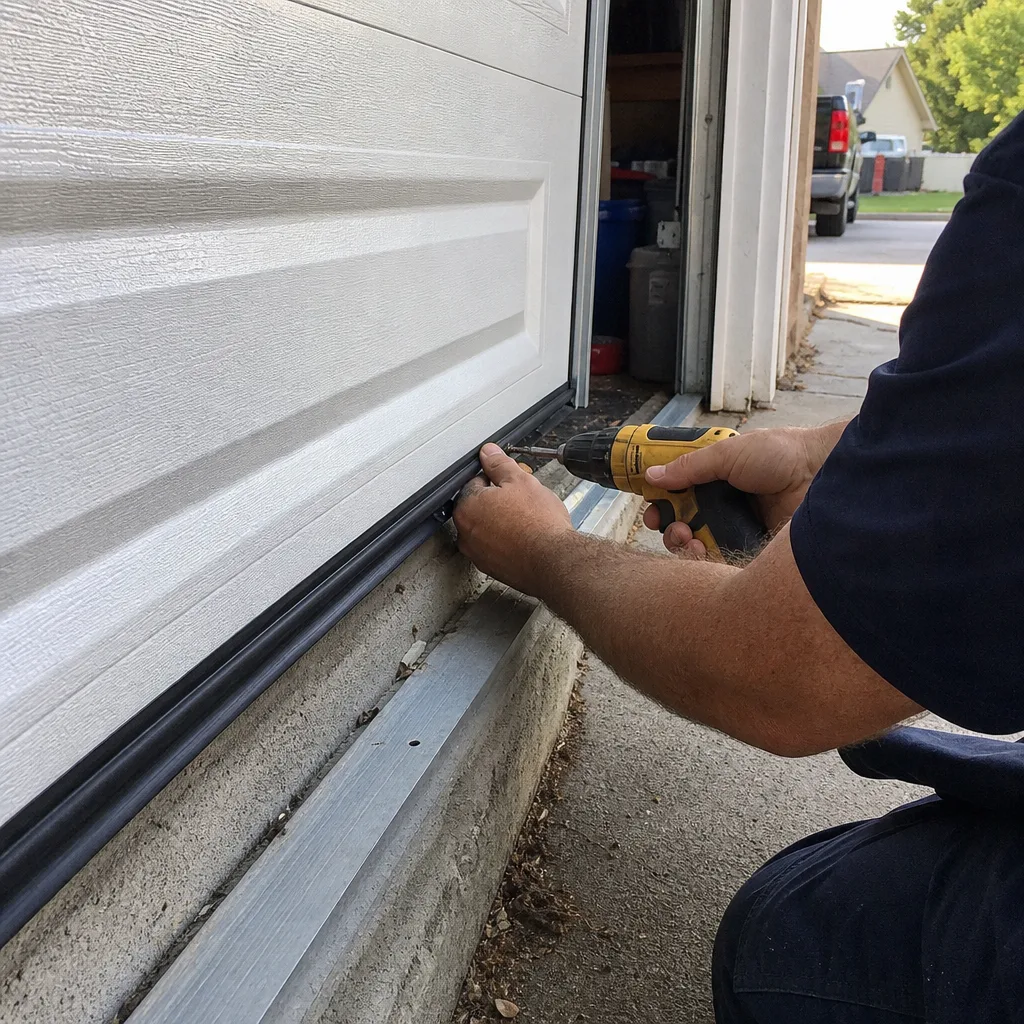
Marine-layer humidity, particularly in neighborhoods west of Treat Boulevard and near the Concord Naval Weapons Station perimeter, corrodes bottom weather seals and galvanized hardware faster than inland Livermore or Tracy. We’ve pulled bottom seals from Clayton Valley homes that showed complete vinyl degradation in 18 months where the manufacturer rated them for 5 years. The replacement part costs $25-$45; installation takes 20 minutes with a utility knife and flat-head screwdriver.
Winter rainfall concentrated in November through March washes road salt and de-icing compounds into Concord driveways. That residue accumulates in vertical track lower sections and crystallizes, accelerating roller wear and creating flat spots on nylon rollers that manifest as a rhythmic thumping at the same point in every open-close cycle. Nylon roller replacement runs $12-$18 per roller in materials, with full-roller swaps on a standard 16-foot door running $140-$220 installed.
Key climate takeaway: Concord homeowners should inspect bottom seals and lower track sections quarterly, not annually, and should budget for spring replacement closer to year 7 than year 10 on standard-cycle springs.
Monthly Maintenance Checklist
These tasks take 10 minutes and require no tools beyond a flashlight and your phone’s camera. The goal is spotting change, not fixing it.
Visual Inspection of All Moving Parts
With the door closed, stand inside the garage and scan every visible component in a systematic pattern: bottom to top, left to right.
- Bottom weather seal: Look for cracks, compression flattening, or gaps where light shows through. In Concord’s humidity zones, also check for white powdery oxidation on the aluminum retainer channel. A degraded seal lets water pool at the door base and rust out the bottom section.
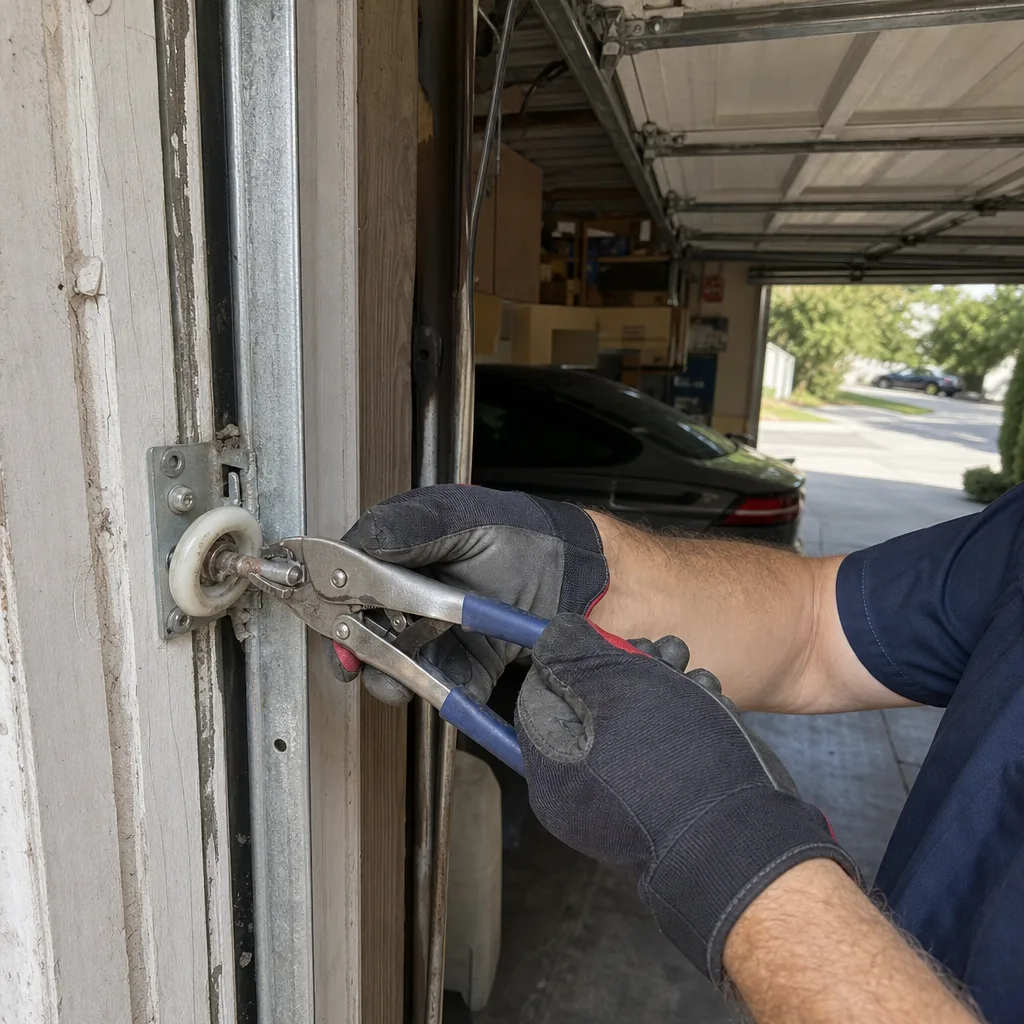
- Rollers: Nylon rollers should show intact wheels without flat spots, cracks, or wobble in the stem. Steel rollers should show intact bearings without rust weeping from the race. Worn rollers stress the opener’s trolley carriage and can strip nylon drive gears in chain-drive openers.
- Hinges: Check for cracks at the bend points, particularly the #1 hinge at the bottom section where it carries the full door weight during the transition from vertical to horizontal. A cracked hinge allows section misalignment that binds in the track.
- Cables: Look for fraying, bird-caging (strands pushing outward from the cable body), or rust discoloration. The lift cables run from the bottom bracket to the drum at the top of the door; the retaining cable (if present) runs through the extension spring. Any fraying means replacement, not repair. Cable replacement runs $180-$280 in Concord.
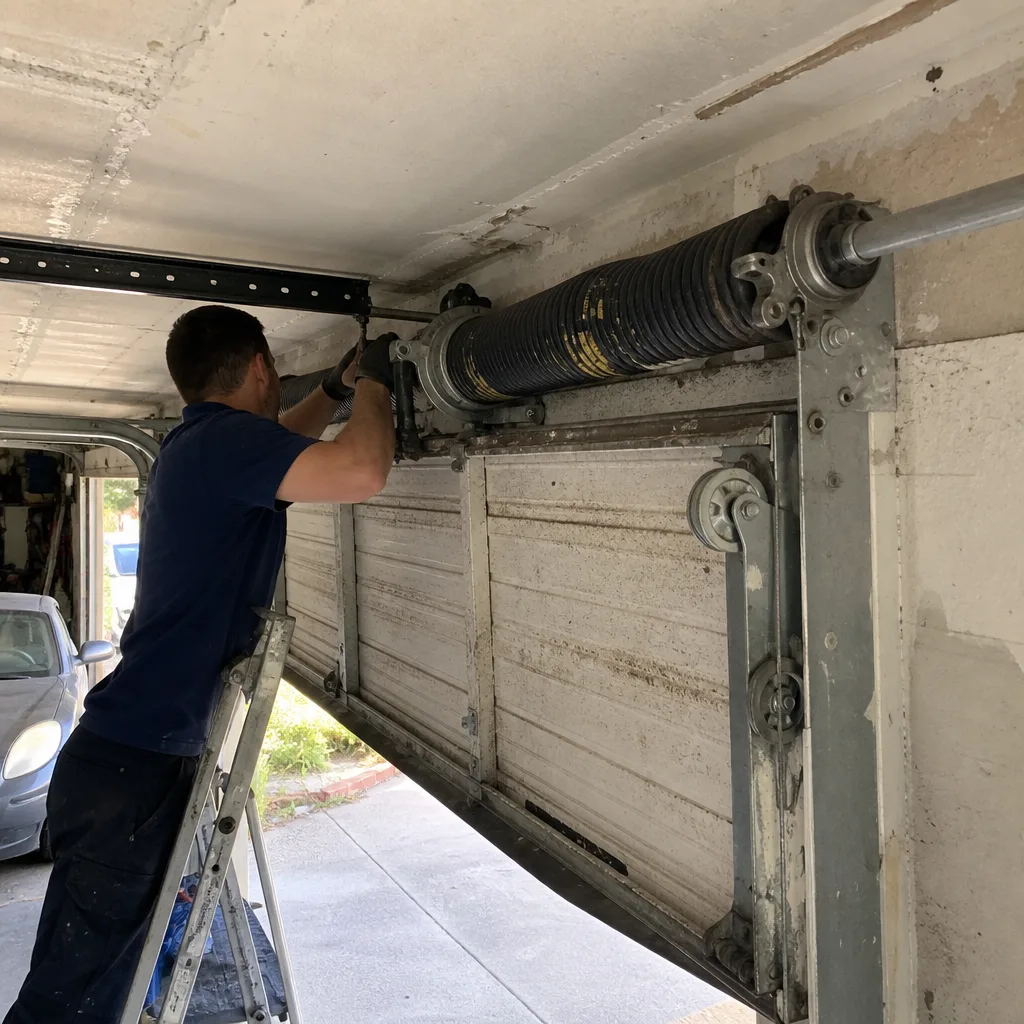
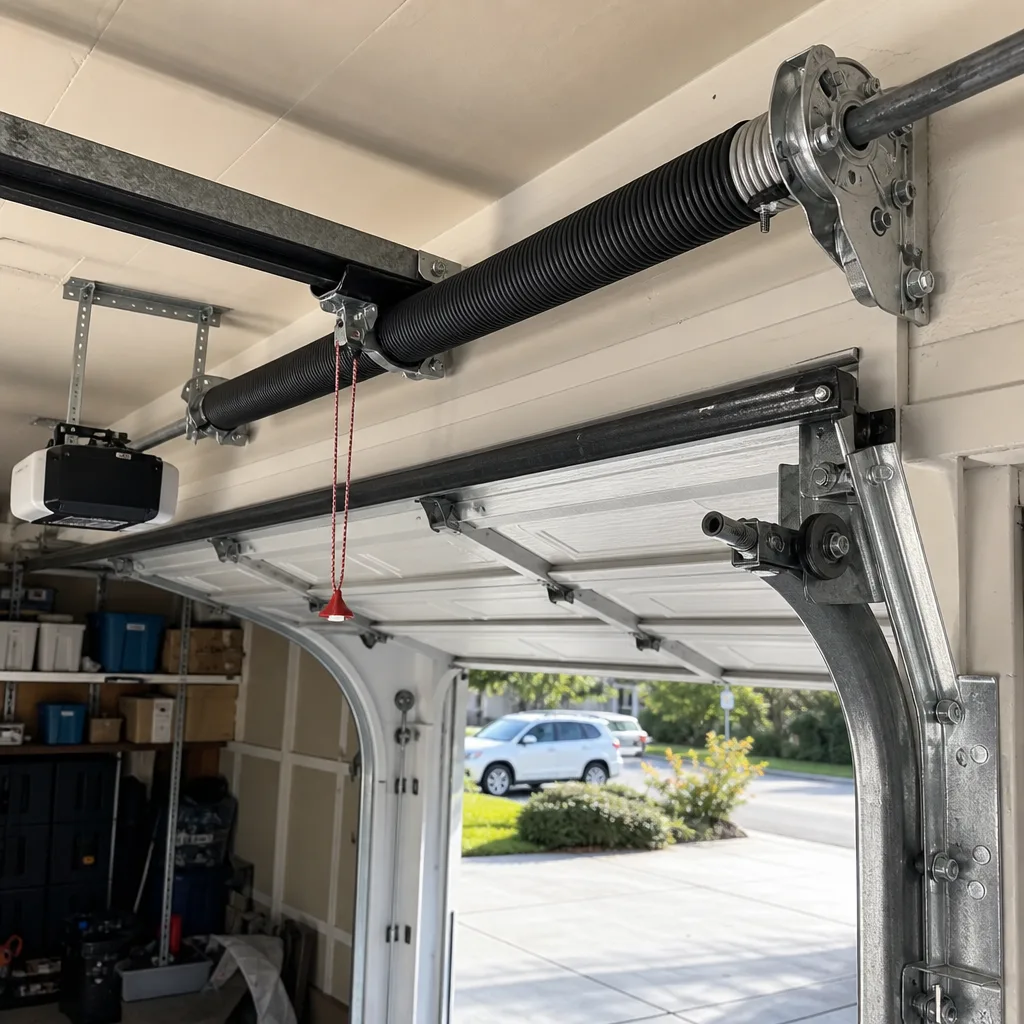
- Springs: Torsion springs (mounted horizontally above the door) should show intact coils without gaps or rust scaling. Extension springs (mounted vertically along the horizontal tracks) should show intact coils and intact safety cables running through their centers. Do not touch or test spring tension yourself.
Listen Test
Run the door through one complete cycle. Note any new sounds: grinding (opener gear wear or dry chain), squealing (dry rollers or hinges), rhythmic thumping (flat-spotted roller or bent track), or loud bang at startup (failing spring). Record a 10-second video on your phone. If you call a technician, play it before they dispatch. It often eliminates a diagnostic visit charge.
Balance Check (Visual Only)
Watch the door travel. It should move at a consistent speed without sagging at either side. A door that drops faster on one side indicates uneven spring tension or a failing cable drum. Mark it for the annual professional check; do not attempt adjustment.
Biannual Maintenance Checklist
These tasks require basic tools and 30-45 minutes. Perform them in April (post-rain season) and October (pre-rain season) to align with Concord’s weather pattern.
Tools and Supplies
- Silicone-based garage door lubricant (not WD-40 - see Common Mistakes)
- 7/16-inch and 1/2-inch wrenches or socket set
- Clean rag
- Stiff brush or old toothbrush
- Level
Step-by-Step Procedure
- Disconnect the opener. Pull the red emergency release cord to put the door in manual mode. This prevents accidental activation during work and lets you feel the door’s true weight and balance.
- Tighten all hardware. Work methodically: bottom brackets, hinges, track brackets, opener rail supports, and opener header bracket. Do not overtighten; snug plus a quarter-turn is sufficient. Stripped lag bolts in the header are a common and avoidable service call.
- Clean the tracks. Run the stiff brush through both vertical and horizontal track sections to dislodge grit, spider webs, and crystallized residue. Wipe with a damp rag. Do not lubricate the tracks; lubricant attracts debris and creates a grinding paste.
- Lubricate moving parts. Apply silicone spray to roller bearings (not the wheel tread), hinge pivot points, and torsion spring coils. One light pass is sufficient. For chain-drive openers, lubricate the chain per manufacturer spec; for belt drives, inspect the belt for cracking but do not lubricate.
- Inspect and clear photo eyes. The safety sensors sit 4-6 inches above the floor on both vertical tracks. Clean lenses with a dry cloth, check alignment (both LED indicators should glow steady, not flicker), and clear any stored items that might interrupt the beam. Misaligned photo eyes are the #1 cause of “door won’t close” calls in Concord; the fix takes 30 seconds if you know to look.
- Test manual operation. Lift the door to waist height and release. A properly balanced door should hold position or drift slowly. If it drops hard or shoots upward, the spring tension is out of spec. Note it for professional service.
- Reconnect the opener. Re-engage the trolley carriage and run one test cycle.
Annual Maintenance Checklist
The annual check validates safety systems and structural integrity. Some of these tests are required by California Building Code and manufacturer warranty terms.
Force Setting Test
With the door traveling downward, apply firm upward pressure on the bottom section with a 2×4 or your hand at the center. The door should reverse within 2 seconds of contact. If it doesn’t, the opener’s down-force limit is out of spec. This is not a homeowner adjustment on modern openers; the logic board stores force values digitally, and recalibration requires manufacturer-specific procedure. Opener force-limit service runs $120-$180 in Concord.
Auto-Reverse Test
Place a 1-1/2 inch high object (a 2×4 on its side) centered in the door path. The door should reverse on contact. If it doesn’t, the photo eye alignment or opener sensitivity requires service. This test is mandated by federal safety standard UL 325.
Balance Test (Measured)
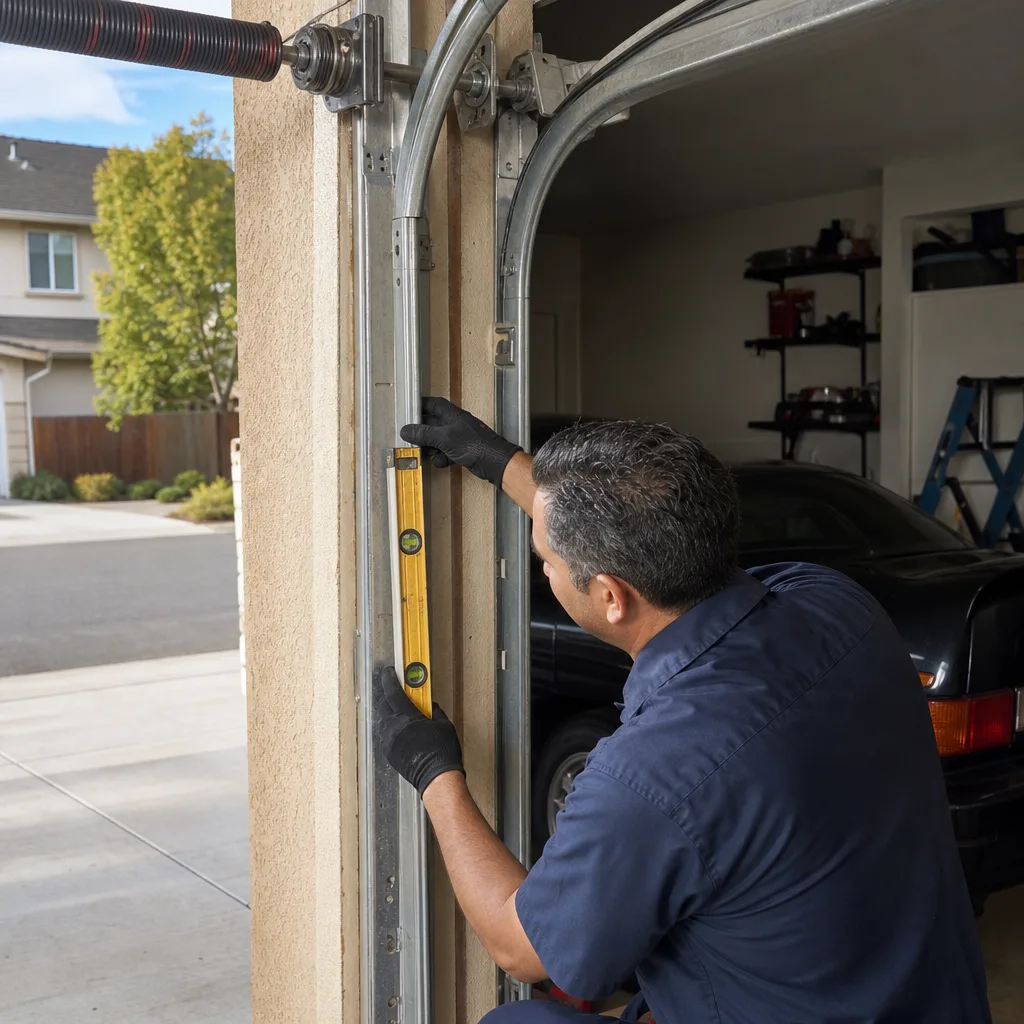
Disconnect the opener and lift the door manually to the halfway point. A balanced door should hold within 12 inches of that position. If it falls or rises more than that, spring tension is out of spec by more than 5%, which accelerates opener wear and creates a safety hazard if the opener fails. Document the result with a photo showing the door position and a level reading.
Full Hardware Inspection
Remove and inspect one roller from the top section to check bearing condition. Inspect the cable drums for wear grooves where the cable seats. Check the opener rail for deflection when the door is at the fully open position; sagging indicates loose header mounting or rail joint failure. These are advanced observations that inform whether you need a tune-up or a component replacement conversation.
Homeowner-Safe Tasks vs. Technician-Required Work
The line is not arbitrary. It’s drawn by physics, California contractor law, and insurance liability.
Homeowner-Safe Tasks
- Visual inspection of all components
- Photo eye cleaning and alignment verification
- Track cleaning and debris removal
- Weather seal replacement (bottom, sides, and top)
- Remote battery replacement and keypad code changes
- Opener light bulb replacement (LED only; never exceed wattage rating)
- Lubrication of accessible pivot points with silicone spray
These tasks carry no stored energy risk and require no specialized tools. If you can do it with the door stationary and your hands more than 24 inches from any spring, cable, or drum, it’s generally homeowner-safe.
Technician-Required Work
- Torsion spring adjustment or replacement: These springs store 1,000+ foot-pounds of torque. Winding cone failure or improper bar insertion causes severe injury or death. California Business and Professions Code Section 7159 requires a C-61/D-49 license for this work.
- Cable replacement: Lift cables are under full spring tension when the door is closed. A slipped cable whips with enough force to lacerate.
- Bottom bracket replacement: The bottom bracket attaches directly to the lift cable. Even with the door open, improper handling can release cable tension.
- Opener force-limit calibration: Modern units require manufacturer-specific software access. Incorrect calibration voids warranty and creates liability if the door injures someone.
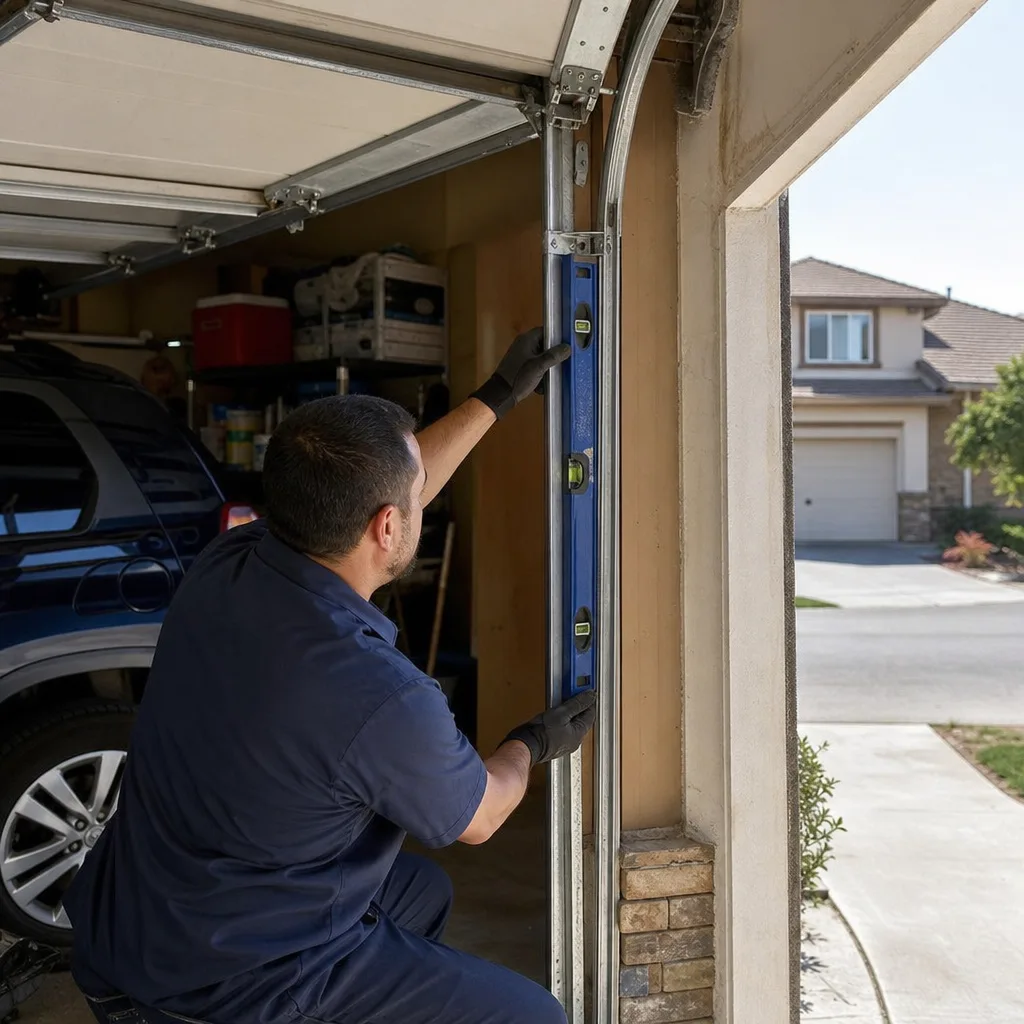
- Track realignment: Vertical track plumb and horizontal track level must meet manufacturer tolerance (typically 1/4 inch over 10 feet). Improper alignment causes binding, roller failure, and door derailment.
We’ve responded to Garage Door Repair in Concord calls where a homeowner’s track adjustment attempt turned a $140 roller job into a $680 section replacement after the door jumped the track and folded a middle panel. The documentation of that damage becomes part of the property record if you sell.
Documenting Your Maintenance History
A maintenance log protects you from scope inflation and supports warranty claims. We’ve seen competitors attribute a spring failure to “deferred maintenance” and upsell a full hardware replacement when the spring was simply at end of rated cycle life. Your documentation changes that conversation.
What to Record
For each inspection, log:
- Date and door approximate cycle count (estimate 3-5 cycles per day for typical use)
- Findings with photos: wide shot of full door, close-ups of any wear or damage
- Any sounds or behavior changes, with video if possible
- Tasks performed and products used (brand and type of lubricant, for instance)
- Professional service dates, technician name, and scope of work
Storage Format
A cloud folder dated by inspection is sufficient. The key is accessibility: if a technician claims “these rollers haven’t been lubricated in years,” you can pull up your October log showing silicone application and the batch photo of roller condition. At Servo Garage Doors Concord home, we provide a documented photo record on every visit precisely because evidence prevents disputes. Your own log extends that protection between professional visits.
For Concord homeowners in neighborhoods with HOA maintenance requirements, such as the condos near Todos Santos Plaza or the newer developments off Port Chicago Highway, this documentation also satisfies annual compliance reporting without a separate inspection fee.
What Each Problem Costs to Fix in Concord
These ranges reflect Concord’s market as of 2024-2025, including parts and labor. They assume standard 16×7 steel non-insulated or insulated doors, the most common configuration in Concord’s 1980-2010 housing stock.
| Problem Identified | Repair Category | Concord Price Range |
|---|---|---|
| Worn nylon roller (single) | Hardware replacement | $12-$18 part; $140-$220 full set installed |
| Cracked hinge (#1-#4) | Hardware replacement | $15-$25 part; $120-$180 full set installed |
| Frayed lift cable | Cable replacement (technician-required) | $180-$280 |
| Broken torsion spring (standard cycle) | Spring replacement (technician-required) | $280-$420 |
| Broken torsion spring (high cycle) | Spring replacement (technician-required) | $380-$580 |
| Opener gear or trolley failure | Opener repair | $180-$340 |
| Opener replacement (1/2 HP chain drive) | Opener installation | $380-$520 |
| Opener replacement (3/4 HP belt drive with WiFi) | Opener installation | $520-$720 |
| Bottom weather seal replacement | Homeowner DIY or pro install | $25-$45 part; $80-$120 installed |
| Section dent or fold (steel, single section) | Section replacement | $280-$450 |
| Full door replacement (steel, insulated) | Door installation | $1,200-$2,400 |
| Annual professional tune-up | Preventive maintenance | $120-$220 |
These are flat, written prices quoted before work starts, per Clause 1 of The Haven Standard. No Concord homeowner should accept a “time and materials” garage door repair. The parts are standard; the labor is predictable; the price should be fixed.
For Garage Door Opener Repair & Installation in Concord, the specific opener brand matters. LiftMaster and Chamberlain share parts availability; Genie and Craftsman often require dealer-specific components with longer lead times that affect pricing.
Common Mistakes to Avoid
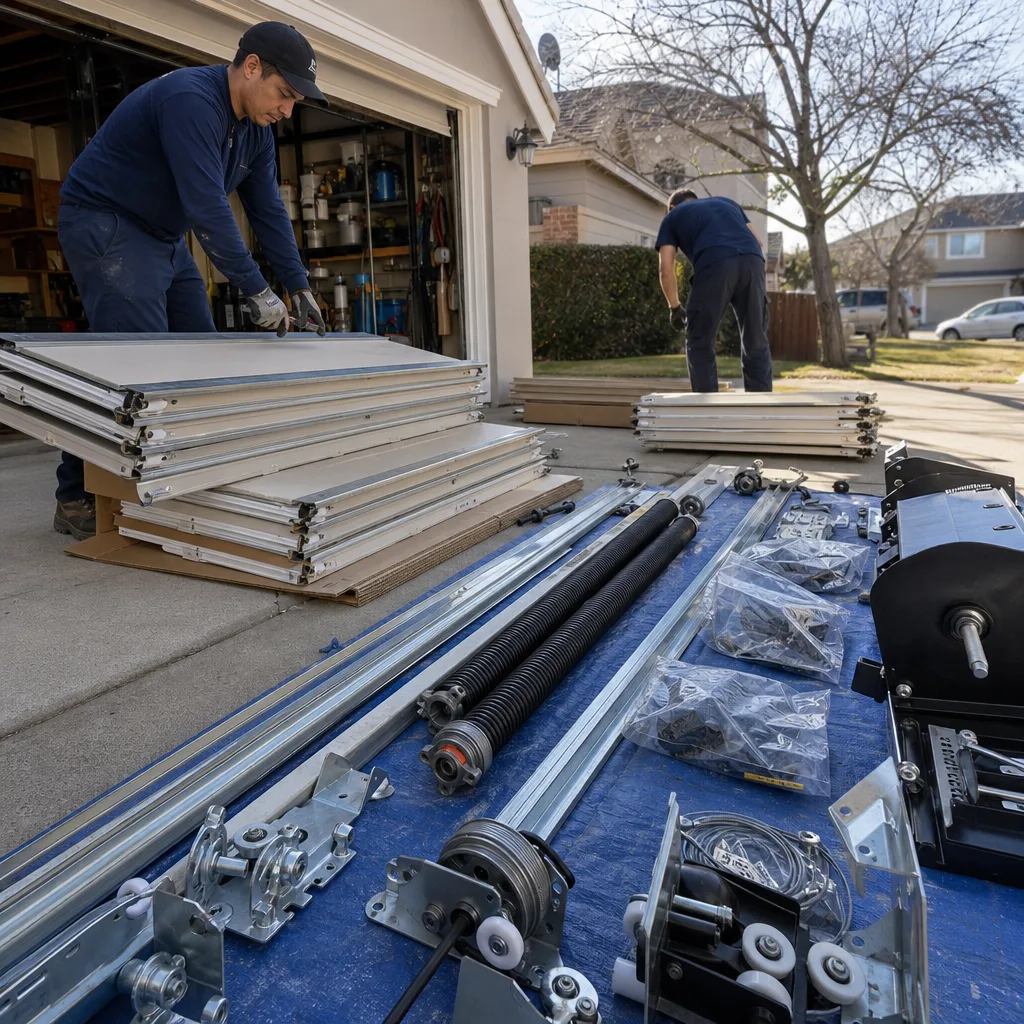
- Using WD-40 as a garage door lubricant. WD-40 is a water-displacement solvent, not a lubricant. It strips protective coatings from torsion springs and attracts dust that forms an abrasive paste in roller bearings. Use silicone-based spray formulated for garage doors. The $12 can prevents the $280 spring replacement.
- Lubricating the track. The roller wheel tread is designed to grip the track, not slide on it. Lubricated tracks cause rollers to slip, misalign, and jump the track during high-wind conditions common in Concord’s spring afternoons.
- Ignoring a single noisy roller. One failed roller overloads its neighbors. In a 10-roller door, the adjacent rollers carry 25% more load until they too fail, turning a $140 repair into a $220 repair plus potential section damage from the binding.
- Testing the auto-reverse with a body part. Use a 2×4 or solid object. The force setting on older openers can exceed 50 pounds of pressure before reversal. We’ve seen hand and foot injuries from “I’ll just use my hand, it’s quick.”
- Storing chemicals near the bottom seal. Concord garages often store pool chemicals, fertilizers, and automotive fluids. Chlorine vapor degrades vinyl seals; petroleum products soften them. Store chemicals on shelves, not the floor, and inspect seals quarterly if storage is unavoidable.
- Assuming a slow door means the opener is failing. In 60% of “slow door” calls we handle in Concord, the issue is spring tension loss, not opener weakness. The opener works harder, overheats, and then fails. Fixing the spring first saves the opener.
When to Call a Professional
Call when you identify any technician-required condition, when the door makes a new sound you can’t source, or when Garage Door Warning Signs: A Concord Homeowner’s Reference Guide would flag safety systems that fail any test. Specifically: a door that won’t hold position in manual mode, a cable that shows any fraying, a spring with visible coil separation, or an opener that fails either reversal test. These are not “watch and wait” conditions.
Servo Garage Doors Concord offers free estimates in Concord - call (925) 940-6359. Every estimate includes a documented photo record of findings and a flat, written price before any work begins, per Clause 1 and Clause 4 of The Haven Standard. Our technicians are background-checked, uniformed, and carry license documentation on every job.
Frequently Asked Questions
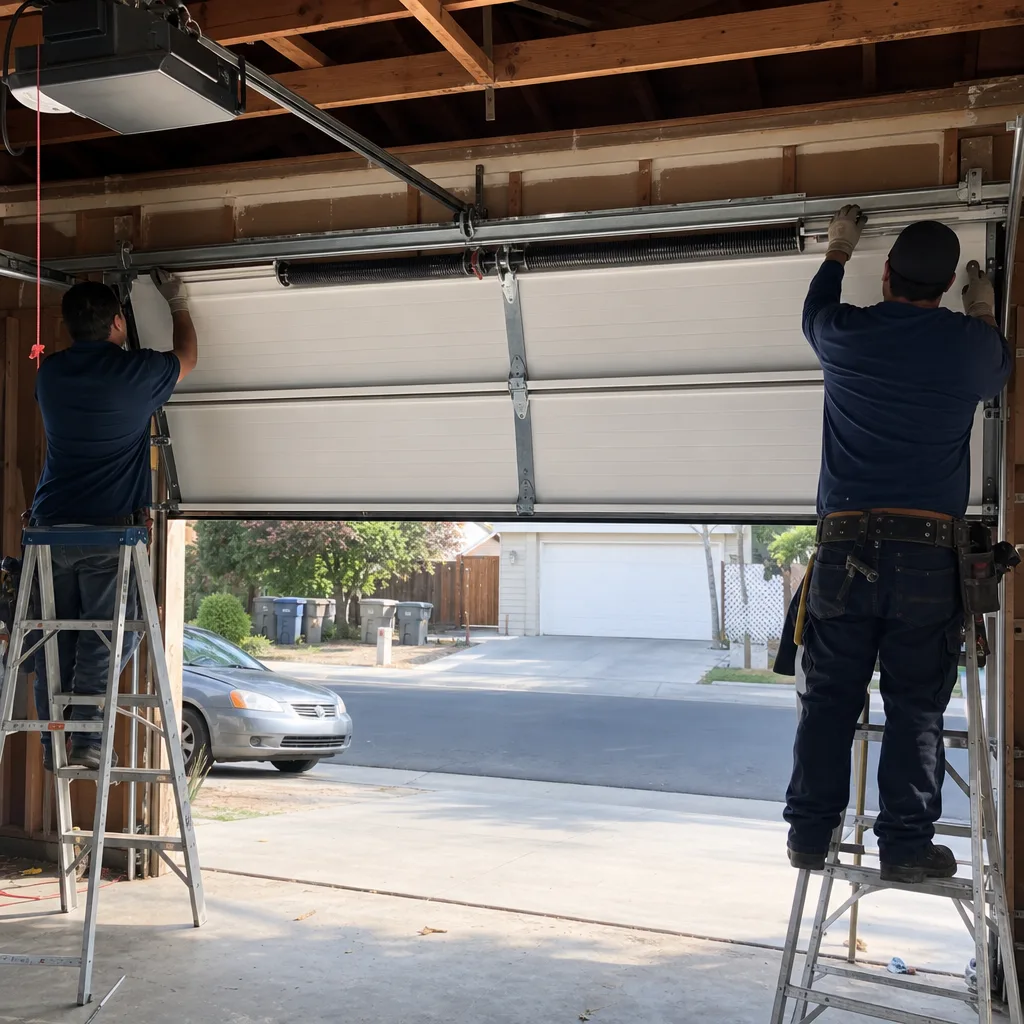
A professional garage door tune-up in Concord typically costs $120-$220 and includes balance testing, safety reversal verification, hardware tightening, lubrication, and a documented photo record of all findings, as detailed in our guide on How to Hire a Garage Door Contractor in Concord: A Step-by-Step Guide. Higher prices usually indicate additional worn parts identified during inspection. Call (925) 940-6359 for a flat, written quote - estimates are free.
Homeowners can safely perform visual inspections, track cleaning, photo eye alignment, weather seal replacement, and lubrication of accessible pivot points. Any work involving springs, cables, bottom brackets, or opener force calibration requires a licensed technician under California law and presents serious injury risk. The dividing line is stored energy: if releasing your grip could cause sudden movement, call a professional.
Standard-cycle torsion springs (10,000 cycles) typically last 7-9 years in Concord’s climate, not the rated 10,000 cycles, due to thermal fatigue from temperature swings. High-cycle springs (25,000-50,000 cycles) last 15-25 years. Replace when the door shows balance failure, you hear a loud bang from the header, or you see coil gaps. Annual professional inspection catches pre-failure conditions.
Use silicone-based spray lubricant formulated for garage doors, available at hardware stores for $8-$14. Apply to roller bearings, hinge pivot points, and torsion spring coils. Never use WD-40, motor oil, or grease. These attract debris, strip protective coatings, or harden in cold weather and cause binding.
A rhythmic thump at the same point in every cycle indicates a flat-spotted nylon roller, a bent track section, or a loose track bracket allowing deflection. Isolate the location by watching from inside as the door travels. A flat-spotted roller thumps once per roller rotation; a track issue thumps at a fixed door position. Both conditions worsen until they cause derailment or opener gear failure.
Garage door replacement in Concord requires a building permit from the City of Concord Building Division when the door size changes, when structural modification to the opening is needed, or when the project is part of a larger renovation. Like-for-like replacement on existing framing typically does not require permitting, but verify with the city at (925) 940-6359. We handle permit documentation on all Garage Door Installation in Concord projects where it’s required.
The Bottom Line
A maintenance checklist works only when it tells you what a failed check means in dollars and danger. Concord homeowners should run monthly 10-minute visual inspections, biannual hardware and lubrication service, and annual safety system validation. Keep a photo log. Know which problems are $30 DIY fixes and which are $400 technician conversations before anyone arrives. For more guides & resources, explore our blog. And never accept a verbal estimate for work involving stored energy components - Clause 1 of The Haven Standard exists because flat, written pricing is the minimum evidence a homeowner should demand.
Written by Marcus Deller, Owner at Servo Garage Doors Concord, serving Concord since 2015.