
Last updated September 21, 2026
Full 25-point door and opener safety check with every visit - springs, cables, rollers, tracks, and your LiftMaster or Chamberlain opener included
You get a price before we start. It does not change when the truck arrives.
 Before
 After
After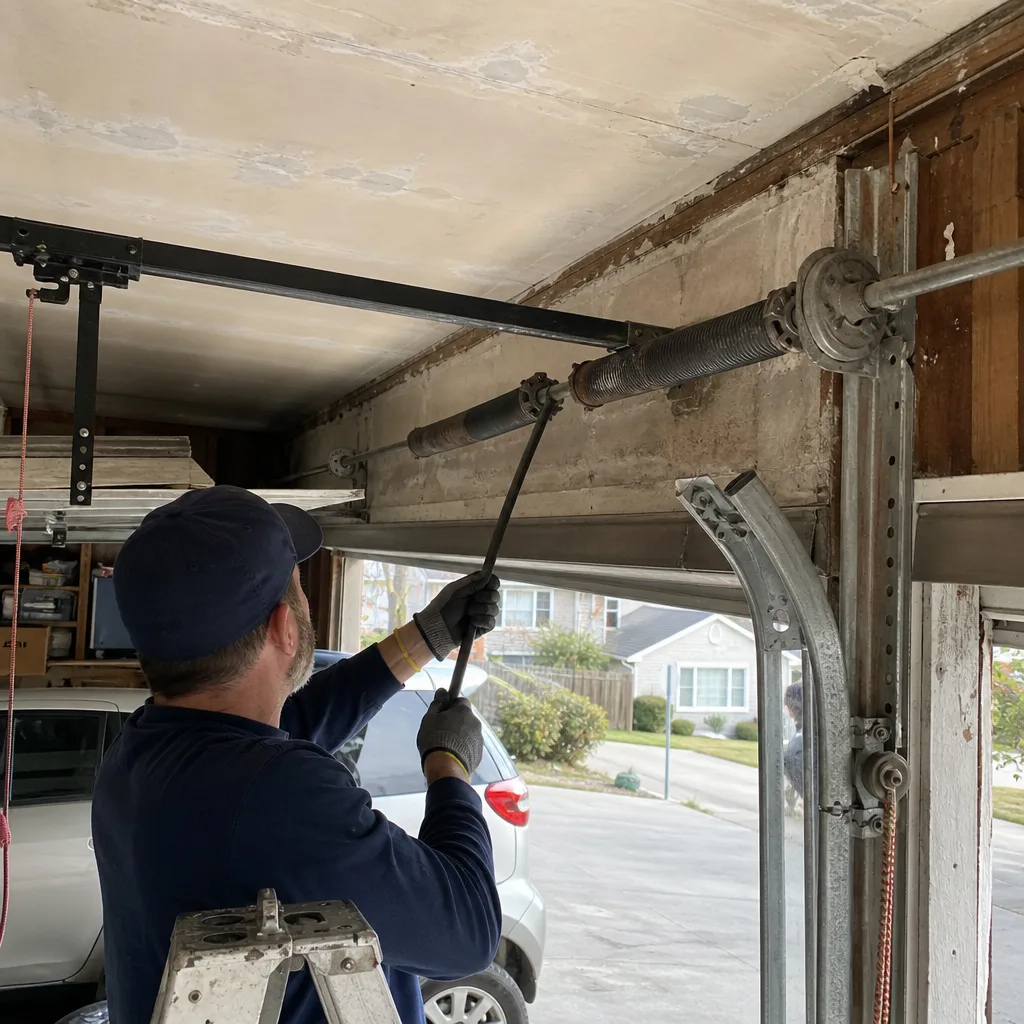 Before
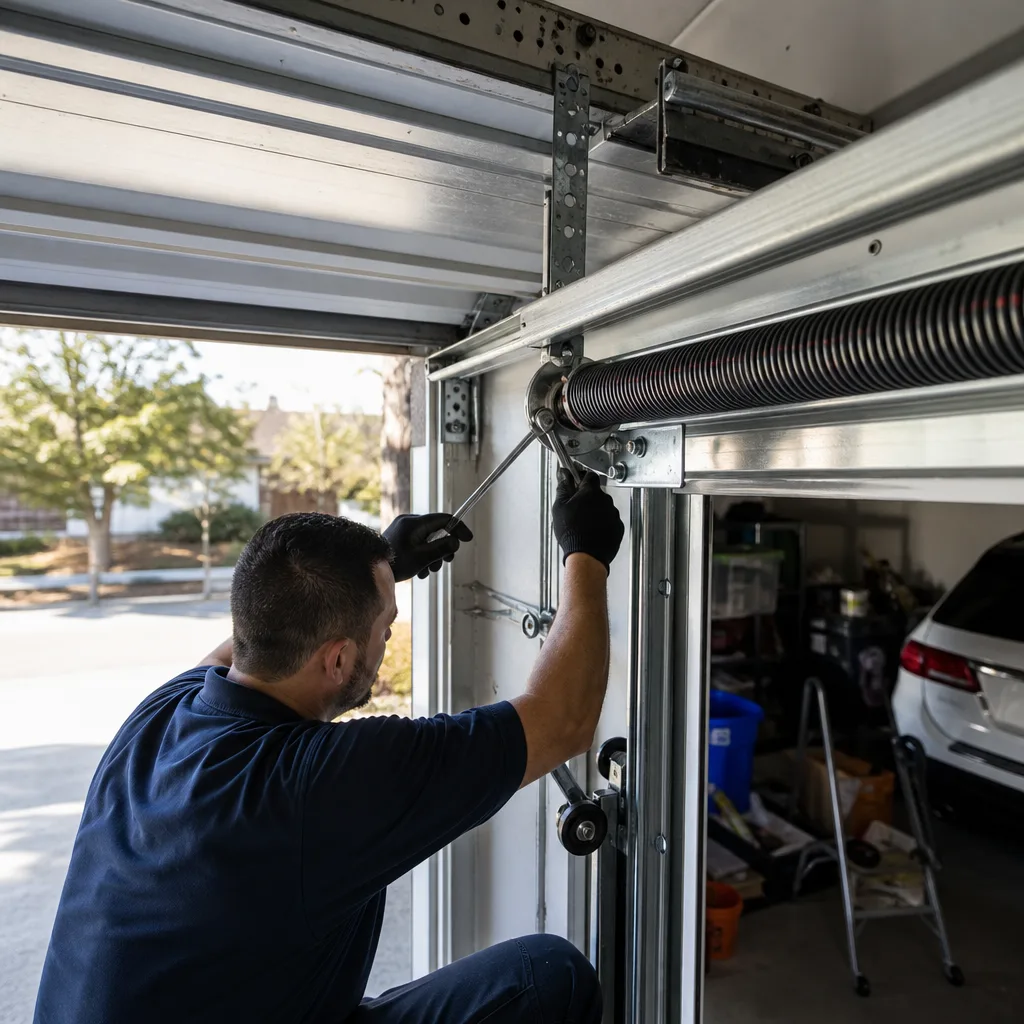 After
After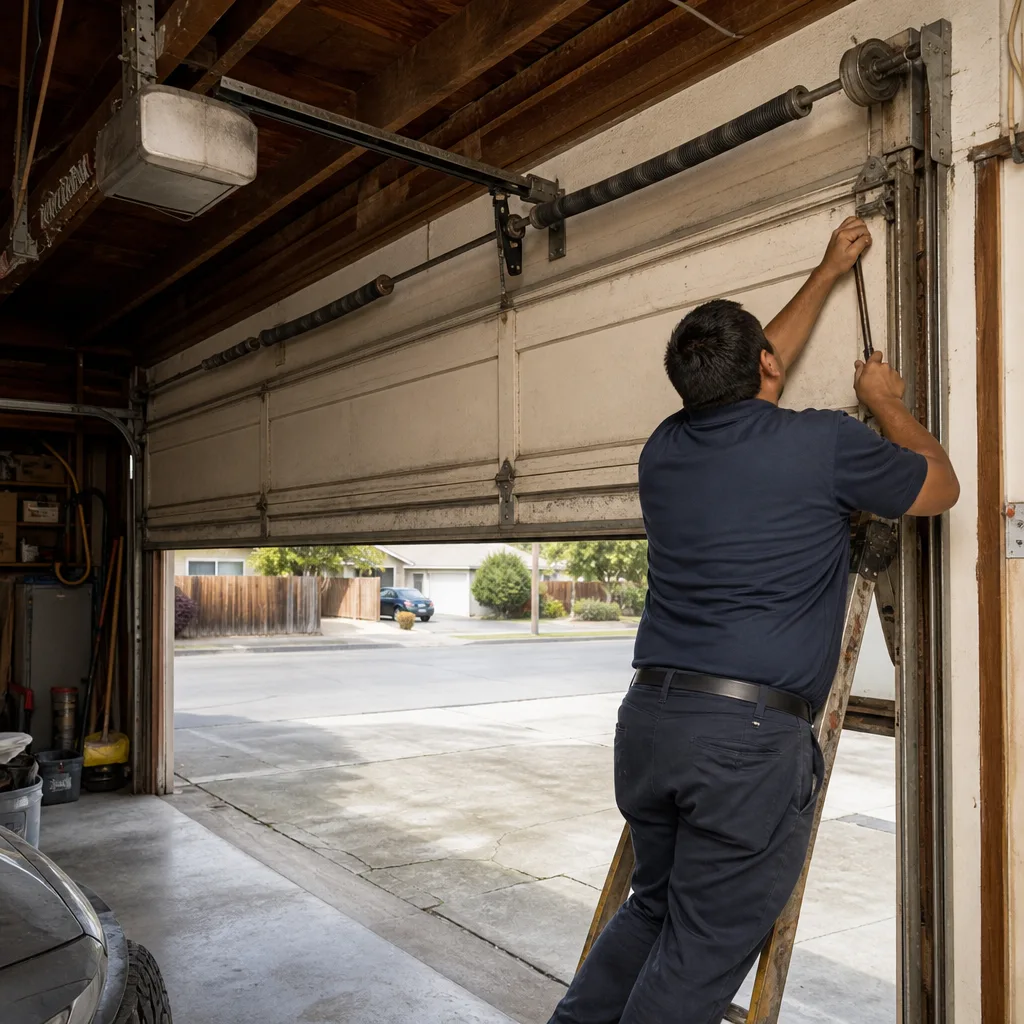 Before
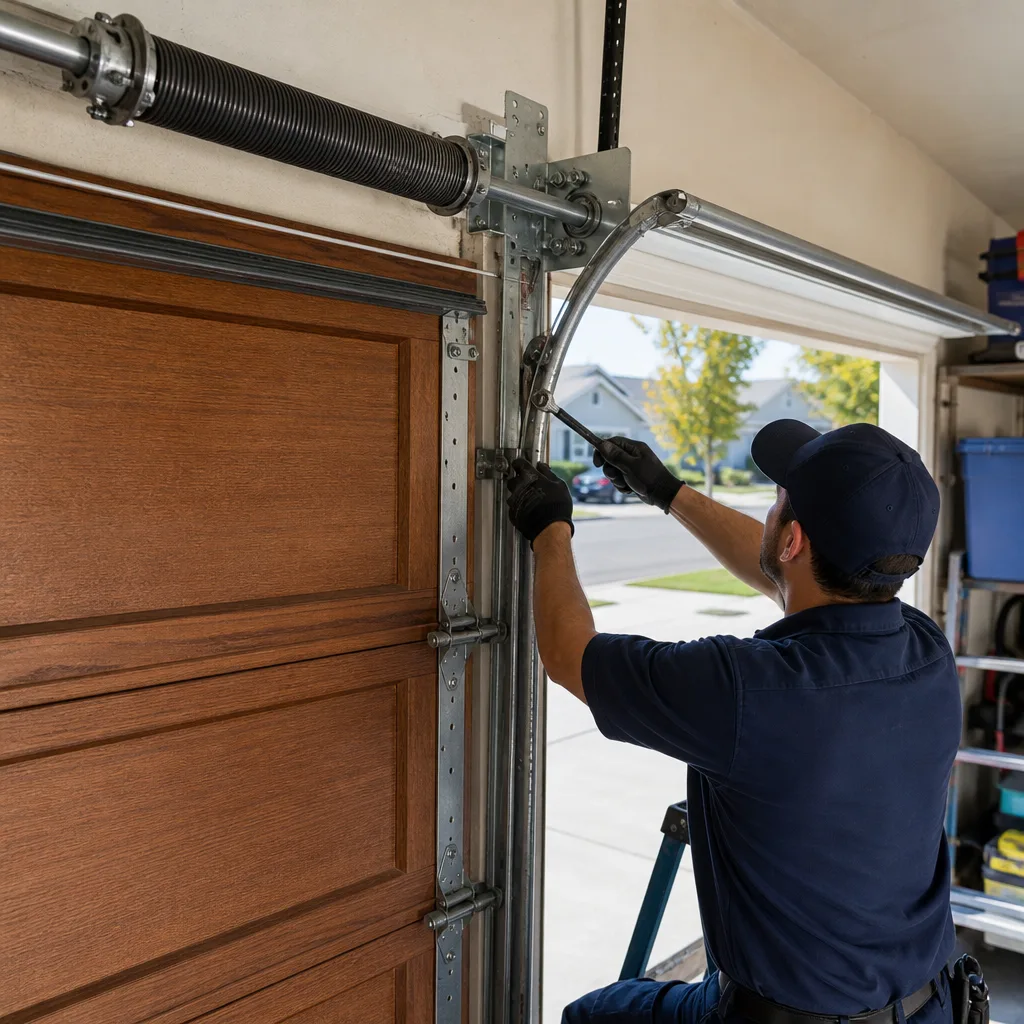 After
AfterGarage Door Warning Signs: A Concord Homeowner’s Reference Guide
A garage door that reverses before hitting the floor and a garage door that reverses halfway down are two different problems with two different price tags. In Concord, where many homes built between 1985 and 2005 still run original hardware, describing both as “not closing” sends a technician to the wrong place first and costs you an extra trip charge. This guide maps every observable symptom to a specific component, a failure mechanism, and a repair urgency tier, so you can describe the problem precisely, document it usefully, and know whether to keep using the door or stop immediately. For a broader overview, see The Complete Guide to Garage Door in Concord.
Quick Answer
The most critical garage door warning signs for Concord homeowners are: a loud bang followed by a heavy door (broken torsion spring, stop using immediately), visible fraying on cables under tension (same-day safety stop), and a door that drifts left or right when moving (cable imbalance or track misalignment, schedule within 48 hours). Most other symptoms, including slow movement, grinding noises, and intermittent reversing, allow continued cautious use with a scheduled service call. The key is matching the symptom to the component, not the emotion.
Table of Contents
- Symptom-to-Component Mapping: What Each Warning Sign Actually Means
- The Three Same-Day Safety Stops
- Reading Your Opener’s Error Code Blink Pattern
- How to Document a Warning Sign With Your Phone
- False Warning Signs Concord Homeowners Misread
- Cost and Urgency by Symptom in Concord
- Common Mistakes to Avoid
- When to Call a Professional
- Frequently Asked Questions
- The Bottom Line
 Before
 After
AfterSymptom-to-Component Mapping: What Each Warning Sign Actually Means
Most homeowners describe problems by how they feel: “it sounds weird,” “it’s acting up,” “something’s wrong.” That wastes everyone’s time. Here’s what each common symptom implicates, what the failure mechanism is, and what you should do before calling.
Grinding or Scraping Noise
Grinding usually means metal-on-metal contact where there shouldn’t be. The most common culprits in Concord:
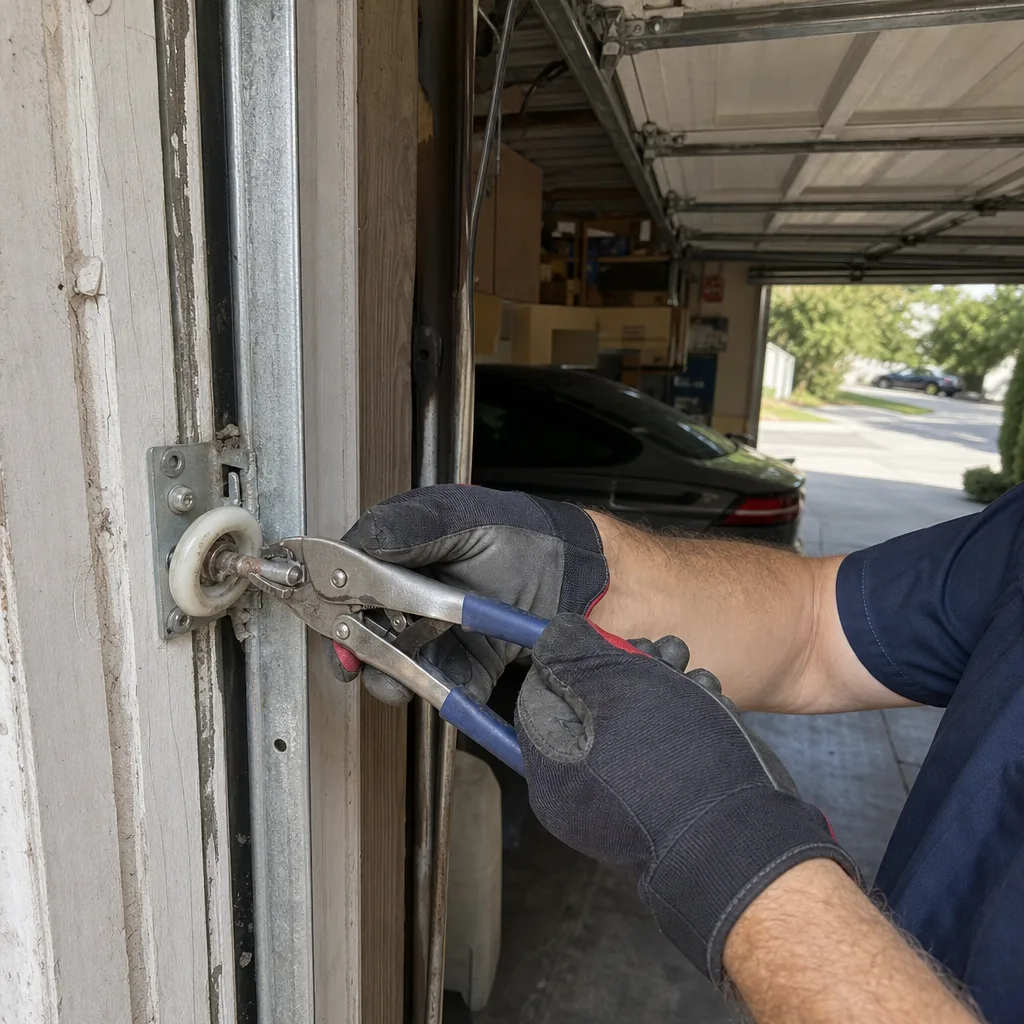
- Worn steel rollers in the track: the roller bearing has failed, and the stem is dragging against the track wall. You’ll hear it at the same point in every open/close cycle, usually on the bend where the vertical track meets the horizontal.
- Dry hinge pins: the hinge that connects door sections has lost lubrication and is squealing under load. This gets worse in cold morning air, which we’ll cover in the false alarms section.
- Track misalignment: the vertical or horizontal track has shifted, and the roller is scraping the edge. Check for bright metal wear marks on the track interior.
In the Garage Door Repair in Concord work we’ve done since 2015, grinding from steel rollers is the most common preventable failure we see in the Dana Estates and Concord Hills areas, where many homes still run original builder-grade hardware.
Door Drifts Left or Right During Movement
A door that doesn’t travel straight implicates the balance system, not the opener. The trolley carriage pulls from the center; if the door skews, one side is doing more work than the other.
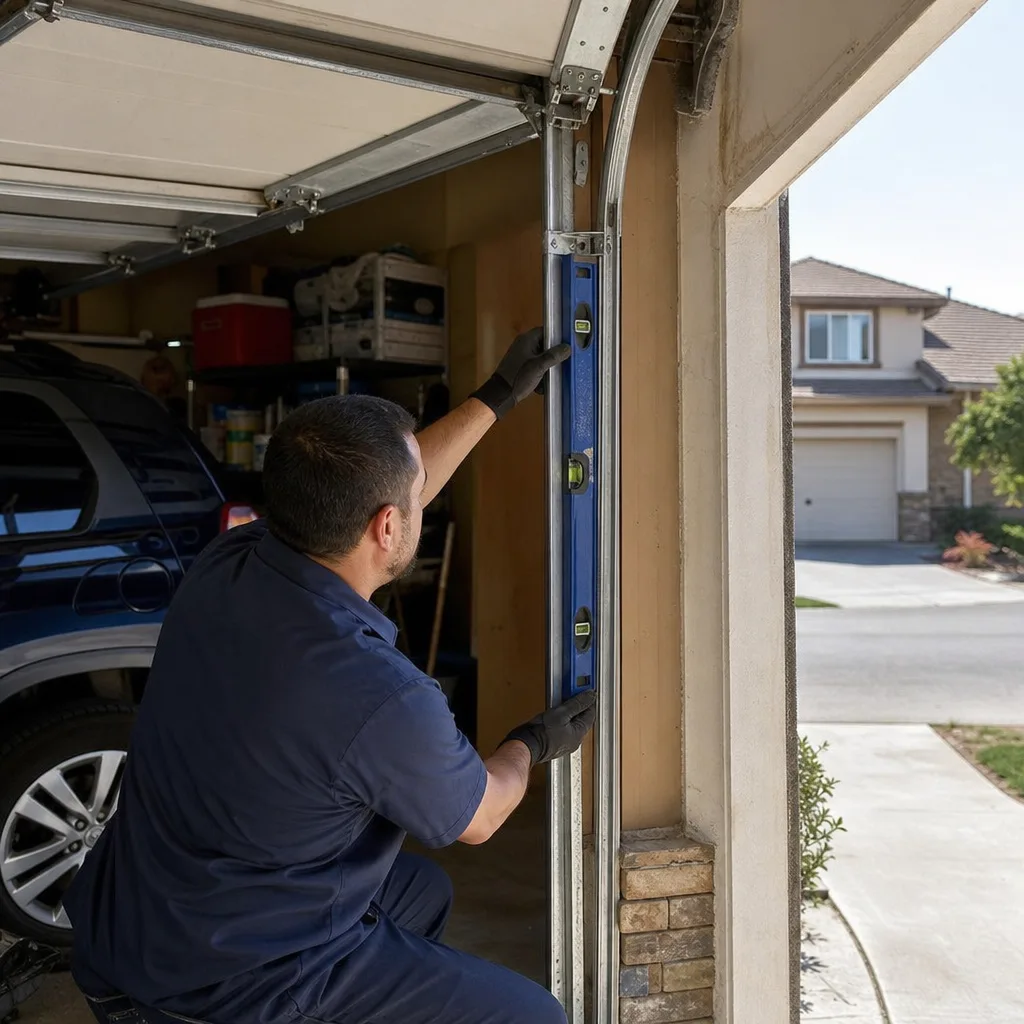
- Cable imbalance: one lift cable has stretched or slipped on the drum, or one torsion spring has lost tension faster than its pair. The door rises crooked and may bind in the track.
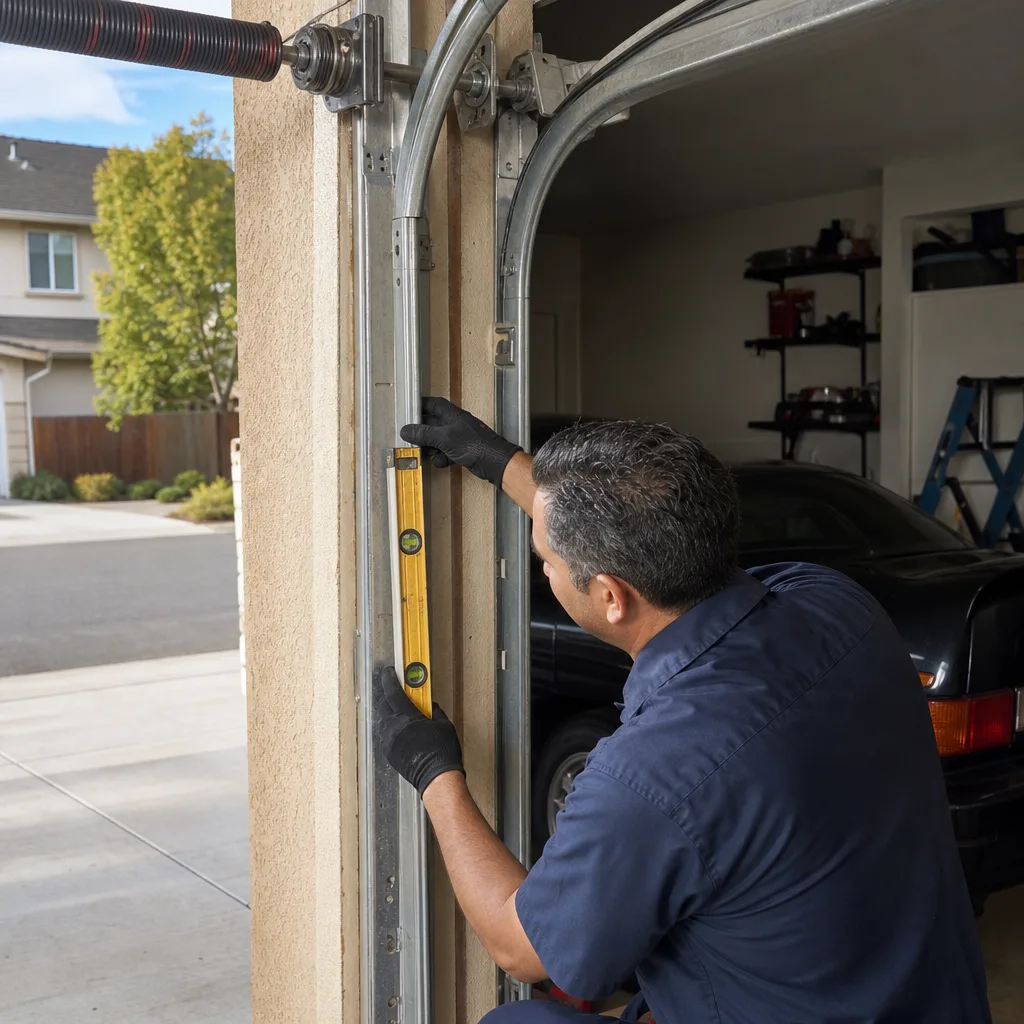
- Track alignment: the vertical tracks aren’t parallel, or the horizontal tracks aren’t level. This often follows foundation settling, which is common in Concord’s clay-heavy soils, particularly in the Holbrook Heights area.
- Bottom bracket failure: the bracket that anchors the lift cable to the bottom of the door is pulling loose on one side. This is a same-day stop, detailed below.
Slow or Labored Movement
A door that moves slowly but evenly usually points to spring tension loss or opener force settings, not motor failure.
- Torsion spring fatigue: springs lose tension gradually. A 150-pound door that took 10 pounds of force to lift last year may take 40 pounds now. The opener works harder, runs hotter, and may trigger thermal protection.
- Opener force setting too low: the force adjustment dials on Chamberlain and LiftMaster openers can drift or be bumped. The door moves slowly because the opener thinks it’s hitting resistance.
- Bent track creating drag: less common, but visible if you watch the rollers closely.
Loud Bang From the Garage
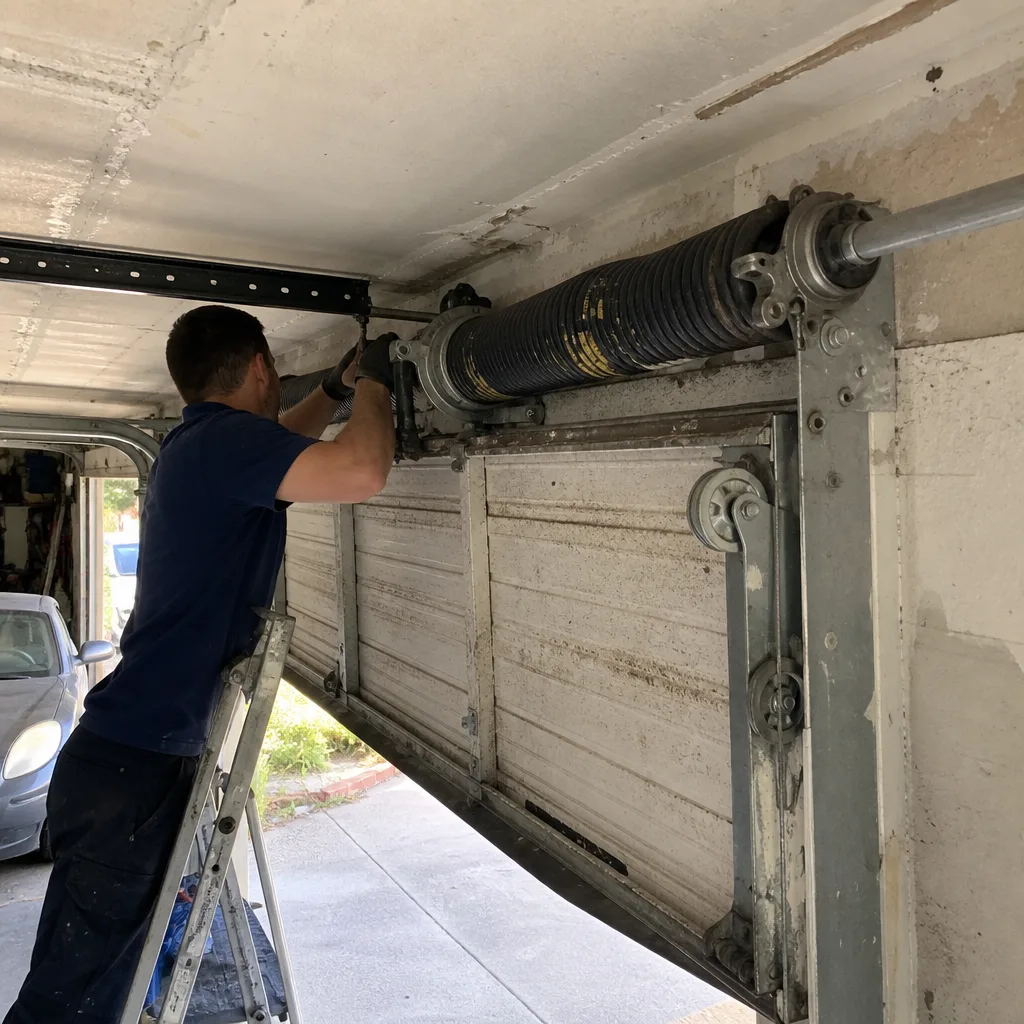
A single loud bang, often described as a gunshot, is almost always a torsion spring breaking. The spring stores massive mechanical energy; when it fails, the coils unwind violently against the shaft. This is an immediate stop-use situation. The door is now dead weight, and the opener cannot lift it safely. Continuing to operate it strains the opener gear set and risks cable derailment.
In Concord’s variable climate, where morning fog moisture meets afternoon heat, torsion springs fatigue faster than in drier inland areas. We’ve documented this in our photo records across thousands of Concord visits since 2015.
Door Reverses Before Hitting Floor
This implicates the close-limit switch or the safety sensor system. The opener thinks the floor is higher than it is, or it detects phantom obstruction.
- Close-limit switch out of adjustment: the limit switch tells the opener where the floor is. If it drifts, the door reverses 6-12 inches early. This is a 10-minute adjustment.
- Safety sensors misaligned or dirty: the photo eyes at track level are blocked, misaligned by 1/8 inch, or have condensation on the lens. Common in Concord’s fog season.
- Sensor wiring compromised: the low-voltage wire to one sensor has been nicked by landscaping or rodents.
Door Reverses Halfway Down
This is different from reversing before the floor. Halfway-down reversal usually means the opener is encountering real or perceived mechanical resistance.
- Binding in the track: a damaged roller, bent track, or debris is creating drag that exceeds the opener’s force threshold.
- Force setting too sensitive: the opener’s safety force is set too low for the door’s actual weight, often after a spring has weakened.
- Logic board interpreting current draw incorrectly: the opener’s logic board measures motor current to detect obstruction; a failing board may misread normal load as obstruction.
| Symptom | Component Implicated | Failure Mechanism | Urgency Tier |
|---|---|---|---|
| Grinding/scraping at same cycle point | Steel roller, hinge, or track | Bearing failure, lubrication loss, or misalignment | Schedule within 1-2 weeks |
| Door drifts left or right | Lift cable, torsion spring, or track | Tension imbalance or alignment shift | Schedule within 48 hours |
| Slow, labored movement | Torsion spring or opener force setting | Spring fatigue or drifted adjustment | Schedule within 1 week |
| Loud bang | Torsion spring | Metal fatigue, coil separation | Stop using immediately |
| Reverses before floor | Limit switch or safety sensor | Adjustment drift, misalignment, or moisture | Schedule within 1 week |
| Reverses halfway down | Track, roller, or opener force/logic board | Mechanical binding or misinterpreted load | Schedule within 48 hours |
The Three Same-Day Safety Stops
Some warning signs mean the door is actively dangerous to operate. These three require you to stop using the door immediately and call for service. Not tomorrow. Today.
1. Broken Torsion Spring
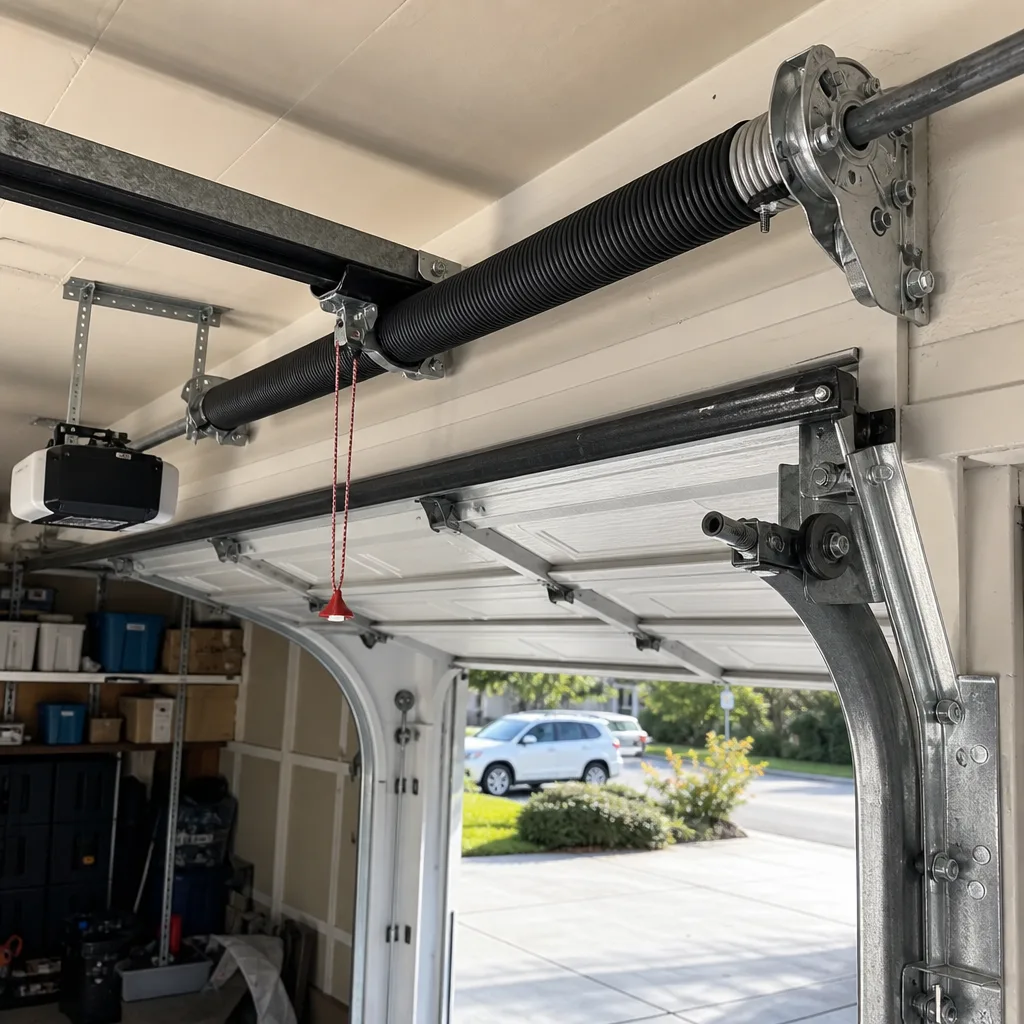
You’ll know it by the bang, the gap in the spring coil, and the door’s sudden dead weight. A single torsion spring on a standard 16-foot door stores enough energy to cause serious injury if handled incorrectly. The cables may still look intact, but they’re now carrying load they weren’t designed for alone.
Why it’s urgent: Operating the door with a broken spring forces the opener to lift the full door weight. This strips the nylon gear in chain-drive openers and burns out belt-drive motors. Worse, a cable can snap under the unbalanced load and whip through the garage.
What to do: Disconnect the opener by pulling the red emergency release cord (with the door closed, if possible). Do not attempt to lift the door manually unless it’s the only exit and you have help. The door weighs 150-250 pounds without spring assist.
2. Frayed Lift Cable Under Tension
Lift cables run from the bottom bracket, up the vertical track, around the drum at the top, and anchor to the torsion tube. When a cable frays, individual strands break and the remaining strands carry overload.
Why it’s urgent: A snapping cable releases stored energy unpredictably. We’ve documented cable failures in our photo records where the cable whipped across the garage and damaged vehicles. The fraying is visible if you look: broken strands protrude from the cable weave like bristles.
What to do: Stop using the door. Do not attempt to remove or adjust a cable under tension. The torsion system must be unwound professionally before cable work begins.
3. Bottom Bracket Pulling From Door Panel
The bottom bracket anchors the lift cable to the lowest door section. If you see the bracket separating from the panel, or the bolts working loose, the entire door’s load is concentrating on failing fasteners.
Why it’s urgent: When the bracket fails, the door drops on that side, jams in the track, and may fall completely. This is more common in older wood doors and in Concord’s moisture-cycling climate, where expansion and contraction loosen fasteners over years.
What to do: Stop using the door immediately. Do not attempt to tighten bolts with the cable under load. The torsion system must be released first.
These three conditions are why Servo Garage Doors Concord home technicians carry a full spring and cable inventory on every truck. When you call with one of these symptoms, we know not to schedule a “diagnostic visit” that leaves you stranded. Clause 4 of The Haven Standard requires we photograph the failed component before quoting replacement, but for same-day safety stops, we also carry the parts to complete the repair.
Reading Your Opener’s Error Code Blink Pattern
Modern Chamberlain and LiftMaster openers flash their LED light in patterns that correspond to specific faults. Reading the pattern before you call lets you give the technician a code, not a story.
How to Read the Pattern
- Stand where you can see the opener’s LED clearly. It’s a small round light near the learn button, not the main light bulb.
- Trigger the fault: press the remote or wall button and let the failure occur.
- Count the flashes between pauses. A “5 flashes” code means five quick blinks, a pause, then five more.
- Note whether the flashes occur during travel, at startup, or after travel completes.
Common Chamberlain/LiftMaster Codes in Concord Homes
| Blink Code | Meaning | Component | Typical Resolution |
|---|---|---|---|
| 1 flash | Safety sensor wire disconnected or shorted | Sensor wiring | Inspect/replace low-voltage wire |
| 2 flashes | Safety sensors misaligned or obstructed | Photo eyes | Realign, clean, or replace |
| 4 flashes | Safety sensors misaligned (slight) | Photo eyes | Minor realignment |
| 5 flashes | Motor overheated or RPM sensor failure | Motor or logic board | Cool-down test or board replacement |
| 6 flashes | Motor circuit failure | Logic board or motor | Board or opener replacement |
The 2-flash and 4-flash codes dominate our Garage Door Opener Repair & Installation in Concord calls during fall and spring, when temperature swings and fog condensation throw off sensor alignment by fractions of an inch. A homeowner who reports “2-flash code, right sensor drifts in morning fog” gets a faster fix than one who says “the door doesn’t work sometimes.”
Genie openers use a different system: their Intellicode units typically flash the red or green LED near the power head in distinct patterns, and many display a solid or blinking status light on the wall console. Check your manual for the specific pattern, or photograph the console during the fault for our technician.
How to Document a Warning Sign With Your Phone
A video sent before we arrive lets a technician narrow the problem and confirm parts availability. A useless video wastes the opportunity. Here’s how to capture what matters.
For Noise Problems
- Open the garage door fully, then close it using the wall button (not the remote, which adds RF variables).
- Stand 8-10 feet from the door, at center, with the camera at waist height.
- Record one complete cycle: close, then open. Let the microphone pick up the sound without commentary.
- Immediately after, record a second clip from the side, 4 feet away, showing the rollers in the track as the door moves.
- Send both clips with a note on whether the noise happens at the same point every time.
For Movement Problems (Drift, Binding, Reversing)
- With the door fully open, place a piece of masking tape on the floor at the center of the door’s path.
- Record from directly in front, showing the full door width, as it closes.
- Watch for: left/right drift, speed changes, or stops. Keep recording 5 seconds after it stops.
- If it reverses, note whether it reverses to full open or partial, and whether the opener light flashes.
For Visual Damage (Frayed Cable, Cracked Spring, Separated Bracket)
- Do not touch the component. Do not zoom in from 2 inches away.
- Step back 4-6 feet and capture the component in context: show where it sits in the overall assembly.
- Use the phone’s flashlight for fill light, not the flash, which blows out metal detail.
- Include a second shot from 90 degrees different angle if possible.
The documentation you send becomes the first entry in your job record. When our technician arrives, Clause 4 of The Haven Standard requires they photograph the failed component themselves before quoting, but your video helps them bring the right parts and the right expectation. In Concord’s competitive service market, where some companies dispatch for “diagnosis” without parts, this pre-visit documentation protects your time.
False Warning Signs Concord Homeowners Misread
Not every sound or resistance means failure. Three conditions routinely generate unnecessary service calls, especially in Concord’s climate.
Normal Operational Sounds in Cold Morning Air
Steel contracts overnight. At 6 AM on a foggy Concord morning, a steel door in a cold garage may make sharp ticking or pinging sounds as it first moves. This is thermal contraction releasing, not mechanical failure. The sound should diminish within 2-3 cycles as the metal warms. If it persists past the third cycle, or occurs at afternoon temperatures, it’s worth investigating.
Nylon rollers in cold weather can also produce a brief, high-pitched squeal on first movement. This is material stiffness, not bearing failure. Persistent squealing through full travel is different.
Weather-Seal Drag Mimicking Mechanical Resistance
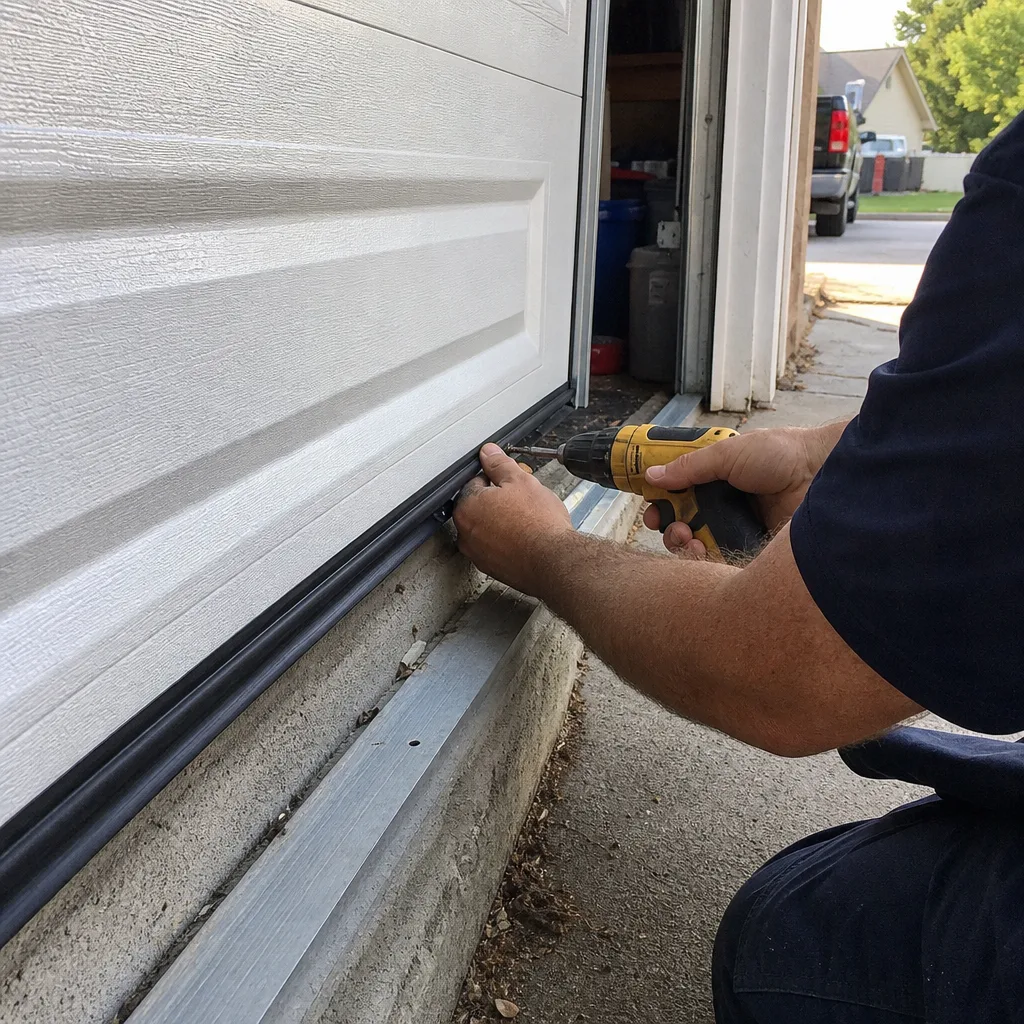
The rubber or vinyl seal at the door’s bottom edge swells in humidity and can freeze to the concrete in winter. The opener strains, reverses, or stalls. Homeowners interpret this as motor failure or spring problem.
Test: Disconnect the opener (red cord, door closed) and lift manually. If the door moves freely until the seal contacts the floor, the problem is seal drag, not the door system. A silicone-based lubricant on the seal face, or adjusting the close-limit switch to stop slightly higher, resolves it. If the door is hard to lift throughout travel, the springs need attention.
Popcorn-Crack Sounds From Painted Panels
Steel doors with factory-applied paint or homeowner repaints can produce a crackling sound as panels flex during operation. This is paint film stress, often at panel edges or embossment lines, not metal fatigue. It’s cosmetic, not structural.
The distinction: paint crackle is random, intermittent, and occurs at panel surface. Mechanical crackle from a failing hinge or roller is rhythmic, repeats at the same cycle point, and localizes to one area. If you can predict when you’ll hear it, it’s mechanical.
Cost and Urgency by Symptom in Concord
Below are the typical price ranges for common repairs mapped to the symptoms above. These are Concord market ranges based on our written-price records since 2015, not national estimates. Your exact price is quoted in writing before work starts, per Clause 1 of The Haven Standard.
| Symptom/Problem | Typical Repair | Concord Price Range | Urgency |
|---|---|---|---|
| Broken torsion spring (single) | Spring replacement, re-tension, safety inspection | $180-$340 | Same day, stop use |
| Broken torsion spring (dual, 2-car door) | Both springs replaced as matched pair | $280-$480 | Same day, stop use |
| Frayed lift cable | Cable replacement, drum inspection, re-tension | $140-$260 | Same day, stop use |
| Worn steel roller set (10 rollers) | Roller replacement, track inspection | $160-$280 | Schedule 1-2 weeks |
| Opener safety sensor realignment | Alignment, cleaning, wiring check | $85-$140 | Schedule 1 week |
| Opener limit switch adjustment | Travel limit and force setting calibration | $85-$140 | Schedule 1 week |
| Logic board replacement (Chamberlain/LiftMaster) | Board replacement, reprogramming | $280-$420 | Schedule 48 hours |
| Track realignment (minor) | Track adjustment, roller inspection | $120-$200 | Schedule 48 hours |
| Bottom bracket replacement | Bracket, fasteners, re-anchoring, safety check | $160-$280 | Same day, stop use |
These ranges include parts, labor, and the documented photo record delivered after service. They do not include new door replacement or Garage Door Installation in Concord, which is measured, quoted, and scheduled separately. Every price is written and agreed before any work starts. If another company has given you a written estimate, we honor our Free Second Opinion: bring the paperwork, no coupon required.
Common Mistakes to Avoid
- Describing the symptom by emotion, not mechanics. “It’s scary” or “it sounds terrible” doesn’t help a technician prepare. “Grinding at the upper left track bend, every cycle, for three seconds” does.
- Continuing to use the door after a loud bang. The opener is not designed to lift a dead-weight door. Using it strains the motor and gear set, turning a $280 spring job into a $600 spring-plus-opener repair.
- WD-40 on the track. WD-40 is a solvent and water displacer, not a lubricant. It attracts dust and hardens into abrasive sludge. Use a silicone or lithium-based garage door lubricant on rollers, hinges, and bearings; keep the track clean and dry.
- Ignoring seasonal patterns. Concord’s fog season (October through April) produces condensation on safety sensors and swelling in bottom seals. A door that worked fine in August may “fail” in November for environmental reasons. Check sensors for moisture before calling.
- Adjusting torsion hardware without training. The winding cone on a torsion spring is under hundreds of pounds of torque. Improper tools or technique cause serious injury. This is not a YouTube project.
- Accepting a verbal estimate. A price given over the phone without seeing the door, or quoted verbally at your door without written scope, is not binding. Clause 1 of The Haven Standard exists because “trust us” pricing fails customers.
- Replacing the opener when the spring failed. A door that won’t move after a loud bang usually needs a spring, not a new opener. The opener was working fine until it was asked to do the spring’s job. Diagnose the root cause before replacing symptoms.
When to Call a Professional
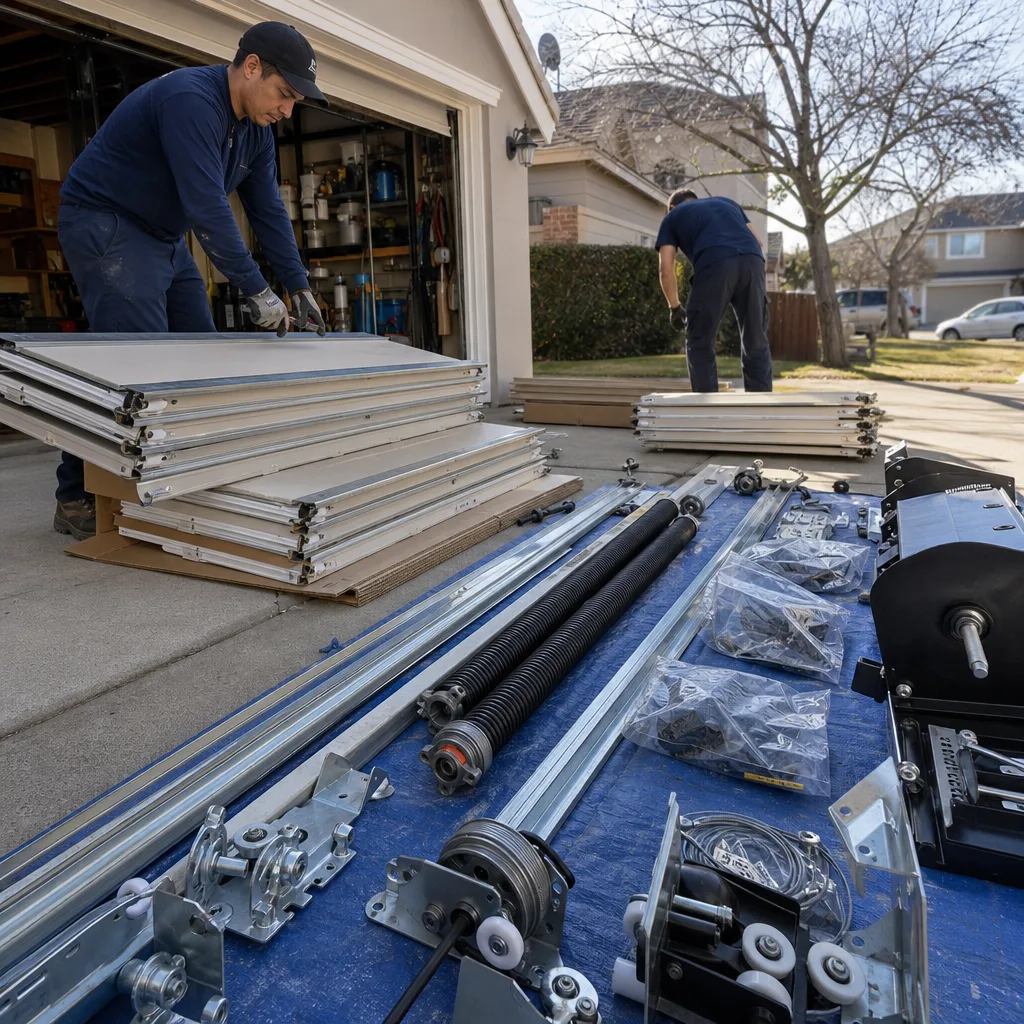
Call when you cannot confidently map the symptom to a component, or when the symptom falls in the same-day safety stop category: broken spring, frayed cable, or failing bottom bracket. Call when the opener displays a blink code you cannot interpret, or when the door’s behavior has changed suddenly rather than gradually. If you’re unsure where to start, read How to Hire a Garage Door Contractor in Concord: A Step-by-Step Guide.
In Concord’s older neighborhoods, particularly around Todos Santos and the downtown corridor, homes with original 1980s and 1990s hardware are approaching end-of-design-life for multiple components. A professional inspection identifies cascading failures before they strand you.
Servo Garage Doors Concord offers free estimates in Concord. Every visit includes a documented photo record of findings, a flat written price before any work starts, and the 365-Day Done Right Promise backed by The Haven Standard. Call (925) 940-6359. A live person answers, 24 hours a day, including holidays. You’ll get a named technician and an on-the-way text, not a callback window. Visit our more guides & resources for additional homeowner tips.
Frequently Asked Questions
Single torsion spring replacement in Concord typically runs $180-$340; dual spring replacement on a two-car door runs $280-$480. The exact price depends on spring wire diameter, length, and wind direction, which we measure on site. We quote a flat, written price before any work starts, per Clause 1 of The Haven Standard. Call (925) 940-6359 for an exact quote; estimates are free.
You should not. A broken torsion spring means the door weighs its full 150-250 pounds. The opener is not designed for this load and will fail. Manual lifting risks the door dropping unpredictably if cables slip. Disconnect the opener with the door closed and call for same-day service. This is one of the three safety stops detailed in this guide.
There’s always a reason. Reversing before the floor usually means the close-limit switch is drifted or the safety sensors are misaligned, dirty, or moisture-affected. Reversing halfway down usually means mechanical binding or an overly sensitive force setting. Check the opener’s LED for a blink code pattern; Chamberlain and LiftMaster units flash in specific sequences that identify the fault. Document the pattern and call with the code.
Every 12-18 months for homes with standard steel doors and moderate use. Concord’s fog season and temperature swings accelerate wear on rollers, hinges, and opener electronics. Annual lubrication and balance checks prevent the gradual failures that become emergency calls. Homes with original hardware in the 1985-2005 build range should consider inspection every 12 months. For a detailed maintenance calendar, see our Seasonal Garage Door Care for Concord: Year-Round Homeowner’s Guide.
No. Clause 1 of The Haven Standard requires a flat, written price and written scope before any work begins. The technician photographs the failed component, identifies the repair, and presents a written price. If you approve, work proceeds. If you decline, you pay nothing for the diagnosis. This is why we don’t give blind phone quotes; we give binding written quotes after seeing the door.
Yes. Our Concord technicians carry torsion springs, cables, rollers, hinges, safety sensors, logic boards, and opener components for all major brands including LiftMaster, Chamberlain, and Genie. For same-day safety stops, we aim to complete the repair in one visit. For scheduled maintenance or non-urgent repairs, we confirm parts availability when you book. Call (925) 940-6359 to describe your symptom and verify the right truck is dispatched.
The Bottom Line
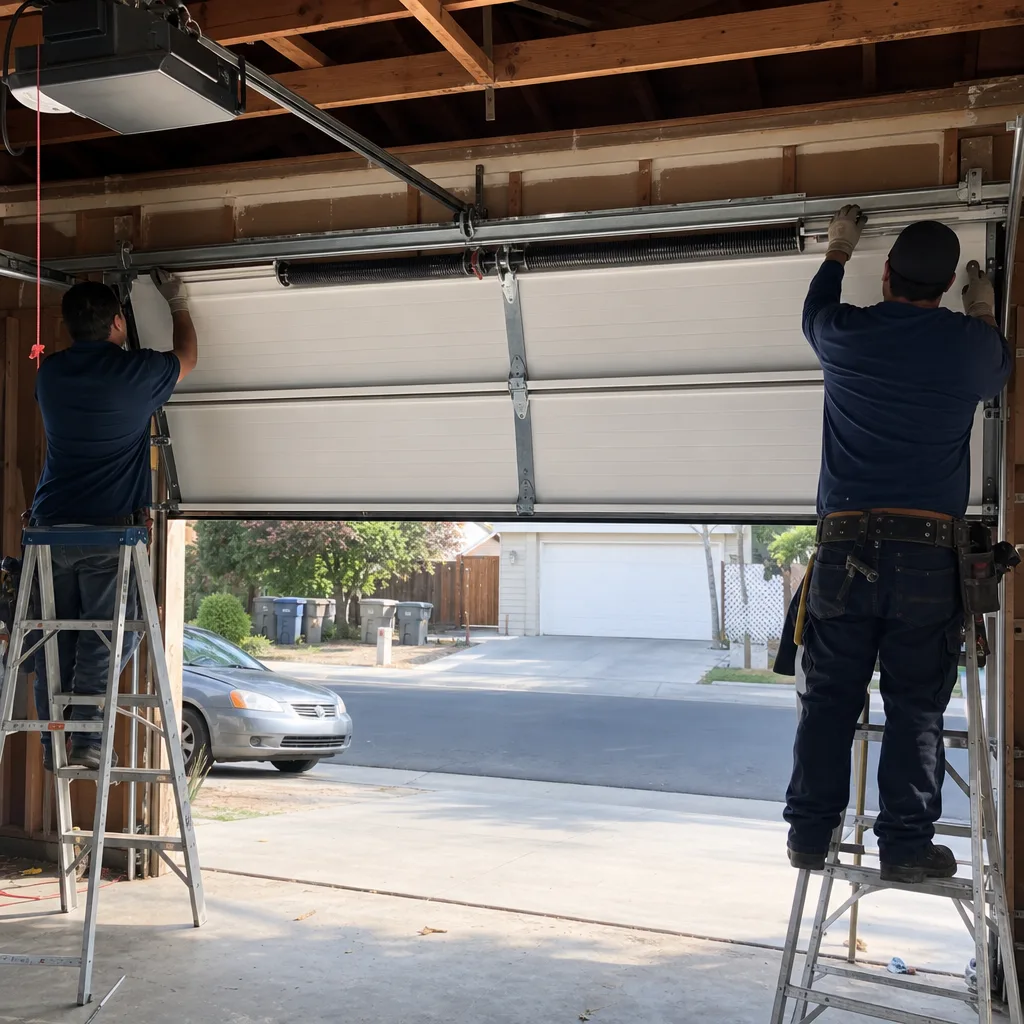
Warning signs are only useful when they lead to the right repair. A grinding noise points to rollers or hinges, not springs. A reversing door points to sensors or limits, not motor failure. A loud bang means stop everything and call today. The homeowners who get the fastest, most accurate service are the ones who can describe what they observed in component terms, or better, show it in a short video.
In Concord, where climate, soil, and housing stock create predictable wear patterns, knowing these mappings saves time, money, and the frustration of a misdiagnosed first visit. Document what you see. Read the blink code. Know the three safety stops. And when you’re ready, call a company that documents its work the same way you should document yours.
Written by Marcus Deller, Owner at Servo Garage Doors Concord, serving Concord since 2015.