
Last updated September 21, 2026
Full 25-point door and opener safety check with every visit - springs, cables, rollers, tracks, and your LiftMaster or Chamberlain opener included
You get a price before we start. It does not change when the truck arrives.
 Before
 After
After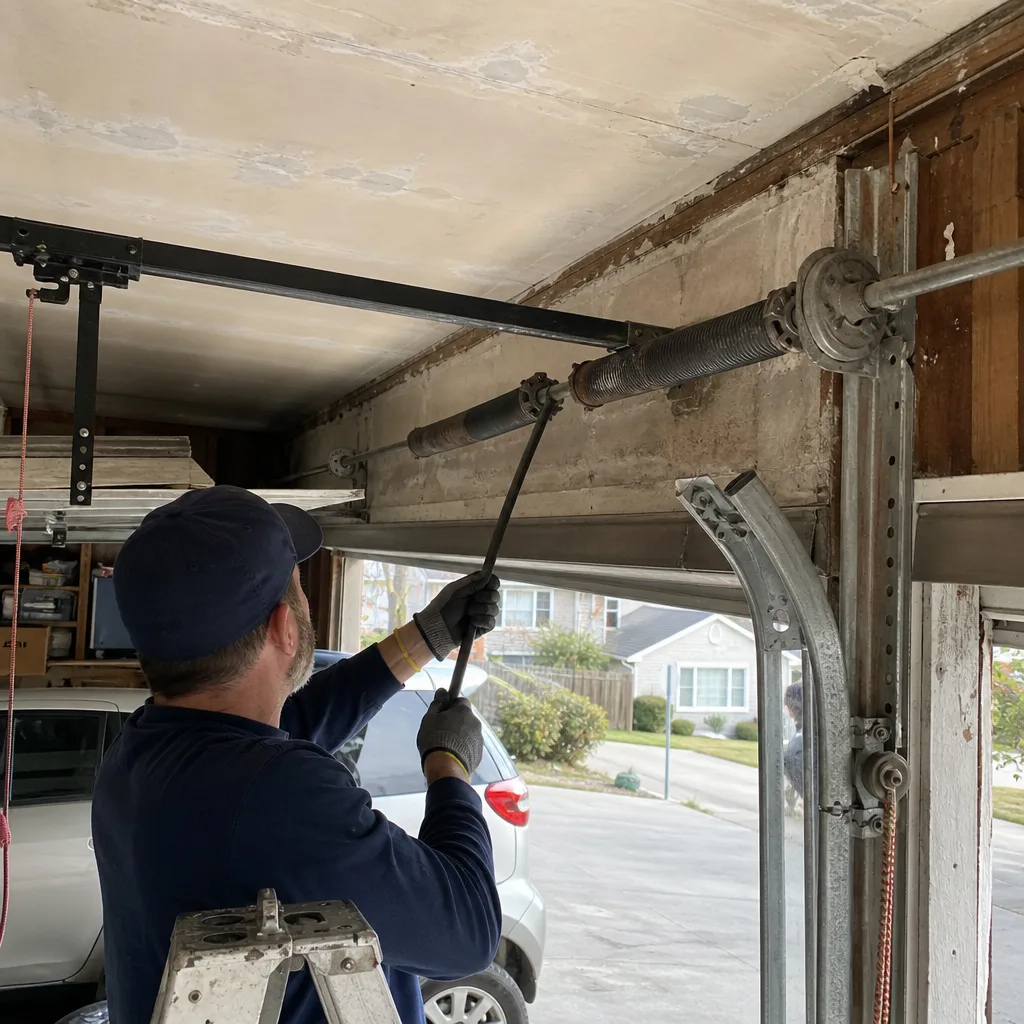 Before
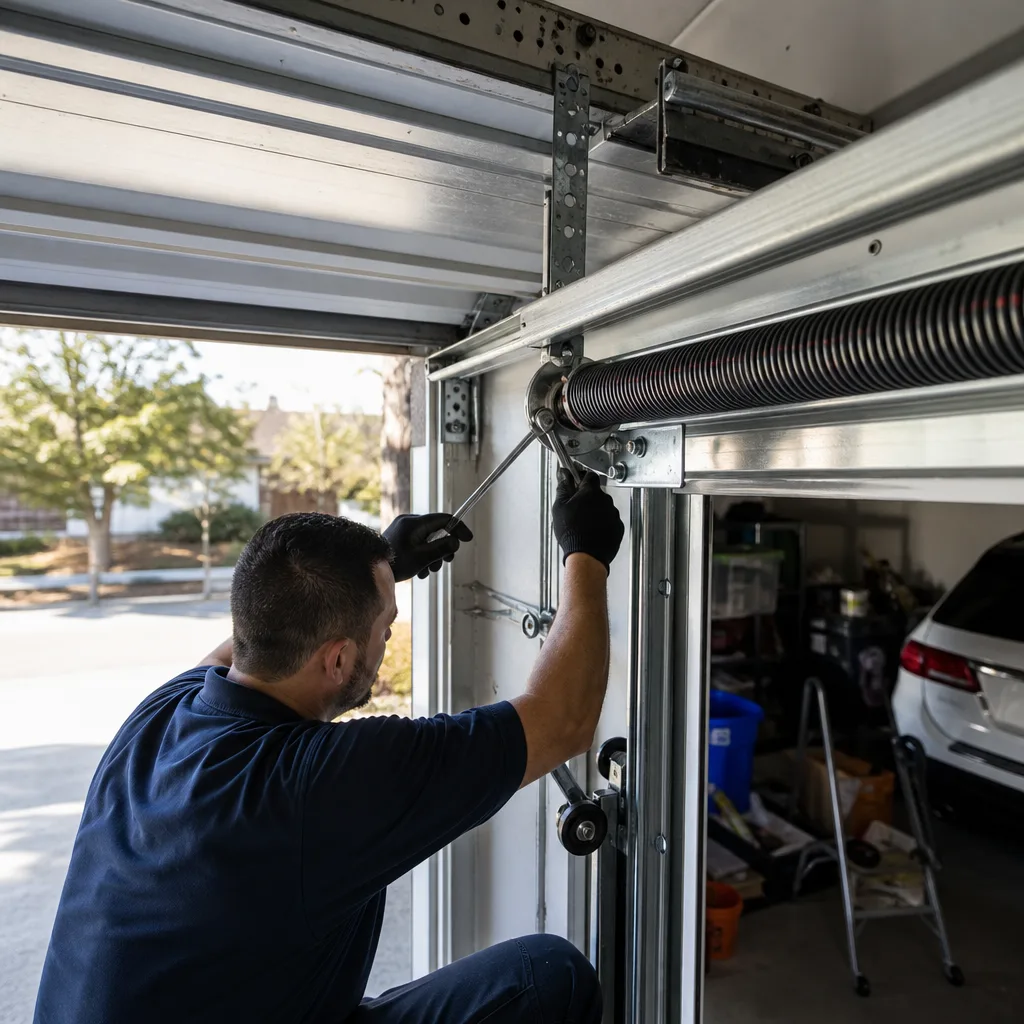 After
After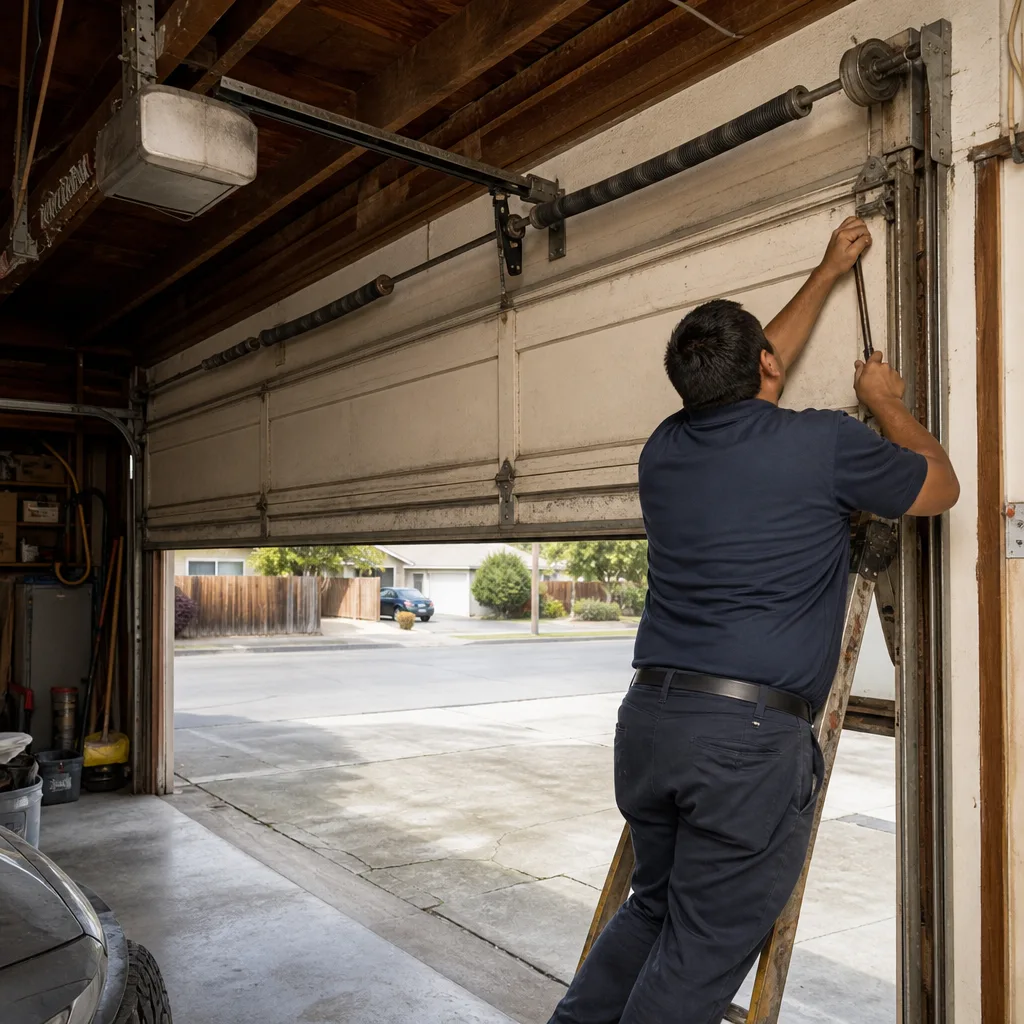 Before
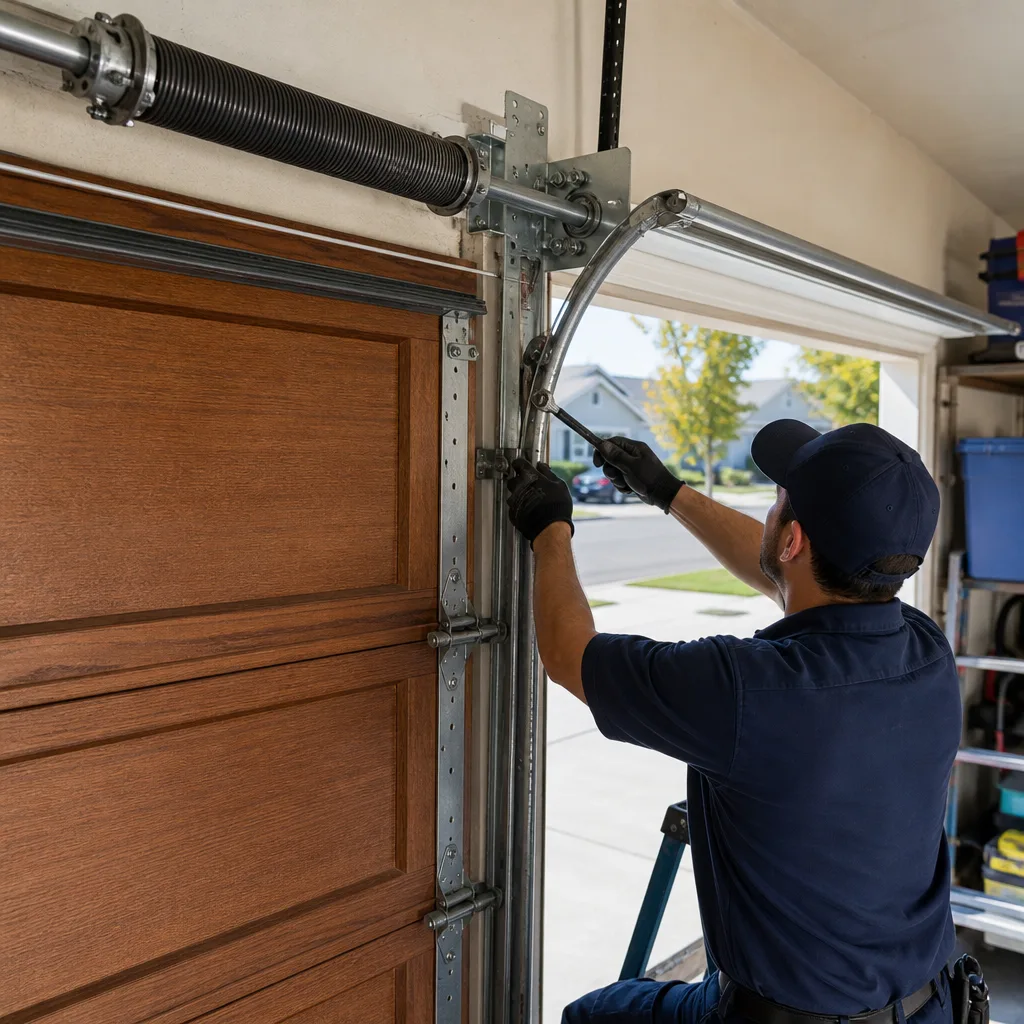 After
AfterSeasonal Garage Door Care for Concord: Year-Round Homeowner’s Guide
Torsion spring manufacturers rate cycle life at 65°F. Concord garage interiors hit 105°F in August. That temperature differential accelerates metal fatigue in a way that most spring warranties quietly exclude. If you’re following a maintenance calendar written for the Midwest, you’re missing the specific stresses that Diablo foothill heat, Delta moisture, and winter wind gusts place on your system. This guide maps what to check, when to check it, and how to document what you find so a technician has usable data instead of a shrug. For The Complete Guide to Garage Door in Concord and more guides & resources, see our blog.
Quick Answer
Concord homeowners should inspect their garage door system four times yearly, with critical checks timed to local climate patterns: thermal overload testing before August heat peaks, moisture seal inspection after Delta fog season, wind-load hinge assessment before Diablo winter gusts, and cable anchor verification after spring rains. Most maintenance tasks take under 30 minutes and require only a flashlight, silicone-based lubricant, and a written log.
Table of Contents
- Why Concord’s Climate Breaks the Standard Calendar
- Summer Heat Protocol: June Through August
- Fall Prep: Delta Moisture and What It Does to Metal
- Winter Reality Check: Wind, Not Ice
- Spring Reset: After the Rainy Season
- How to Log Observations a Technician Can Actually Use
- A Maintenance Checklist by the Numbers
- Common Mistakes to Avoid
- When to Call a Professional
- Frequently Asked Questions
- The Bottom Line
 Before
 After
AfterWhy Concord’s Climate Breaks the Standard Calendar
Most garage door maintenance guides assume a four-season continental climate: freezing winters, mild springs, humid summers, crisp autumns. Concord doesn’t follow that script, which is why our DIY vs Professional Garage Door: The Concord Homeowner’s Decision Guide helps you choose the right approach.
Our summer garage interiors regularly exceed 100°F, particularly in homes without ventilation in the Garage Door Repair in Concord corridor between the Diablo foothills and the flatlands near Willow Pass. That heat doesn’t just make the space uncomfortable. It changes how metal behaves. Torsion springs, rated for 10,000 cycles at moderate temperatures, experience accelerated stress relaxation when coiled metal sits at sustained high temperatures. The grease in your opener’s gear housing thins. The thermal overload cutout in your LiftMaster or Chamberlain logic board becomes more likely to trip mid-cycle, leaving the door stuck half-open during the hottest part of the day.
Then there’s the moisture pattern. The Sacramento-San Joaquin Delta pushes marine-layer humidity inland through the fall, particularly in neighborhoods east of Treat Boulevard and along the Buchanan Field approach. That moisture doesn’t freeze, but it does condense on cooler metal surfaces in October and November, creating the galvanic corrosion conditions that pit aluminum tracks where they contact steel rollers or brackets.
Winter brings something the national guides never mention: Diablo wind events. The pressure differential between inland valleys and coastal systems funnels gusts through the Concord hills at 40+ mph. Your garage door is the largest moving wall in your home, and older hinge systems weren’t engineered for that lateral load.
Spring is our reset period, but not because of thaw. It’s because the rainy season has ended, and whatever moisture found its way into cable anchor plates, bottom seal channels, or roller stem bearings has had months to work.
The maintenance calendar below is built for this specific environment, not a generic temperate zone.
Summer Heat Protocol: June Through August
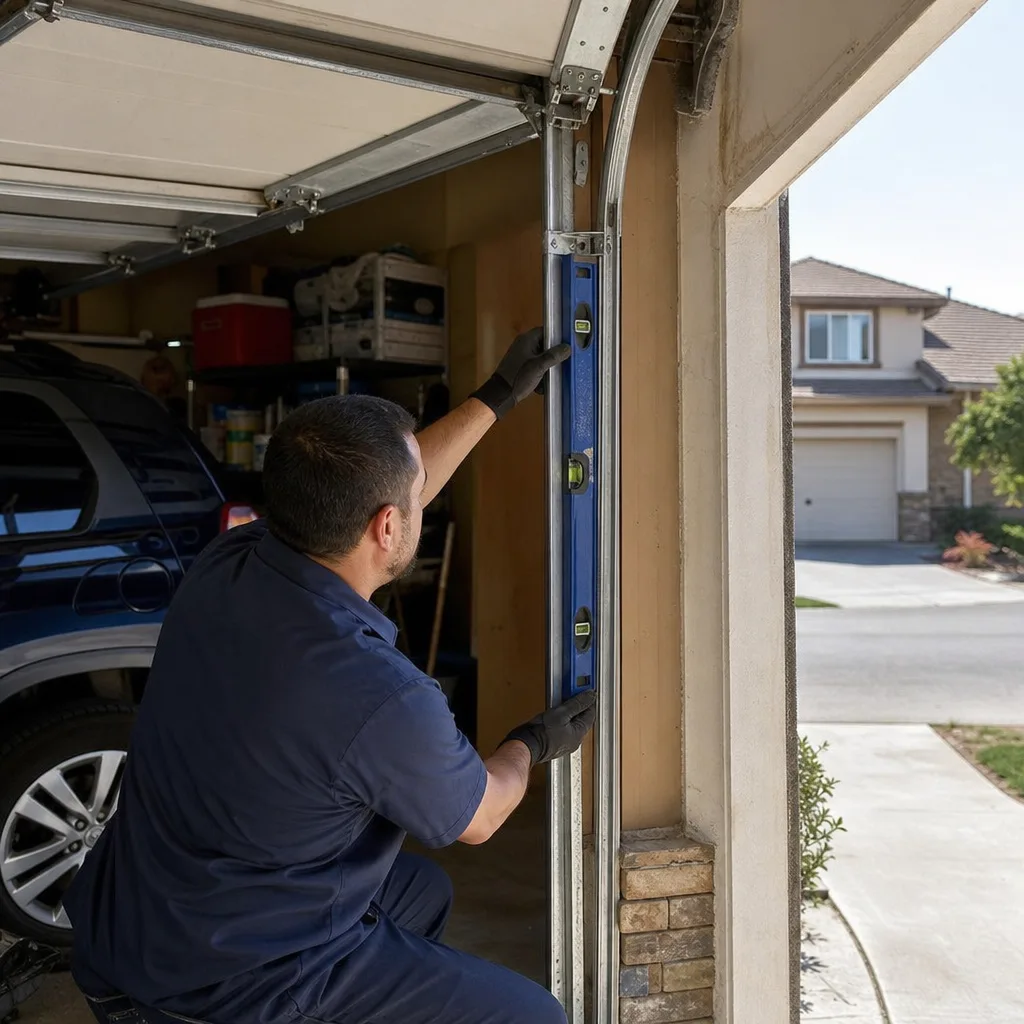
Start your summer inspection in late May, before the sustained heat arrives. The goal is identifying components that will fail under thermal load, not documenting failures after they strand you.
Test the Opener Thermal Overload System
Your garage door opener contains a thermal overload cutout, a small bimetallic switch that shuts down the motor when internal temperature exceeds safe limits. In a 105°F garage, that threshold arrives faster. Here’s how to test it without causing damage:
- Close the door completely and disconnect the trolley carriage from the door arm by pulling the emergency release handle.
- Run the opener through three complete open-close cycles with no door load. The motor should run smoothly without stopping.
- If the opener stops before completing the third cycle, or if you smell hot electrical insulation, the thermal overload is either faulty or the motor is drawing excessive current. Document the ambient garage temperature and the cycle count at failure.
We’ve seen this failure pattern repeatedly in Concord’s older Ranchlands and Dana Estates homes, where garages face west and absorb afternoon sun. Chamberlain and Genie openers from 2015-2019 seem particularly susceptible if the logic board ventilation slots are clogged with dust.
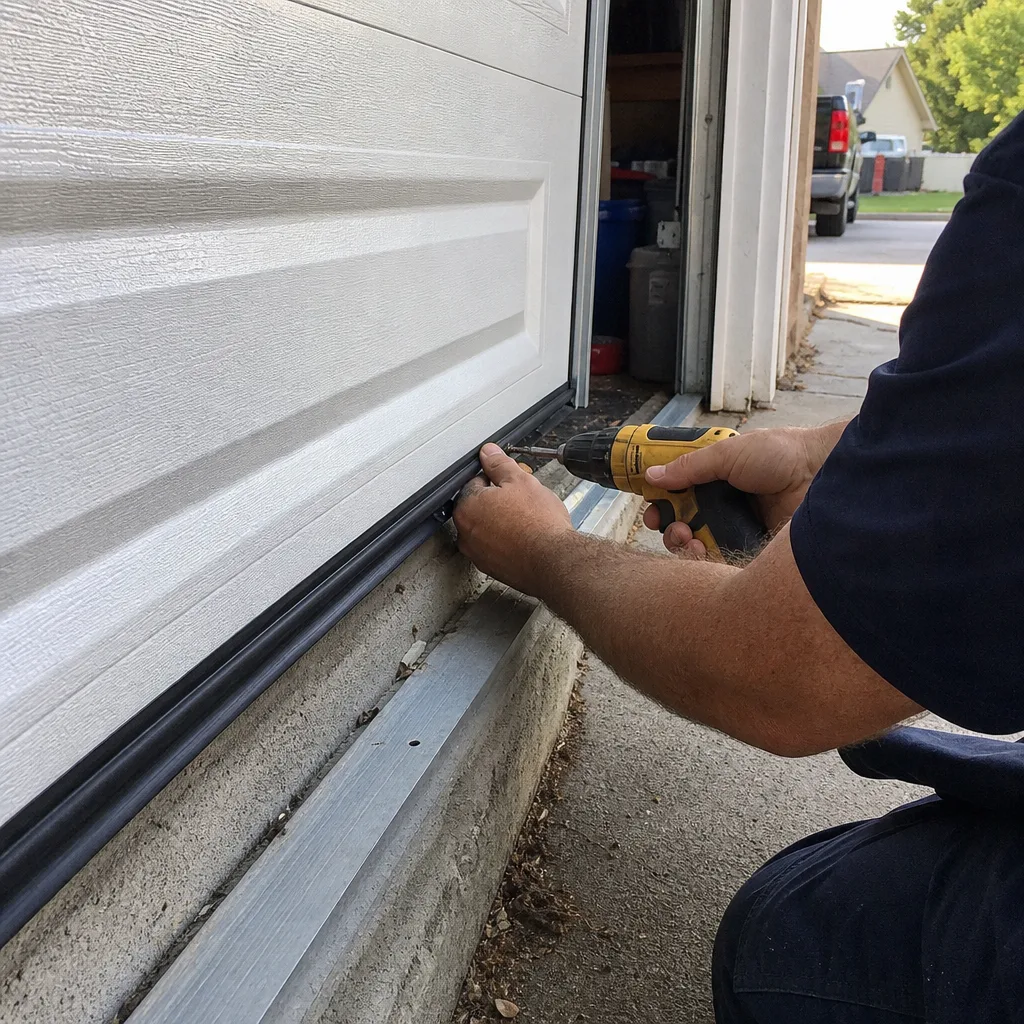
Inspect Bottom Seal Compression
Vinyl and rubber bottom seals expand in heat. A seal that fits properly at 60°F can compress against the threshold and create drag, forcing the opener to work harder and increasing the effective weight on the torsion spring. Check the seal at the hottest point of the day. It should contact the floor without buckling upward or folding under the door edge. If you see a permanent crease forming where the seal meets the threshold, replacement is due. A compressed seal also reduces the gap that rodents exploit, which matters in Concord’s hillside neighborhoods where ground squirrel pressure is continuous.
Lubricant Viscosity Check
Standard white lithium grease thins significantly above 90°F. Open the torsion spring tube or inspect the opener rail. If lubricant has migrated away from bearing surfaces or dripped onto the door sections, switch to a high-temperature silicone-based product rated for 150°F+ operating conditions. Apply sparingly. Excess lubricant attracts dust that forms an abrasive paste.
What to Do If Your Door Reverses Mid-Cycle on a 100°F Afternoon
This is a common summer call in Concord. The door travels 18 inches, stops, and reverses. Most homeowners assume the safety sensors are misaligned, but in heat, the cause is often:
- Thermal overload trip: The opener motor shuts down, and the door’s weight pulls it closed. Wait 15 minutes for cooling, then test again. If the pattern repeats, the motor is overheating.
- Expanded door sections binding in the tracks: Steel door sections expand in heat. Measure the clearance between door edge and track. It should be 1/4 to 1/2 inch. Less than 1/8 inch indicates expansion binding.
- Force setting too sensitive: The opener’s force adjustment, set in cooler months, interprets normal summer drag as an obstruction. This requires recalibration, not sensor replacement.
Document the exact temperature and time of day when this occurs. A technician can replicate the condition with that data.
Fall Prep: Delta Moisture and What It Does to Metal
October through December in Concord brings Delta-pushed fog and humidity, not rain. That moisture settles on metal surfaces that cooled overnight, then evaporates slowly in morning sun. The cycle repeats for weeks. Here’s what to inspect before corrosion becomes structural.
Bottom Seal and Stop Molding Inspection
The stop molding is the vinyl or rubber strip attached to the door jamb that seals the gap between door edge and frame. In fall humidity, this material can absorb moisture and swell, or it can harden and crack if it’s UV-degraded from summer exposure. Run your hand along the interior stop molding while the door is closed. You should feel continuous contact. Gaps at the top corners indicate the door is out of plumb or the molding has shrunk. Either condition admits moisture that corrodes the interior track mounting brackets.
In the Monument Corridor and near the Concord BART station, where morning fog lingers longest, we see accelerated deterioration of the rubber bulb-type seals that were popular on doors installed 2010-2016.
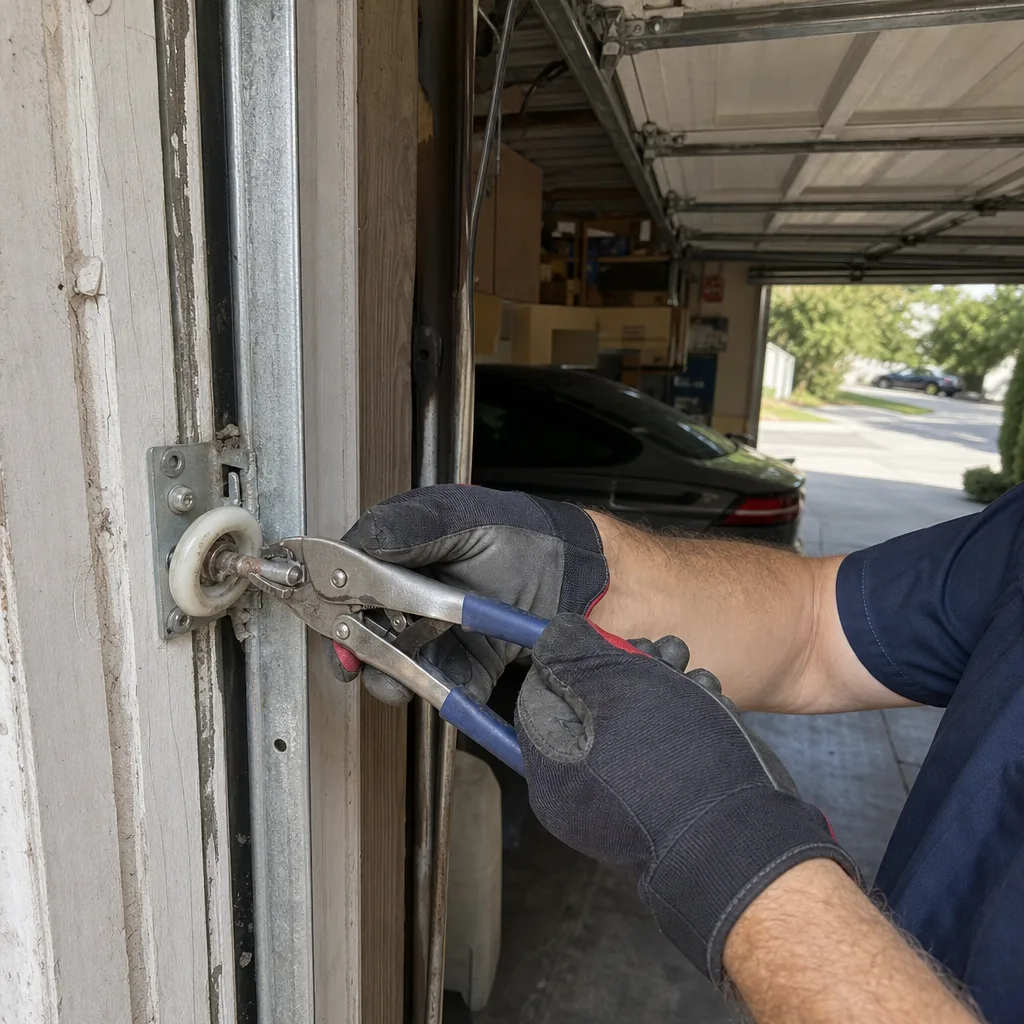
Galvanic Corrosion Check: Aluminum Tracks with Steel Hardware
This is a Concord-specific failure that national guides miss entirely. When dissimilar metals contact in the presence of an electrolyte (condensation counts), galvanic corrosion pits the less noble metal. In your door system, that’s typically the aluminum vertical track where steel rollers or mounting brackets contact it.
Inspect the track interior with a flashlight. You’re looking for:
- White or gray powdery deposits at roller contact points
- Pitting that you can catch with a fingernail
- Track wall thinning that allows roller wobble
If found, the track needs replacement, not cleaning. Galvanic corrosion has already compromised wall thickness. The correct repair uses a dielectric barrier (nylon sleeve or washer) between steel and aluminum, or switches to all-steel or all-aluminum hardware pairing.
Lubricant Viscosity Adjustment
Fall temperatures drop the viscosity of summer-weight lubricants, but more critically, humidity contaminates the lubricant film. Wipe old lubricant from roller stems, hinges, and the torsion spring with a clean rag. Reapply a moisture-displacing silicone lubricant. Do not use WD-40 as a lubricant; it’s a water displacer that evaporates, leaving metal unprotected.
Opener Logic Board Condensation Risk
Garage ceilings in Concord’s older homes, particularly in the Dana Estates and Holbrook Heights areas, often lack vapor barriers. Fall temperature swings create condensation on the underside of the roof deck, directly above ceiling-mounted openers. LiftMaster and Raynor openers with vented logic board housings can accumulate moisture that causes intermittent operation. If your opener behaves erratically only in fall mornings, this is the likely cause. A logic board shield or improved garage ventilation solves it.
Winter Reality Check: Wind, Not Ice
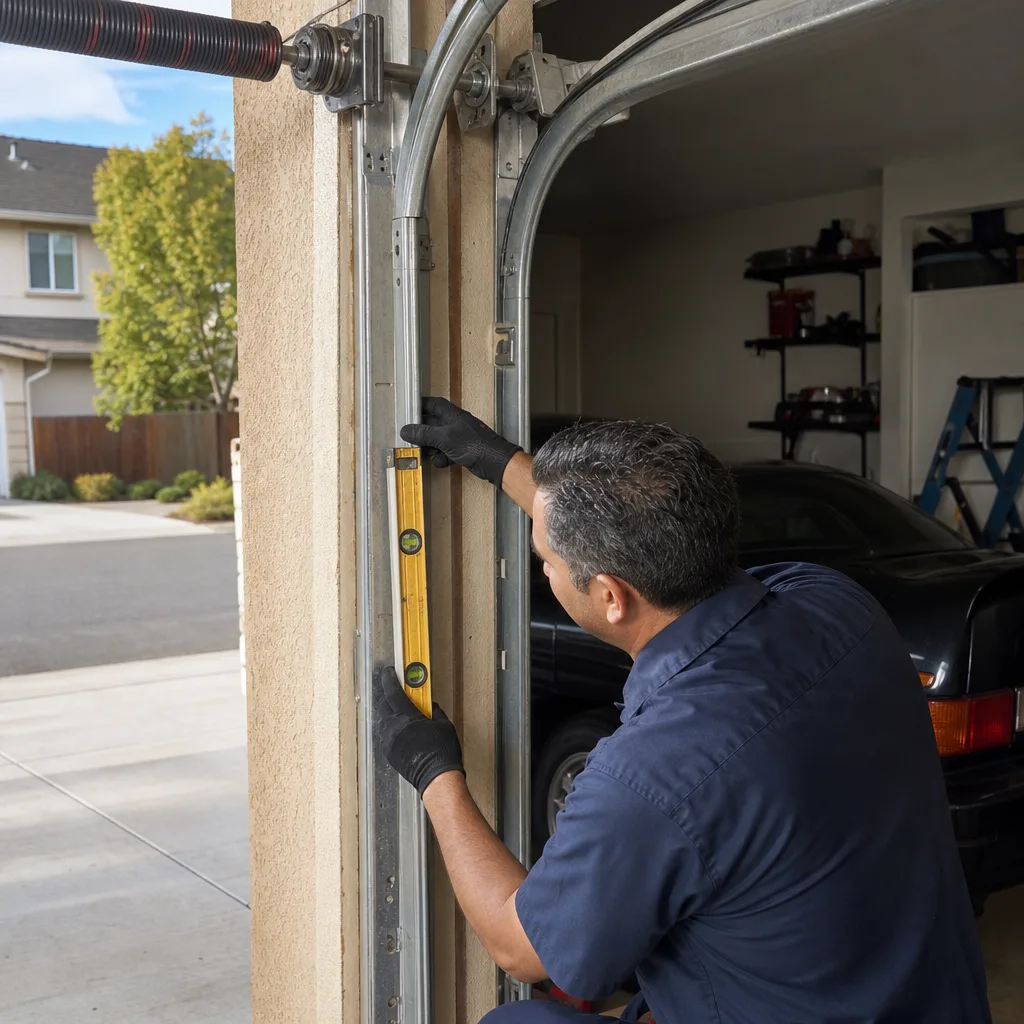
Concord’s winter low temperatures rarely threaten freeze damage to garage door systems. Your torsion spring won’t ice-lock, and opener grease won’t solidify. What winter does bring is wind, and that matters more than most homeowners realize.
Diablo Wind Events and Hinge Load
The Diablo range channels winter storm systems, creating localized wind acceleration. Your closed garage door presents a large surface area to that wind. The hinges transfer that lateral load to the door sections and ultimately to the track system. Weak hinges fail catastrophically, often tearing out of the door section and allowing the door to fold or detach.
Check your hinge gauge. Residential garage doors typically ship with 18-gauge or 16-gauge hinges. In Concord’s wind-exposed locations, particularly homes above 200 feet elevation in the Clayton Valley and Diablo Hills areas, 14-gauge hinges are the minimum we install. The difference is visible: 14-gauge steel is substantially thicker at the pivot barrel and the mounting flanges. If your hinges flex visibly when you manually lift the door, they’re undersized for wind load.
Track Bracket and Jamb Bracket Torque
Wind load transfers through hinges to rollers, then to track brackets, then to the wood or steel jambs. Inspect the lag screws securing track brackets to the jamb. In older Concord homes with Douglas fir jambs, seasonal moisture cycling loosens these fasteners. A loose track bracket allows roller displacement, which causes the door to bind and increases opener strain. Tighten with a socket wrench, but don’t overtighten and strip the wood.
Weather Seal Integrity Against Wind-Driven Debris
Winter storms in Concord carry leaf litter, small branches, and dust from the hills. A compromised bottom seal or perimeter stop molding allows debris accumulation in the track, causing roller binding and premature wear. Clean tracks with a dry brush, then verify seal contact.
Opener Force Setting Verification
Cold-weather opener manuals assume grease thickening increases door weight. In Concord, wind pressure does the same thing. If your door has become harder to move manually, the opener’s force setting may be insufficient for winter conditions. However, do not increase force settings without verifying door balance first. An unbalanced door with increased force settings becomes a safety hazard. The correct sequence is: balance check, then force adjustment if needed.
We document this sequence on every Garage Door Opener Repair & Installation in Concord winter service call, with photos of the force test measurement and the final setting.
Spring Reset: After the Rainy Season
March through May is Concord’s maintenance window. The rains have ended, the Delta moisture has diminished, and you have three to four months before heat returns. This is when you address what the wet season concealed. Budgeting for repairs? Our Garage Door Cost Breakdown: The Concord Homeowner’s Reference for 2026 has current pricing.
Cable Anchor Plate Corrosion
The cable anchor plate, also called the bottom fixture or corner bracket, secures the lift cable to the bottom of the door. It’s typically mild steel, painted or zinc-plated, and it sits at the lowest point of the door system where water and road salt spray collect. In Concord, where winter storms can drive water under the door edge, these plates corrode from the back side, hidden from casual inspection.
Remove any debris from the bottom door section. Inspect the anchor plate where the cable swage fitting attaches. If you see rust staining, flaking metal, or if the plate moves when you tug the cable, replacement is required. A failed anchor plate allows the cable to detach, and the door’s full weight transfers to the remaining cable, causing immediate, dangerous unbalance.
Safety note: Do not attempt to adjust or replace cables yourself. The torsion spring stores lethal energy. A cable under door weight can cause serious injury if it slips. This inspection is visual only. If you find corrosion, call a professional.
Opener Force Setting Drift After Humidity Fluctuation
Electronic force sensors in modern openers, particularly Chamberlain MyQ and Genie Aladdin Connect systems, can drift with humidity-induced changes in door system friction. After the rainy season, test the safety reverse:
- Place a 2×4 board flat on the floor in the door’s path.
- Close the door using the opener. It should reverse within 2 seconds of contacting the board.
- If it doesn’t reverse, or if it crushes the board, the force setting is excessive and the safety system has failed.
This test is required by federal safety standards and should be performed quarterly. Document the date and result.
Spring Fatigue Assessment Post-Heat
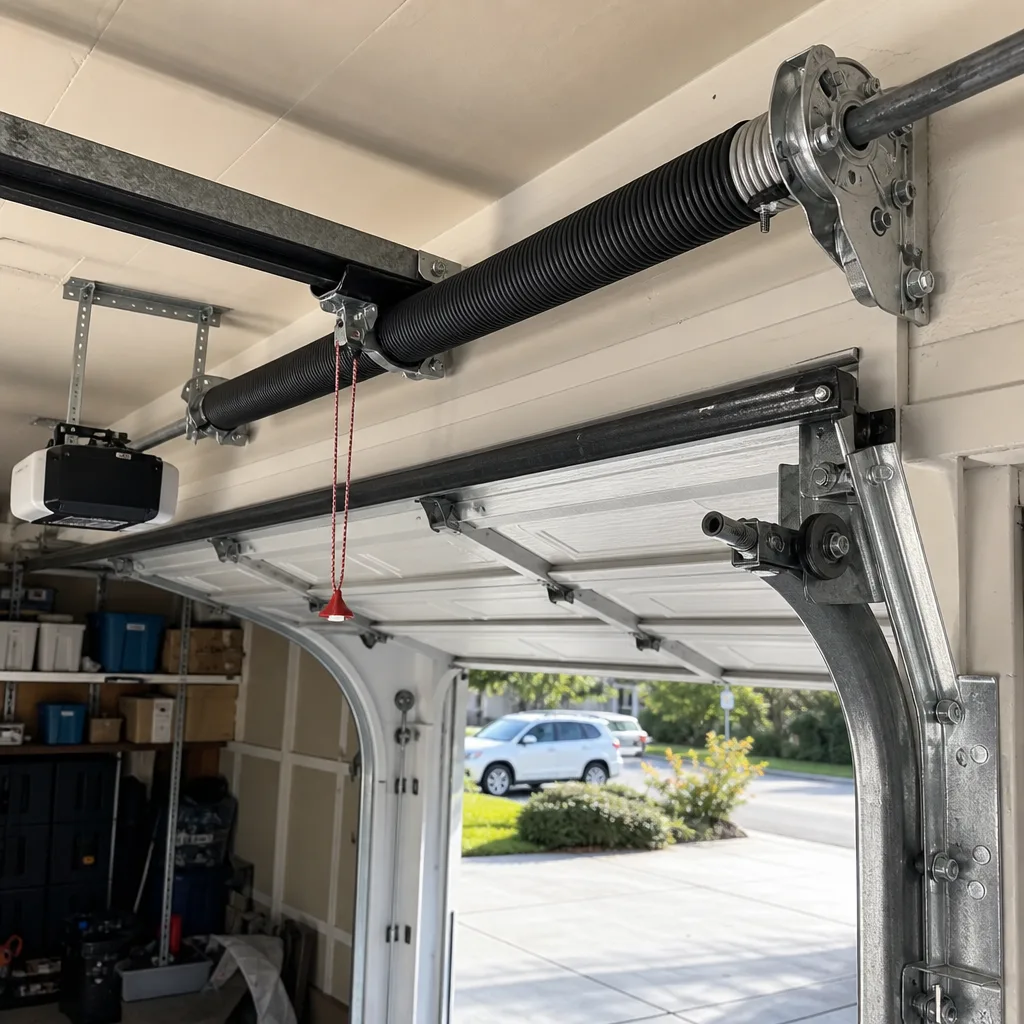
Your torsion spring just survived another Concord summer. Perform a balance test: disconnect the opener and manually lift the door to waist height. It should stay in place, neither rising nor falling. If it drifts, the spring has lost tension or the cables have stretched. Spring replacement is measured in remaining cycle life, not calendar age, but a door that fails the balance test after summer heat exposure is telling you something about material fatigue.
Neighborhood-Specific Notes
In Concord’s newer construction, particularly the Sander Ridge and Ellis Lake areas, garage doors are often non-insulated steel with minimal bottom seal contact. These doors transfer heat and cold rapidly, creating more severe expansion-contraction cycles. Inspect panel seams for paint cracking or metal fatigue at corners. In older neighborhoods like Todos Santos and West Concord, wood doors or wood-composite overlays require checking for moisture absorption at panel joints, which manifests as delamination or swelling.
How to Log Observations a Technician Can Actually Use
“It started making a noise a few months ago” is the least useful sentence a homeowner can offer. Here’s what we actually need, and how to record it so the diagnosis is faster and the repair quote is accurate. For more guides & resources on keeping your system running, explore our blog.
The Log Format
Create a simple document, digital or paper, with these columns:
- Date: Exact date of observation
- Weather: Temperature, humidity if known, recent rain or wind
- Symptom: What you observed, in mechanical terms if possible
- Frequency: Every cycle, intermittent, only when cold, etc.
- Photo: Yes/no, and approximate angle
Example entry:
2024-08-14 / Garage temp 102°F per thermostat / Door reversed at 18″ open, three consecutive cycles, 4:30 PM / Every cycle in heat / Photo: track clearance at right-side roller, mid-door
A technician receiving this log can reproduce the condition, inspect the specific component, and quote accurately. Without it, you’re paying for diagnostic time that could have been avoided.
Photo Documentation Standards
Your phone photos are more useful than you think. For track or roller issues, shoot parallel to the track, not down it. For seal problems, include a ruler or coin for scale. For opener issues, photograph the model label on the motor housing, not just the remote. Servo Garage Doors Concord home technicians receive these photos before arrival when customers send them, and Clause 4 of The Haven Standard requires we photograph our own findings before quoting replacement, so your documentation and ours create a complete record.
What to Track Seasonally
At minimum, log these four observations per year:
- Spring: Balance test result and cable anchor plate condition
- Summer: Thermal overload test result and any mid-cycle reversal
- Fall: Stop molding contact and any galvanic corrosion findings
- Winter: Hinge flex check and manual door effort (rate 1-10)
Over multiple years, this log reveals patterns. A door that drifts out of balance every second spring indicates a spring at end of cycle life, not random failure. A mid-cycle reversal that always occurs above 95°F points to thermal expansion, not sensor misalignment.
A Maintenance Checklist by the Numbers
This table summarizes the critical tasks, their Concord timing, and what you’re checking for. Use it as a printed reference or digital checklist.
| Season | Task | What Failure Looks Like | Time Required |
|---|---|---|---|
| Late May | Opener thermal overload test (3 cycles, no load) | Motor stops before cycle 3; hot electrical smell | 10 min |
| Late May | Bottom seal compression check at peak heat | Seal buckles upward or folds under door edge | 5 min |
| Late May | Lubricant viscosity inspection (torsion tube, rail, rollers) | Grease migrated or thinned; metal visible | 15 min |
| October | Stop molding contact verification | Gaps at top corners; hardened or cracked material | 10 min |
| October | Galvanic corrosion check (track interior at roller points) | White/gray deposits; pitting; roller wobble | 10 min |
| October | Opener logic board condensation check (ceiling-mounted units) | Erratic operation only in morning fog conditions | 5 min |
| December | Hinge gauge and flex inspection | Visible flex during manual lift; 18-gauge or thinner | 10 min |
| December | Track bracket lag screw torque check | Loose fasteners; track movement when door operates | 15 min |
| March | Cable anchor plate corrosion inspection (visual only) | Rust staining; flaking metal; plate movement | 10 min |
| March | Safety reverse test with 2×4 board | Door fails to reverse; crushes board | 5 min |
| March | Spring balance test (disconnect opener, lift to waist height) | Door drifts up or down when released | 10 min |
Total annual hands-on time: approximately 105 minutes, spread across four sessions. The return is avoiding the emergency service call that costs three to five times the planned maintenance, and having documentation that makes any necessary repair faster and more accurately quoted.
Common Mistakes to Avoid
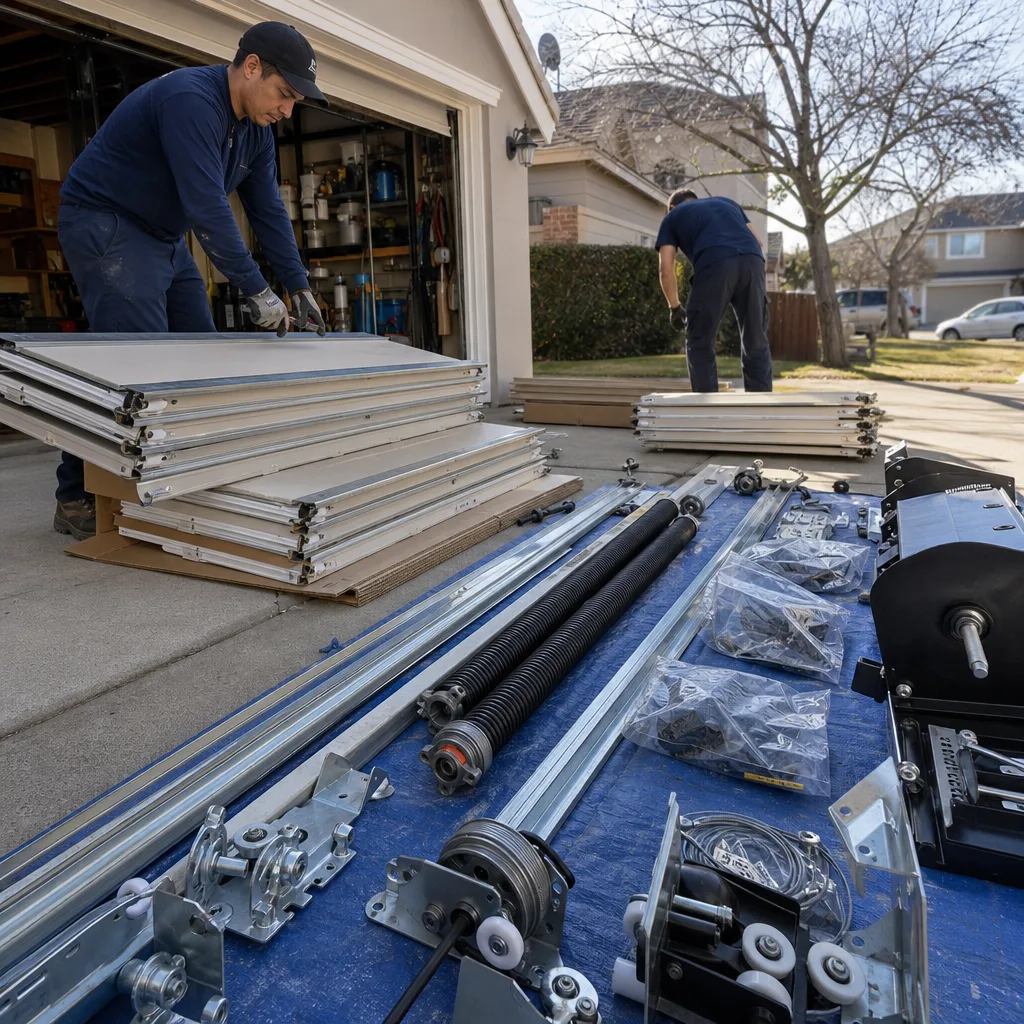
- Using WD-40 on rollers or springs. WD-40 displaces water but evaporates completely, leaving metal unprotected. Within two weeks, you’ll have more friction than before. Use silicone-based lubricant rated for garage door components.
- Adjusting opener force settings without testing door balance first. A heavy door with increased force becomes a crushing hazard. The balance test comes first, always. If the door is properly balanced and still needs force adjustment, the opener’s internal sensor may be failing.
- Ignoring the “small” gap in the bottom seal. In Concord’s hillside neighborhoods, a 1/4-inch gap is a rodent highway. Ground squirrels and roof rats exploit these openings, and their nesting debris causes track blockages that mimic mechanical failure.
- Cleaning galvanized corrosion and calling it fixed. Once pitting is visible, the track wall is compromised. Cleaning removes the symptom, not the structural damage. Replacement with proper dielectric isolation is the correct repair.
- Assuming mid-cycle reversal is always a sensor problem. In Concord’s August heat, thermal expansion and thermal overload are equally likely causes. Cleaning sensors that are already aligned wastes time and misses the actual failure mode.
- Skipping documentation because “I’ll remember.” You won’t. And “a few months ago” doesn’t help a technician reproduce a temperature-dependent failure. The log takes 90 seconds and saves diagnostic time.
- Delaying cable anchor plate replacement because the cable “still looks okay.” The plate fails first, then the cable detaches under load. This is not a wear item that can be monitored to failure; replacement at first visible corrosion is the only safe approach.
When to Call a Professional
Some maintenance is homeowner-accessible. Some is not, for safety or technical reasons. Call a technician when you encounter:
- Any torsion spring issue: visible gap in coils, door imbalance, or cable slack. The spring stores lethal energy and requires specialized winding tools.
- Cable wear, fraying, or anchor plate corrosion. Cable replacement involves door weight management that requires training.
- Opener logic board replacement or force setting recalibration after component replacement. Modern electronic controls require manufacturer-specific procedures.
- Track replacement, particularly if galvanic corrosion or impact damage has deformed the roller path.
- Any safety system failure: safety reverse test failure, photo-eye misalignment that persists after cleaning, or wall button malfunction.
Servo Garage Doors Concord offers free estimates in Concord. We’ll inspect your system, document our findings with photographs per Clause 4 of The Haven Standard, and provide a flat written price before any work begins. Call (925) 940-6359 to schedule. Emergency calls are answered by a live person, 24/7, with a named technician and an on-the-way text.
Frequently Asked Questions
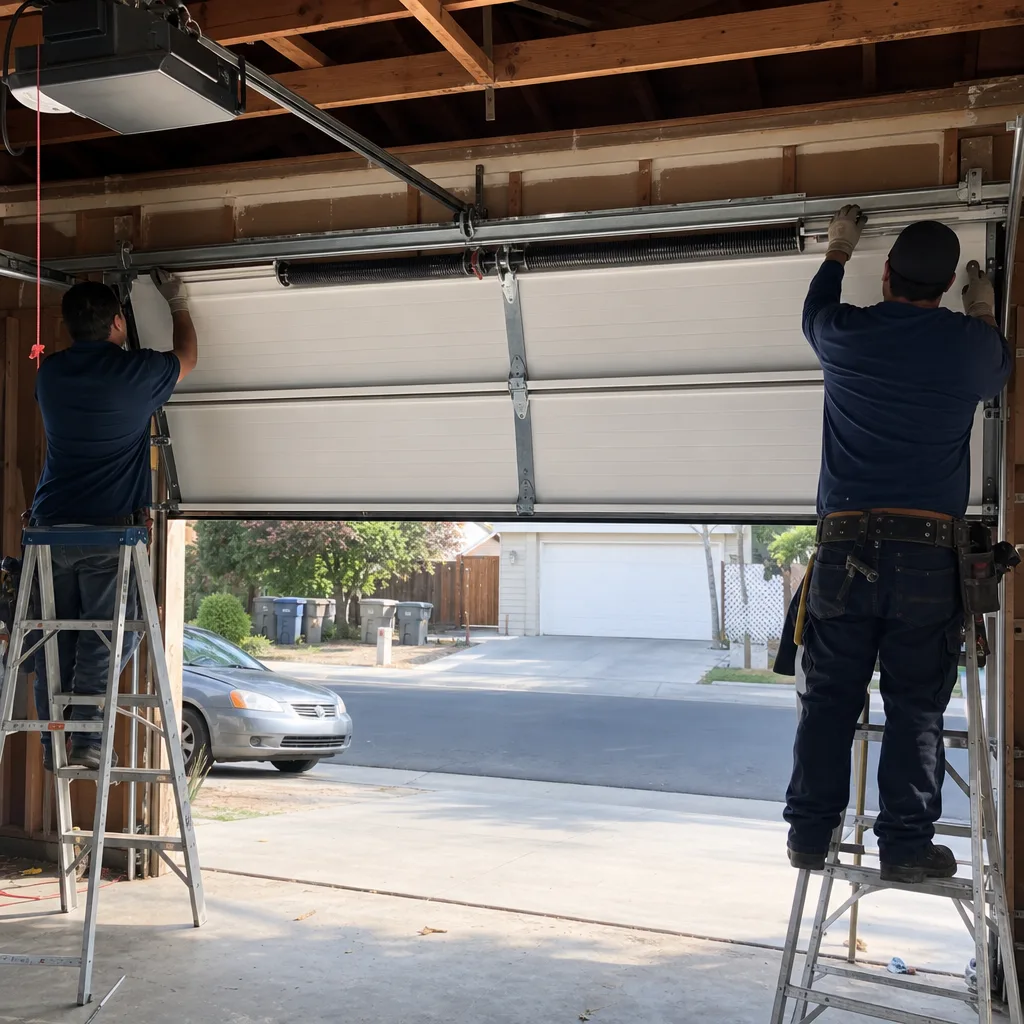
Four times yearly, timed to local conditions: late May before heat peaks, October before Delta moisture arrives, December before winter wind events, and March after the rainy season ends. Each session takes 20-30 minutes and addresses the specific stress that season applies.
Homeowners can apply lubricant to accessible components: roller stems, hinge pivot points, and the torsion spring surface. Do not lubricate the track interior, where lubricant attracts dust that forms abrasive paste, and do not attempt to access the torsion spring tube interior. If you’re uncertain which components are safe to lubricate, schedule a maintenance visit and observe what the technician addresses.
Temperature-dependent expansion is the most likely cause in Concord. Steel door sections expand in heat, reducing track clearance. Opener thermal overload becomes more likely as garage temperature rises. Grease thins and migrates from bearing surfaces. Log the exact temperature and failure time, then test the thermal overload and measure track clearance at peak heat. This pattern is diagnostic, not random.
We provide a flat, written price after inspection, before any work begins, per Clause 1 of The Haven Standard. A standard maintenance visit including inspection, lubrication, safety test, and documented photo record typically falls in the $150-$250 range for Concord residential doors, depending on door size and accessibility. We do not quote over the phone without seeing the system; “call for a quote” contradicts our pricing system. Call (925) 940-6359 to schedule a free estimate.
Rarely. Wind resistance is primarily a function of hinge gauge, track bracket integrity, and jamb attachment, not door age. A 20-year-old door with 14-gauge hinges and secure hardware outperforms a 5-year-old door with 18-gauge hinges in Diablo wind conditions. Inspect hardware first. Door replacement is only necessary if the sections themselves are fatigued or delaminated.
We service and install all major brands including LiftMaster, Chamberlain, Genie, Clopay, Amarr, Wayne Dalton, Craftsman, and Raynor. Our technicians carry common parts for these brands on every truck, and we provide a 365-Day Done Right Promise on all work. If a repair is not right, we make it right, backed by The Haven Standard and a terms page, not a handshake.
The Bottom Line
Concord’s garage doors face heat that thins lubricant and expands metal, moisture that corrodes dissimilar metal contacts, and wind that tests hinge and track integrity. A maintenance calendar built for Ohio misses all of this. The homeowners who avoid emergency calls are the ones who inspect seasonally, document specifically, and address findings before they become failures. The 105 minutes of annual maintenance this guide describes is the difference between a scheduled service with a written price and a stuck door on a 102°F Saturday afternoon. Start with the checklist, keep the log, and when you need professional work, demand the documentation that proves what was found and what was done.
Written by Marcus Deller, Owner at Servo Garage Doors Concord, serving Concord since 2015.